An American Dies in Riyadh Airport Attack — And Washington Can No
An American citizen killed at Riyadh's international airport marks a turning point in the Gulf conflict. With Saudi Arabia running low on interceptors and Trump evaluating direct strikes, the US faces intense pressure to escalate beyond its current advisory role.
The killing that changes everything
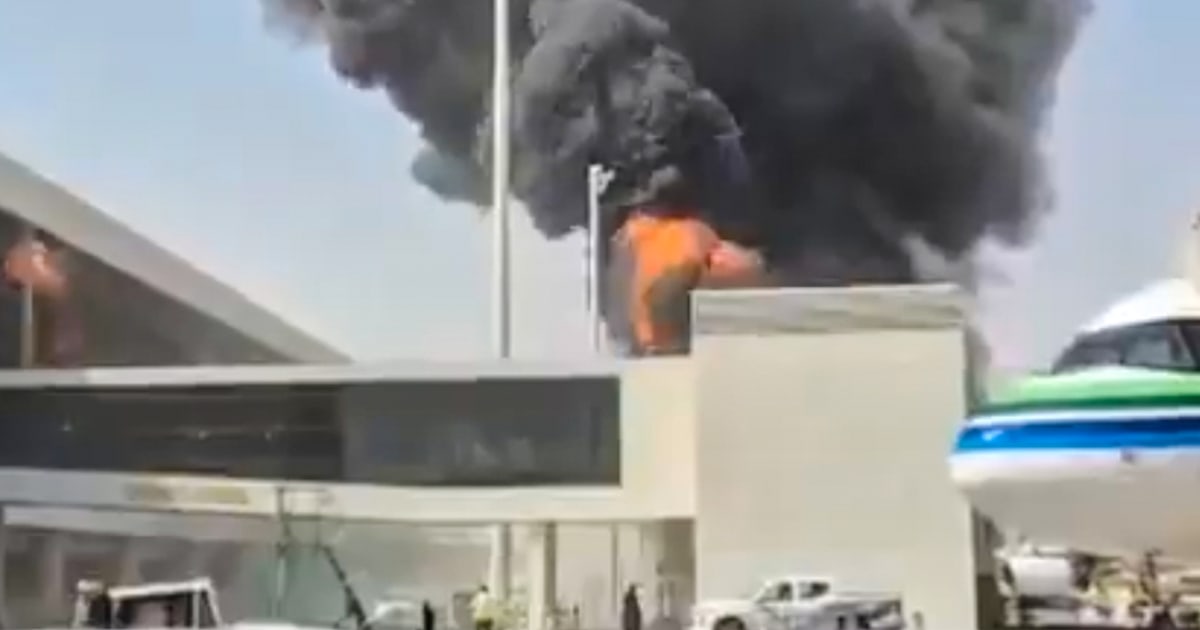
An American died at Riyadh’s King Khalid International Airport on Saturday, and with that single casualty the calculus in Washington shifted overnight. Twelve people were killed in the attack — four Saudis, two Bangladeshis, a Palestinian, an Egyptian, a Jordanian, a Syrian, a Sudan and one American. Over 300 more were wounded, some critically. But the number that matters for the future of US policy in the Middle East is one.
President Donald Trump was clear about what came next. “We may. We’re going to look at it,” he said when asked whether American forces would join Saudi strikes against the Houthis. “We just found out about the recent attack. So we’ll make a decision. We move very quickly.”
That is not the language of a president committing to action. It is the language of a president preparing domestic audiences for exactly that possibility.
The interceptors are running dry
The context behind Trump’s calculus is dire. Saudi Arabia, the world’s top oil exporter and a key American partner, is running dangerously low on missile interceptors, officials told the Associated Press last month. The kingdom has requested air defense support from France, Britain, Pakistan and Egypt. The United States has seen its own stock dwindle during the ongoing war with Iran, leaving Riyadh effectively alone against an enemy that has shown it can strike deep inside Saudi territory at will.
This is not a theoretical vulnerability. The attack on Saturday was the latest in a string of strikes on King Khalid International Airport over the past week. Earlier attacks killed three Saudis, including a pilot. Before this week, the Houthis had already demonstrated they could hit beyond Yemen’s borders — targeting Saudi airports, military facilities, and oil infrastructure with missile and drone swarms that saturation defense systems simply cannot absorb indefinitely.
The math is brutal. Every intercepted missile costs money and depletes finite stocks. Every miss costs lives. Saudi Arabia is losing that exchange rate.
What the US is already doing
The United States is not standing idle. Riyadh confirmed that American assistance has included intelligence sharing, target identification, and planning support for the coalition’s latest offensive against the Houthis. That is significant — it means US forces are already embedded in the operational fabric of Saudi military actions in Yemen. What Trump is now weighing is whether to cross the line from planning to participation.
The distinction matters more than the vocabulary. American troops participating in strike missions would represent the most direct US military involvement in the Gulf conflict since the Iran war began. It would also represent an escalation that Iran would almost certainly view as a casus bellendi — a justification for expanding the war beyond Yemen and into broader regional confrontation.
The Houthis are not backing down
There was no immediate Houthi claim of responsibility for the Riyadh airport attack, continuing a pattern of calculated ambiguity. The rebels did, however, accuse Saudi Arabia of striking Sanaa International Airport in the Houthi-held Yemeni capital earlier on Saturday — a charge that, if true, would represent a significant escalation in Saudi tactics as well.
The Houthis have warned global airlines “for the last time” about operating in Saudi airspace, describing it as a theater for their military operations. At least 291 flights at the Riyadh airport were canceled over a 24-hour period. Air India, FlyDubai, Lufthansa, and Pakistan International Airlines all suspended services. The European Union Aviation Safety Agency warned of increased risk of misidentification of civil aircraft amid the missile and drone activity.
The message from Sanaa is unambiguous: the conflict is no longer contained within Yemen’s borders, and it shows no sign of de-escalation.
Markets and messaging
In a bizarre display of institutional inertia, Saudi Arabia’s energy ministry promoted a major international energy conference set to begin in Riyadh on Sunday — hours after the airport attack. The contradiction between the kingdom’s need to project stability and the reality of its vulnerable infrastructure reveals the central tension of Saudi strategy: economic revival through Vision 2030 depends on the world believing Saudi Arabia is safe, while the military reality suggests otherwise.
The attacks have rattled energy markets. The conflict has expanded to include fighting along the Red Sea corridor — a crucial alternative to the Strait of Hormuz, where Iran has been attacking ships. The Houthis previously broadened their maritime targeting to include commercial vessels after the Gaza war began, calling it solidarity with Palestinians. A US bombing campaign sharply limited those attacks — until now.
The diplomatic hedge
Saudi Arabia’s foreign minister spoke by phone with his Omani counterpart on Saturday, emphasizing “supporting diplomatic solutions to de-escalate tensions.” Oman, which sits across the Strait of Hormuz from Iran, has occasionally played a mediator role in the region. This is the kingdom’s civilian face to the crisis — but it is hard to take seriously alongside public requests for foreign air defense deployments and a president openly weighing direct military strikes.
Meanwhile, Saudi authorities warned citizens this week that “filming, publishing or sharing information related to countering missiles and drones and their impact sites exposes you to legal liability.” The command-and-control posture suggests a government trying to manage information as fiercely as it manages air defense — another sign of vulnerability beneath the surface.
Who wins, who loses
If the United States commits militarily, it gains a clearer frontline against Iran’s proxy network but risks dragging itself into a wider war it has been working to avoid. If it holds back, it risks appearing weak to allies and emboldening adversaries at a moment when Saudi Arabia’s defenses are cracking. Either path carries cost. The American killed at Riyadh airport ensures that any decision Washington makes will be measured not just in strategic terms but in domestic political ones.
For the Houthis, the attack proves they can strike at the heart of a Gulf capital — a psychological victory that transcends the physical damage. For Saudi Arabia, it is a humiliation that demands a response, whether from Riyadh or from Washington on its behalf.
The next 48 hours will determine whether the United States joins the fight or watches from the sidelines as its ally absorbs blows it can no longer deflect alone. Either outcome reshapes the Middle East.