Riyadh Airport Attack Signals Iran War's Dangerous New Phase
The Houthi strike on Riyadh's international airport is the deadliest attack on a Gulf capital since the Iran war began, and it forces the United States into an impossible calculus: respond directly or watch its alliance system unravel.
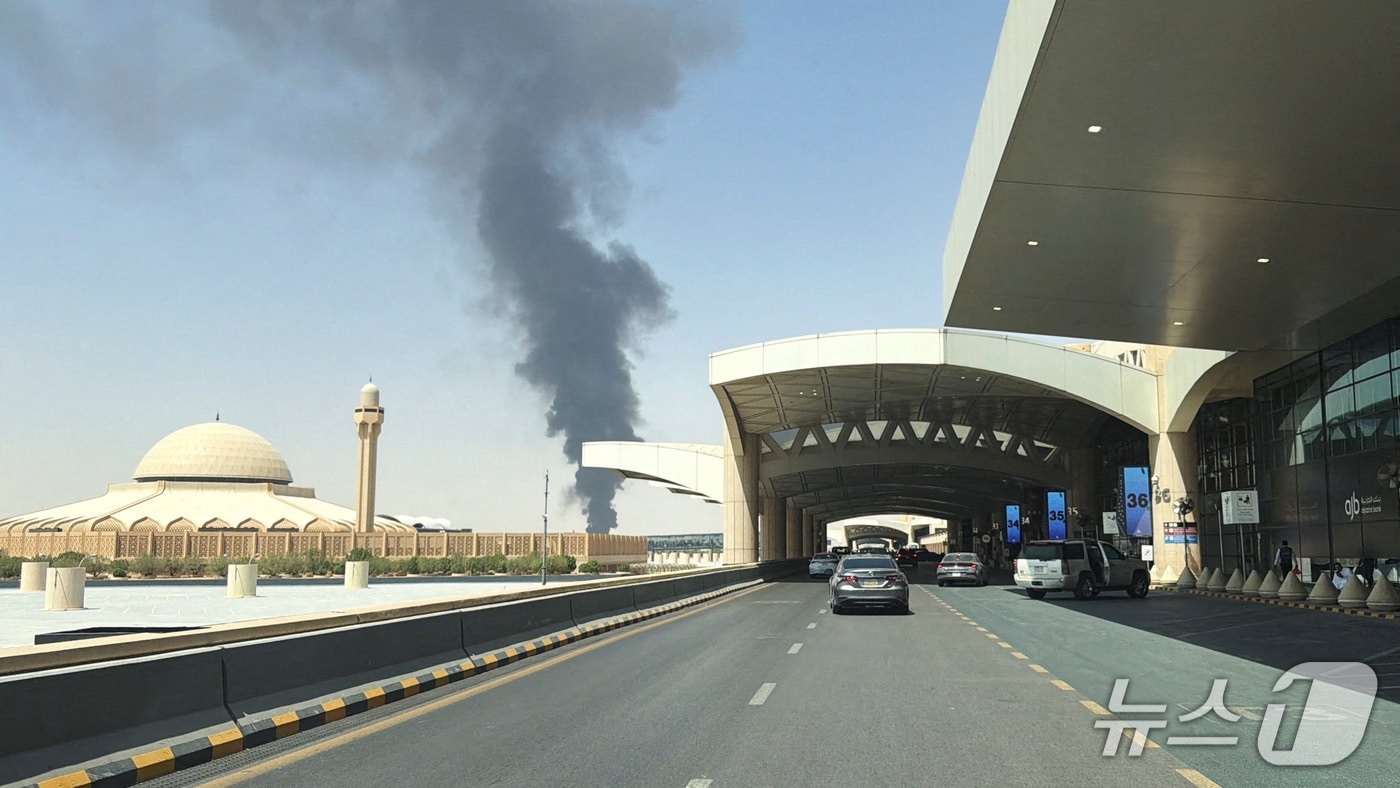
The strike that crossed a line
King Khalid International Airport was hit again. The second time in eleven days, Saudi Arabia’s busiest airport — and one of the Persian Gulf’s largest aviation hubs — became ground zero for a Houthi missile strike that killed at least 12 people and wounded 309.
The first attack on September 8 killed three people, including a Saudia pilot, and damaged an aircraft. This time, a fuel storage facility erupted in black smoke visible across the capital. The dead include four Saudis, two Bangladeshis, one American, and citizens of Egypt, Jordan, Syria, Palestine, and Sudan. Some of the injured are in critical condition.
The United Arab Emirates and other Saudi coalition partners immediately branded the attack a war crime. The joint military command said it would respond firmly. By nightfall, coalition forces claimed they had destroyed 136 military targets in retaliatory strikes against Houthi positions.
But the real question has nothing to do with retaliation. It is about escalation, and about what happens when a regional proxy conflict produces casualties that include an American citizen on Saudi soil.
Why this matters beyond the Persian Gulf
No attack on a Gulf state capital has matched the scale of this one since the Iran war began in late February 2026. That is not a rhetorical point. It is a strategic benchmark. The Houthi movement, which opened a renewed offensive against Saudi and Saudi-backed Yemeni government forces in July 2026 after four years of silence, has now shifted its targeting from military outposts and remote installations to the heart of a Gulf capital’s civilian infrastructure.
An international airport is not a military base. It is a node of global commerce, a symbol of state functionality, and a place where citizens and foreign nationals converge in predictable numbers. Striking it is a deliberate choice — and it changes the calculus for every capital in the region.
Kuwait Airways canceled flights to Riyadh. Etihad and Qatar Airways did the same. FlightRadar24 recorded widespread rerouting and cancellations. Airlines received an explicit warning from the Houthis to stop flying through Saudi airspace entirely.
The economic signal was immediate and loud. Supply chains that depend on Riyadh as a logistical hub were disrupted. More importantly, the psychological boundary that had held since February was breached.
The American dilemma
Donald Trump told reporters at the White House that the United States was aware of the attack and would decide how to respond. He said he was acting quickly. He did not rule out direct military involvement.
That is the pivot point.
Since the Iran war began, the United States has supported Saudi operations from behind the scenes — intelligence sharing, weapons resupply, defensive coordination. Direct combat involvement has been carefully avoided. That distance has given Washington strategic flexibility. It has also allowed regional allies to absorb Houthi attacks without forcing American boots on the ground.
This attack collapses both advantages.
An American citizen was killed on Saudi soil in an attack that the Trump administration could interpret as an act of war by a Iranian-backed proxy. Declaring no response would look like abandonment to Riyadh and other Gulf partners. Declaring war — even a limited one — commits the United States to a conflict it has spent months trying to contain without direct engagement.
The mathematics of US involvement in this war are already uncomfortable. The Trump administration has watched Iran’s regional network absorb losses in Lebanon, Yemen, and Iraq without a decisive shift in the strategic balance. Opening a new front in Saudi Arabia risks exactly what Washington has been trying to avoid: a broader regional war that pulls American forces into a ground conflict against an enemy that does not fight conventionally.
Who wins, who loses, who blinks
The Houthis win if they force the United States into a direct military response that drags American forces into a costly counterinsurgency in mountainous Yemen terrain. They win if they fracture the Gulf security architecture, making daily life in Riyadh and neighboring capitals feel as insecure as it does in conflict zones. They win if Saudi Arabia absorbs so many attacks that its economic transformation program — the visible centerpiece of Crown Prince Mohammed bin Salman’s vision — stalls under the weight of perpetual defense spending.
Saudi Arabia wins if it can demonstrate through coordinated coalition action that the Houthis are vulnerable, that its air defenses work, and that attacks on its cities carry unacceptable costs. It wins if it can prevent the Houthi offensive from metastasizing into a multi-front war that drags in Iran directly.
The United States wins if it can deter further attacks without triggering a war it cannot easily exit. That means calibrated responses that signal resolve without committing to escalation. It means helping Saudi Arabia defend itself while refusing to become the primary target. The hardest part is timing. Every day of hesitation erodes credibility with allies. Every day of action increases the risk of miscalculation with Iran.
What comes next
The Houthis have already warned that they will expand their attack scope. King Khalid Airport was hit on September 8 and again on September 19. Between those dates, Saudi and coalition forces launched Operation Dawn of Yemen, a campaign to push the Houthis back from territory they seized and to disrupt their command structure.
The operation has achieved some tactical success. The coalition claims to have degraded Houthi military capabilities. But the strategic picture is worsening. The Houthis have adapted to pressure by targeting higher-value civilian infrastructure deeper inside Saudi territory. That is a sign of resilience, not decline.
Riyadh is now treating its airport as a frontline installation. That is not normal. That is the language of a war that has moved beyond deterrence and into a phase where both sides are testing whether the other will break first.
Trump’s statement that the United States might join Saudi operations is the loudest signal yet that Washington is losing patience with its old strategy of managed ambiguity. If the United States enters this war directly, the conflict stops being a regional proxy struggle and becomes something far larger — and far more dangerous for everyone involved.
The 309 people injured at King Khalid International Airport are not statistics. They are the human cost of a war that refuses to stay contained. And the 12 who died on September 19 are the latest evidence that the rules of this conflict are being rewritten in real time.