Riyadh Airport Reopens Amid Houthi Threats — A Dangerous New Normal
Saudi Arabia's partial reopening of Riyadh's international airport while Houthi missile attacks continue signals a dangerous acceptance of civilian infrastructure as a battlefield. The move has global implications for energy routes and regional stability.
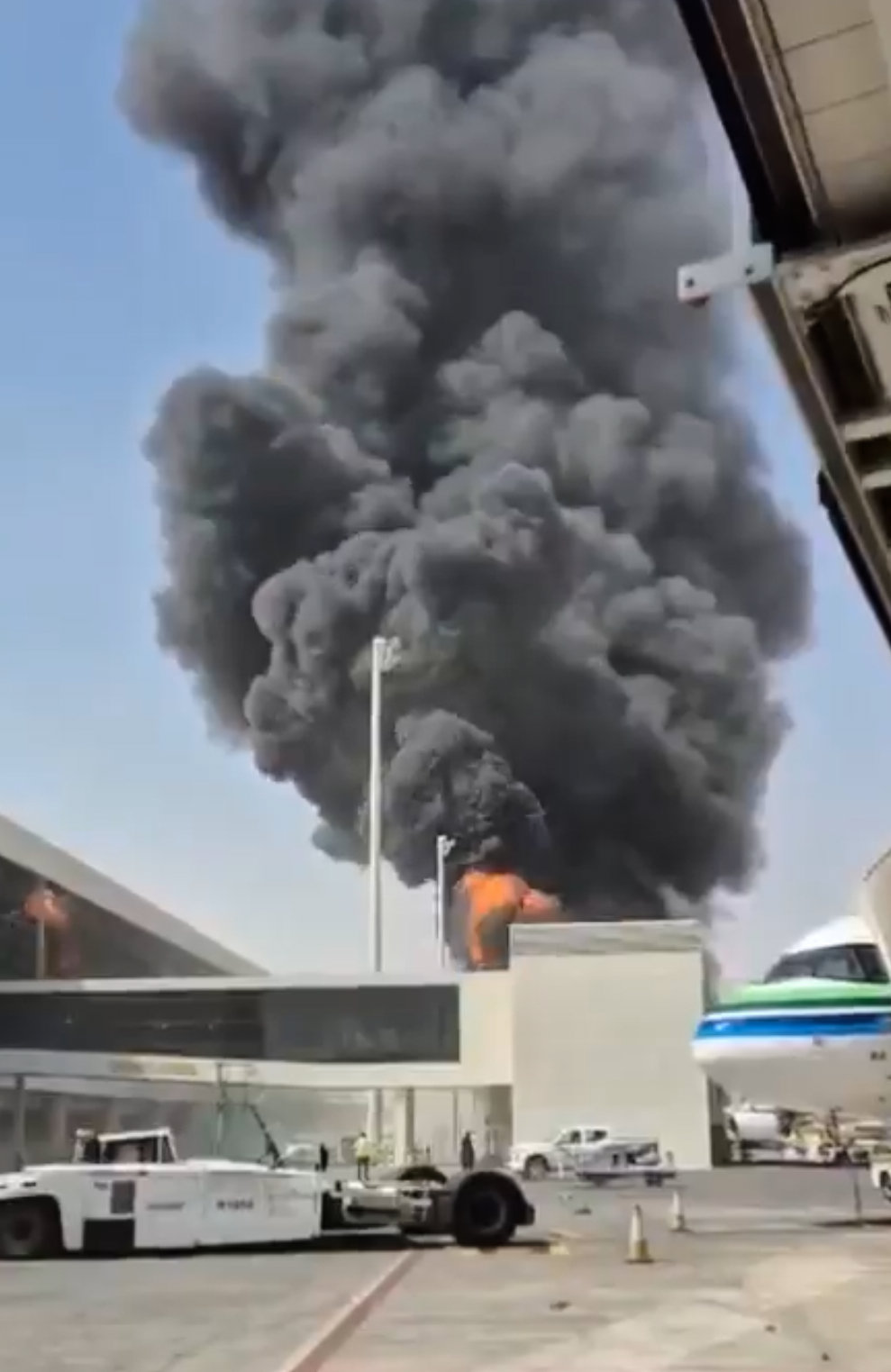
The Airport Is Open. So Are the Missiles.
King Khalid International Airport in Riyadh started partial operations again on October 25th. On the same day, the Houthi movement in Yemen issued a public warning to travelers and airlines: do not use this airport. It is not safe.
That contradiction — an airport reopening while its attackers explicitly target it — is the story here. It is not a sign of de-escalation. It is a sign that Saudi Arabia has accepted, however grudgingly, that civilian infrastructure in the kingdom is now a regular battlefield in a war that shows no sign of ending.
The partial nature of the reopening is itself revealing. Only a fraction of the terminal’s capacity has been restored, flight schedules remain truncated, and security protocols have been visibly tightened. Yet the decision to reopen at all sends a message that cuts in both directions: the kingdom refuses to be cowed, but it also cannot afford to keep its primary international gateway shut indefinitely. The cost of closure — economic, reputational, logistical — is too high for a country betting its future on Vision 2030 and a diversified economy that depends on connectivity.
What Happened at the Airport
The airport had been closed temporarily after a series of Houthi strikes killed and injured people in the capital. The Houthis have now said they successfully hit King Khalid International Airport as part of three separate missile attacks they carried out against Saudi targets over the weekend. The first strike aimed at the airport itself. The second and third targeted the King Khalid Air Force Base in Qamar Mish’at and a Saudi Border Guard naval base near Jizan on the Red Sea coast.
Saudi Arabia’s coalition forces said they intercepted and destroyed 12 missiles and two drones fired at the kingdom, including two missiles and two drones aimed at Riyadh. But interception is not the same as prevention. Fragments from downed missiles fell on residential areas in Qamar Mish’at and Ahad Rafida, injuring one Saudi citizen and one Asian resident. Three homes and seven vehicles were damaged.
The damage from falling debris, while not catastrophic, underscores a grim reality: even successful interceptions leave civilians in the crossfire. The Saudi air defense network — one of the most heavily equipped in the region, layered with American, British, and Israeli systems — can shoot down incoming threats, but it cannot guarantee safety in a sky where missiles are being fired with increasing frequency. Every intercepted projectile is a reminder that the threat is real and persistent, and that the window between detection and impact is measured in seconds.
Airline operators navigating Saudi airspace have begun adjusting their flight paths, adding time and fuel costs to routes that were once straightforward. Insurance premiums for flights over Yemeni and Saudi airspace have risen sharply, and some carriers have quietly suspended services to the kingdom on a rotational basis. The financial mathematics of flying into Riyadh under these conditions are unfriendly, and they will only worsen if the Houthis expand the scope of their targeting.
The Houthis Are Drawing a Line
Yahya Sarieh, the Houthi spokesman, did not mince words. He issued warnings to every airline and every passenger: do not fly through Saudi airspace. The only exceptions, he said, were the Islamic holy cities of Mecca and Medina. The message was clear — the Houthis see themselves as waging a war against the Saudi state, not against Muslims performing pilgrimage.
That is a strategic choice, not an accident. By carving out an exception for Mecca and Medina, the Houthis are trying to maintain a veneer of religious legitimacy while making it perfectly clear that Saudi civil aviation, Saudi energy infrastructure, and Saudi citizens are fair game. The distinction is carefully calculated: it allows them to frame their campaign as nationalist and defensive rather than broadly hostile to all who enter Saudi airspace. It also leaves open the possibility of negotiated de-escalation on pilgrimage routes — a off-ramp they may need if international pressure mounts.
There was more. The Houthi-affiliated Saba News Agency quoted military sources telling Saudi civilians and workers to stay away from oil-related facilities. The Houthis also sent a direct message to shareholders of Saudi Aramco: hold onto your stock and you will suffer losses. This is an economic intimidation campaign wrapped in military rhetoric, and it signals that the conflict is no longer confined to the battlefield.
The threat to Aramco shareholders is particularly noteworthy. It represents a deliberate attempt to weaponize financial markets against a state-owned enterprise that is the cornerstone of Saudi fiscal policy. If investors begin to question the safety of their exposure to Saudi energy assets — not because of production disruptions but because of targeted threats — the psychological impact on the kingdom’s economic outlook could be significant. Vision 2030 depends on foreign investment confidence, and every headline about missile strikes on civilian infrastructure erodes that confidence incrementally.
Why the Reopening Matters
Riyadh is the capital of a kingdom that has spent years trying to project stability and modernity, especially under Vision 2030. Reopening part of its main international airport while missiles are still being fired at it is a signal — perhaps unintended, perhaps not — that life must continue even as the war intensifies.
But it is also a dangerous normalization. Every time an airport reopens under threat, the threshold for what counts as “normal” shifts. The Houthis are exploiting that shift. Their attacks on civilian targets, including the airport and residential neighborhoods, are designed to erode the sense of security that Saudi Arabia has built over decades. The partial reopening, whether born of necessity or defiance, inadvertently reinforces the Houthis’ narrative that the kingdom is vulnerable.
The second-order effects of this normalization are hard to quantify but impossible to ignore. When a major international airport becomes a recurring target, the ripple effects extend far beyond Riyadh. Regional carriers face higher operating costs. Business travelers begin to reroute through Dubai or Doha, diverting revenue and prestige away from Saudi hubs. Tourism — a stated pillar of Vision 2030 — suffers not from a single dramatic incident but from the slow accumulation of risk perceptions. Investors do not need to be told directly that a destination is unsafe; they only need to see that normal operations continue under conditions that would be unthinkable elsewhere.
Saudi Arabia’s leadership appears to have made a calculated bet: that reopening the airport, even partially, will demonstrate resilience and deny the Houthis a propaganda victory. But the bet carries a hidden cost. Each time the kingdom restores operations under fire, it establishes a precedent that civilian infrastructure can absorb attack and keep functioning — a precedent that other actors in the region may find useful to replicate.
The Retaliation Cycle
The fighting escalated after Saudi airstrikes killed dozens of civilians, including women and children, in Houthi-held areas around Sanaa. The Houthis called the October 25th strikes a direct response. They claimed the Saudi Air Force launched 56 separate airstrikes and missile attacks over 24 hours, hitting residential areas in Lahiz, Amran, Sada, Al-Jawf, and Taiz provinces, as well as the southern port city of Aden and surrounding strategic positions.
The Houthis also reported striking Yemeni government military bases and Saudi coalition force positions with heavy explosions heard across the region. The back-and-forth is relentless, and each side is escalating the other’s willingness to target civilians.
This cycle of retaliation and counter-retaliation has become self-sustaining. Each strike produces casualties that demand a response, and each response produces new grievances that justify further strikes. The human cost is borne disproportionately by civilians on both sides of the border, but the geopolitical calculus favors escalation: both Riyadh and the Houthi leadership have domestic audiences that reward toughness and punish restraint.
The Yemeni civil war, which predates the current exchange by many years, has now fully consumed Saudi airspace and territory. What began as a proxy conflict fought primarily on Yemeni soil has crossed a threshold. The battlefield is no longer confined to Yemen. It extends into Saudi cities, its airports, its energy facilities, and its skies. That expansion changes the nature of the war entirely.
What Comes Next
The partial reopening of King Khalid International Airport is a small gesture with outsized implications. It tells the world that Saudi Arabia will not let Houthi missiles dictate its daily life, but it also tells the Houthis that their strategy is working — they have made a major international airport a weapon of war and the kingdom has no clean answer.
Global energy markets may already be pricing in some of this risk, but Aramco shareholders and airlines operating in Saudi airspace should prepare for further disruptions. The Houthis have explicitly targeted energy infrastructure and threatened investors. That is not empty rhetoric when you consider their track record of attacking petroleum facilities in recent years.
The regional implications extend beyond aviation and energy. The destabilization of Saudi airspace affects the broader Gulf cooperation framework, strains relations with partners who have invested heavily in Saudi security, and raises questions about the long-term viability of the kingdom’s modernization agenda if large parts of its population continue to live under the shadow of incoming missiles. No amount of economic diversification planning can fully insulate a country from the psychological and material toll of sustained aerial threats.
The war in Yemen has been dragging on for years, and the latest round of exchanges between the Houthis and the Saudi-led coalition shows no sign of slowing. The reopening of Riyadh’s airport is a milestone of a different kind — not a peace deal, but a confirmation that the conflict has moved deeper into Saudi territory than most observers thought possible. The question now is not whether the airport will stay open, but how long the kingdom can sustain the illusion that business as usual is anything but.