Lula's 4th Win Upends Trump's Latin America Strategy
Lula's historic runoff victory over Bolsonaro marks the first reversal of its kind in Brazilian electoral history, preserving Brazil as Latin America's lone left-wing government and stripping Trump of his most important southern-hemisphere foothold.
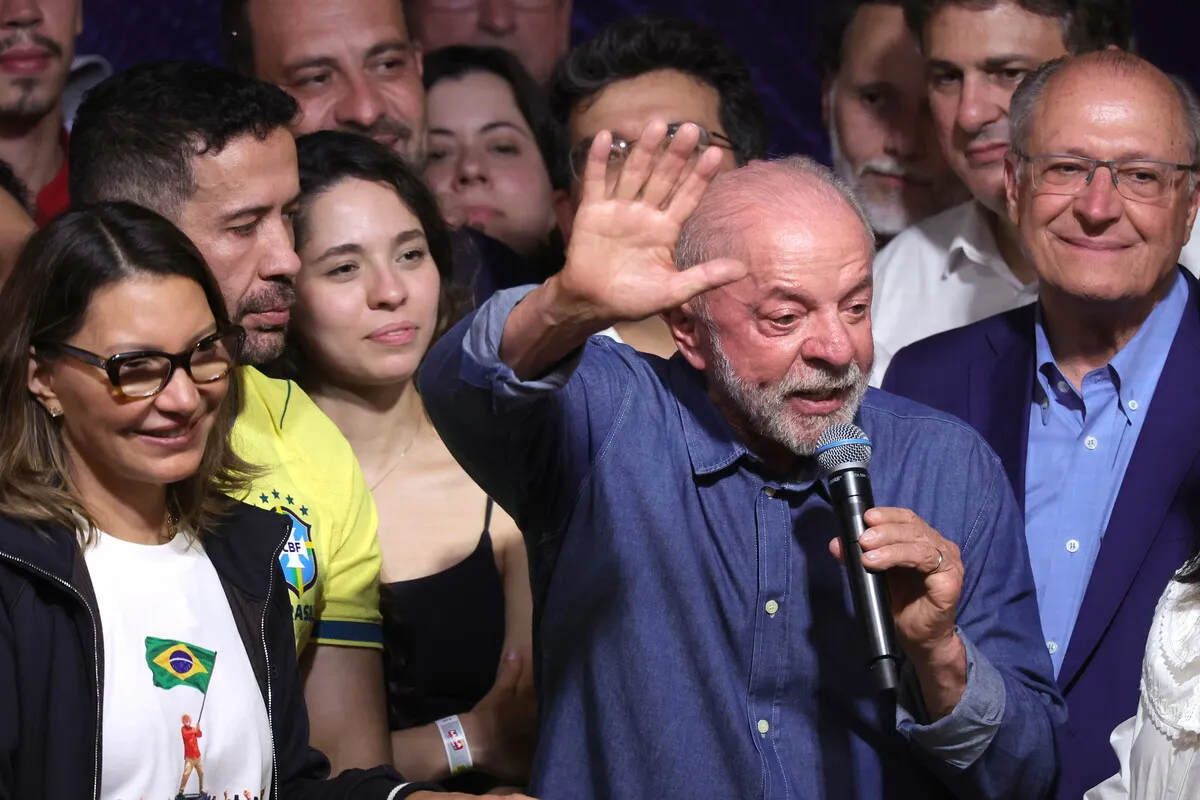
The Runoff That Rewrote History
Brazil’s October 25 runoff election produced the first result of its kind in the country’s electoral history: a second-round reversal of the first-round standings. Luiz Inácio Lula da Silva, the former garment worker turned three-time president, finished with 51.76 percent of the vote to Flavio Bolsonaro’s 48.24 percent, according to the Electoral Court’s final tally at 99.81 percent of ballots counted. Three weeks earlier, Bolsonaro had led the first round by 1.8 percentage points, and most political forecasts — including those in South Korean media covering the race — had read the runoff as a formality.
It was not. The result makes Lula Brazil’s first four-term president and, more significantly, leaves him in power to navigate a world where Donald Trump’s return to the White House has aggressively recalibrated American policy toward Latin America.
Why the Reversal Matters Beyond Brazil
Runoff systems are designed to produce consensus candidates, but they also create predictable consolidation patterns. In Brazil’s 2022 election, the second round narrowed the gap between candidates as voters coalesced around their preferred pole. The statistical literature on Brazilian runoffs shows that the leading candidate in the first round wins the runoff roughly 70 percent of the time.
This cycle broke that pattern. What explains it? Analysts point to several overlapping factors. Bolsonaro’s governing record — including rising inequality despite GDP growth, weakened environmental enforcement in the Amazon, and democratic backsliding concerns — alienated center-left voters who might otherwise have stayed home. Lula’s campaign messaging, emphasizing social programs and institutional stability, appealed to voters who prioritized continuity over disruption. Turnout patterns also shifted in Lula’s favor, particularly among younger and lower-income voters in the Northeast and urban centers like São Paulo and Rio de Janeiro.
Whatever the precise mechanics, the outcome sent a clear signal: Bolsonaro’s political project, which dominated Brazilian politics for eight years, has lost its electoral momentum. And Lula, widely dismissed as a relic of an older era, has proven remarkably durable.
A Lone Left Government in a Rightward-Turning Hemisphere
Brazil’s result has immediate regional consequences. Across Latin America, the political compass has been tilting right for most of the past decade. Argentina’s Javier Milei has implemented shock therapy austerity. Colombia’s Gustavo Petro, elected in 2022, faces relentless opposition and low approval ratings. Mexico’s Andrés Manuel López Obrador is leaving office with his party’s candidate trailing in early polls. Chile’s rightward shift under Gabriel Boric has stalled on key reforms.
In that context, Lula’s fourth term preserves Brazil as Latin America’s most important left-wing government — and the hemisphere’s only large democracy still governed by a politician who views inequality, climate change, and multilateralism as central policy concerns. That distinction matters because Brazil is not just any left-wing government. It is the region’s economic powerhouse, with a GDP exceeding $2 trillion and a population of over 215 million. Its policy choices shape trade flows, investment patterns, and diplomatic alignments across South America.
For neighboring countries like Venezuela, Nicaragua, and Cuba, Lula’s return provides diplomatic cover and economic lifelines that might otherwise have frayed under Trump pressure. For regional integration projects like CELAC and the UNASUR predecessor frameworks, Brazil’s participation under Lula keeps those conversations alive even as other member states pull away.
The Trump Connection: Losing the Southern Anchor
Donald Trump’s approach to Latin America has increasingly centered on a single premise: isolate leftist governments, coerce compliant ones, and redirect trade and security partnerships away from China and Russia. His first term saw unprecedented pressure on Mexico, Colombia, and Central American nations to act as immigration buffer states. His second term has expanded that playbook to include South America.
Brazil was always the centerpiece of that strategy. Under Bolsonaro, Trump had a natural ally in Brasília — a president who shared his skepticism of multilateral institutions, his openness to agricultural exports, and his willingness to criticize China publicly. The two men met multiple times during Trump’s first term, and Brazil was frequently cited in Republican circles as proof that the Trump approach could work in the Western Hemisphere.
Lula’s victory removes that ally. Where Bolsonaro would have amplified Trump’s rhetoric against Venezuela and China, Lula is likely to do the opposite — expanding diplomatic ties with Caracas, deepening trade relationships with Beijing, and rejecting unilateral sanctions that Washington imposes on other Latin American governments. The economic calculus is straightforward: China is already Brazil’s largest trading partner at $150 billion annually, and Lula has no incentive to risk that relationship over ideological alignment with Washington.
That shift matters for U.S. strategic interests. Brazil’s participation in BRICS — the alliance of emerging-market economies that includes China, Russia, India, and South Africa — gives the group institutional weight and geographic reach it previously lacked. With Lula in power, BRICS gains access to South American markets, energy resources, and diplomatic networks that can counterbalance G7 influence. The expansion of BRICS into a broader BRICS+ framework, which has already admitted Egypt, Ethiopia, Iran, and the UAE, becomes easier to justify when a country of Brazil’s size and resources is openly committed to the project.
What Comes Next
Lula’s fourth term will face familiar headwinds. Brazil’s fiscal deficit remains stubborn, inflation has periodically spiked, and infrastructure bottlenecks continue to constrain growth. The Amazon deforestation crisis — a hallmark issue of his first two terms — will demand action that may clash with the agricultural lobby that has grown powerful under Bolsonaro. And the narrowness of his victory, a margin of just 3.5 percentage points, suggests that his coalition is fragile and his mandate limited.
But the broader geopolitical implications are clear. A Lula presidency keeps Brazil in the Global South camp, maintains a counterweight to U.S. unilateralism in Latin America, and preserves a democratic anchor for progressive forces across the region. For Trump, the loss of Brazil as a reliable partner represents the single most significant setback to his hemisphere strategy — one that no tariff threat or diplomatic pressure is likely to reverse in the short term.
The 2026 Brazilian election was never going to be just a Brazilian story. With Lula’s victory, it has become a defining moment for Latin American politics and a blow to an American strategy that counted on Brasília as its southern anchor.