What 100,000 Rogue Planets Mean for the Future of Astronomy
NASA's Roman Space Telescope has launched with a vision 100 times wider than Hubble's. It will survey tens of billions of galaxies and potentially 100,000 exoplanets — including ones orbiting no star at all. The data flood alone will reshape how astronomy works.
The Launch Nobody Is Fully Processing Yet
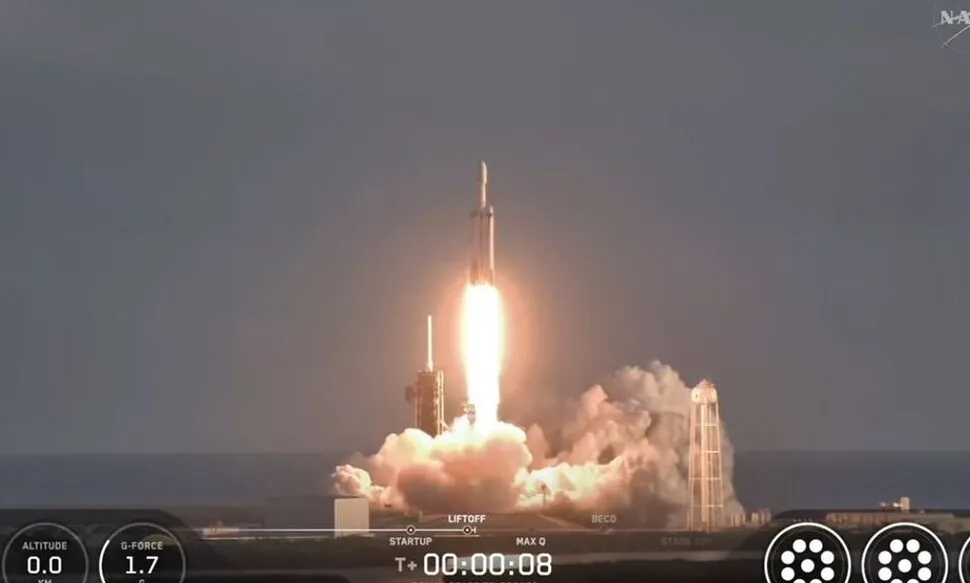
NASA’s Nancy Grace Roman Space Telescope lifted off from Florida aboard a Falcon Heavy rocket on May 30, and most English-language coverage so far has treated it as a nice-to-have successor to Hubble. That undersells what is actually happening. Roman is not a smaller, better Hubble. It is a different instrument designed for a different kind of astronomy — one that trades detail for scope and aims to produce a map of the observable universe rather than a portrait of any single object in it.
The telescope carries a 2.4-meter primary mirror, the same size as Hubble’s. What changes is everything around it. Roman’s Wide Field Instrument stitches together 18 large infrared detectors into a single 300-megapixel sensor. The result is a field of view roughly 100 times wider than Hubble’s — wider than the full moon. Where Hubble stares at a patch of sky and builds up an image pixel by pixel over hours or days, Roman can capture an entire region in a single exposure.
Julie McEnery, Roman’s project scientist, put it plainly: Hubble observations that would take a century, Roman will complete in a month.
The Real Story Is the Data Flood
The most consequential number about Roman is not the launch date or the telescope diameter. It is the data production rate: more than one terabyte per day. Over its baseline five-year mission, Roman will deliver roughly 500 terabytes. After processing, the final archive is projected to reach about 20,000 terabytes. For context, Hubble has collected approximately 400 terabytes across 35 years of operation. Roman will exceed that volume in its first year alone.
This matters because the bottleneck in modern astronomy is shifting from observation to computation. The instruments are no longer the constraint — the people who can make sense of petabyte-scale surveys are. Roman’s architecture assumes this reality. Every observation will be made publicly available for download. The telescope was designed from the start to serve a community of users, not a small consortium of investigators.
That design choice has winners and losers. Universities with strong data-science programs will move faster. Smaller institutions and individual researchers without computational infrastructure may fall behind. The democratization NASA promises is real, but only for those who can handle the volume.
Dark Energy, Dark Matter, and the Universe’s Missing Mass
Roman’s primary science goals target the two invisible components that dominate the cosmos. Astronomers estimate that dark energy accounts for roughly 70 percent of the universe’s total energy budget, dark matter about 25 percent, and ordinary matter — everything we can see — the remaining 5 percent. Roman will not see either component directly. It will infer their properties through indirect signatures.
Dark matter maps will come from weak gravitational lensing: the subtle distortion of light from distant galaxies as it passes through foreground matter distributions. By measuring these distortions across billions of galaxies, Roman will produce a three-dimensional map of dark matter’s web-like structure and track how it has evolved over cosmic time. Any deviation from current models of dark matter clustering will show up here.
Dark energy measurements rely on supernovae. Roman will use a coronagraph — a tool that blocks the light of a bright star to reveal nearby faint objects — to detect Type Ia supernovae across vast distances. These exploding stars serve as standard candles, markers whose intrinsic brightness lets astronomers measure cosmic distances. By comparing distances to redshifts, Roman will tighten constraints on how the universe’s expansion has accelerated over time. Whether that acceleration is driven by a cosmological constant, a dynamic field, or something else entirely remains undecided. Roman will not settle it alone, but it will narrow the possibilities significantly.
The Exoplanet Revolution Is Coming in Two Forms
Roman is expected to discover more than 100,000 exoplanets. To put that in perspective, fewer than 6,000 exoplanets have been confirmed to date. The jump is not incremental — it is an order of magnitude.
Most of those discoveries will come from Roman’s microlensing survey. Gravitational microlensing detects planets by measuring the temporary brightening of a background star when a foreground star and its planets pass in front of it. The technique is uniquely sensitive to planets at large orbital distances and to planets that do not orbit any star — so-called rogue planets. Microlensing is also the only method capable of finding Earth-mass planets at distances comparable to Jupiter’s orbit around the Sun, a region other techniques struggle to probe.
The coronagraph, meanwhile, will enable direct imaging. By blocking starlight a hundred million times over, Roman can see the planets themselves and perform spectroscopy on their atmospheres. This is the same technique that ground-based observatories like the Keck and the upcoming Extremely Large Telescope are pursuing, but Roman will operate above the atmosphere and from a vantage point free from terrestrial interference. The atmospheric data — potential signatures of water, methane, carbon dioxide — will be a first for directly imaged worlds.
Both approaches complement each other. Microlensing finds the majority and reveals population statistics. Direct imaging finds the rare, bright, wide-orbit planets and opens the door to atmospheric characterization. Together they will transform exoplanet science from a field of individual detections into a statistical discipline.
A Spy Satellite That Became a Science Instrument
Roman has an unusual origin. It was originally conceived in the early 2000s as a next-generation reconnaissance satellite for the U.S. National Reconnaissance Office, developed after the September 11 attacks. When the NRO canceled the project in the mid-2000s, NASA revived it in 2010 as the Wide Field Infrared Survey Telescope, or WFIRST. The mission was renamed in 2020 to honor Nancy Grace Roman, NASA’s first chief of astronomy and the person who championed the Hubble Space Telescope from its earliest planning stages.
The dual lineage matters. The coronagraph technology, for instance, has roots in both astronomical and defense applications. The high-stability optics and precision pointing required for a space-based coronagraph are not trivial engineering challenges. Roman’s heritage includes technology developed for surveillance, which likely contributed to the instrument’s ability to achieve the contrast ratios needed for direct exoplanet imaging.
Why Korea Was First to Cover This
The Korean press led the initial response to Roman’s launch. The Hankyoreh article that prompted this piece arrived in English desks hours before NASA’s own press materials were fully translated and distributed. That sequencing is worth noting. South Korea’s Korea Astronomy and Space Science Institute has researchers — including Moon Hong-gyu, who studies small solar system bodies — who are already planning Roman observations. Korean participation in the mission is not symbolic. It is operational.
Roman’s wide-field infrared capability is particularly suited to discovering and characterizing small, dark objects in the solar system — Kuiper Belt objects, Trojans, and other populations that are difficult to detect from Earth. Moon Hong-gyu’s expectation that Roman will open new research areas for solar system science reflects a broader trend: missions designed for cosmology routinely deliver planetary science as a byproduct, and the more versatile the instrument, the more byproducts it produces.
Who Wins, Who Loses, and What Happens Next
Roman will win over surveys. Any research question that benefits from large, uniform, multi-epoch datasets — galaxy evolution, stellar populations, variable objects, transient phenomena — will gain a decisive advantage. Time-domain astronomy, in particular, will flourish. The same patch of sky observed repeatedly over years reveals things that a single snapshot cannot: moving objects, pulsating stars, erupting systems.
The losers are narrower. Traditional deep-field programs that depend on long exposures of tiny sky areas will find themselves competing for limited Hubble and James Webb time for questions Roman can answer faster and across larger samples. This is not a competition for existence — Hubble and Webb have distinct capabilities — but it is a competition for relevance in areas where Roman’s breadth overlaps with their depth.
What happens next is a surge of proposals. Roman’s science team expects the first observed images in early 2026, after a month of transit and a 100-day commissioning period at the L2 Lagrange point. The survey will begin soon after. Within a year, the data deluge will start. The institutions and researchers best positioned to respond will be those with computational capacity, automated pipelines, and teams experienced in large-scale data analysis. The rest will be reading papers produced by those who are.
Roman’s launch is not just another telescope deployment. It is the start of an era in which astronomy moves from studying individual objects to mining entire datasets. The universe will not become more mysterious. It will become more visible.