Russia's Double-Tap Shopping Mall Strike Reveals a Cruel New Winter Strategy
The two-drone attack on a Kryvyi Rih shopping mall — one hitting civilians, the second targeting rescuers — is not an isolated atrocity. It is a template Russia is perfecting for its winter offensive against Ukraine's civilian infrastructure.
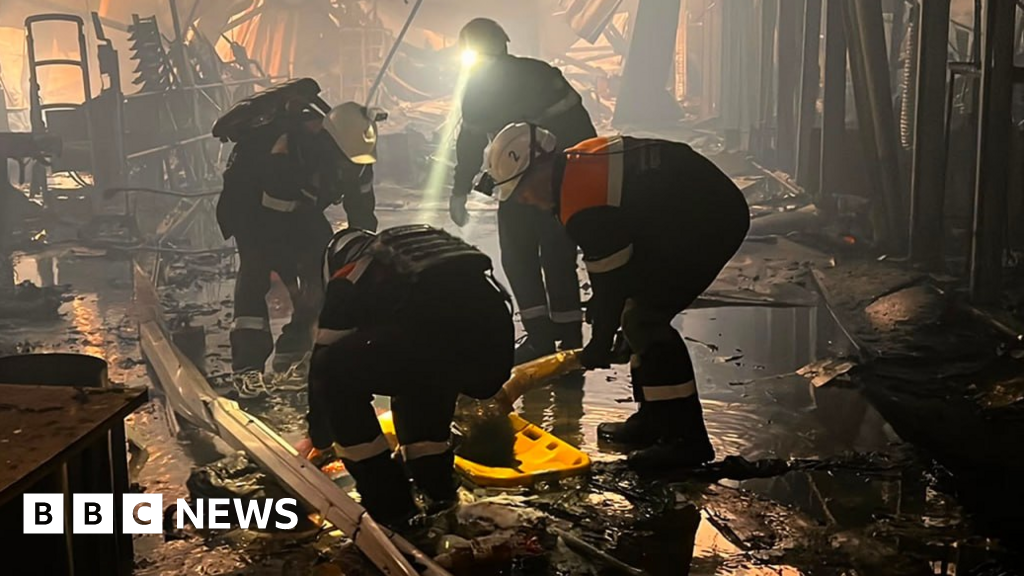
The second drone was the real weapon
Sixteen people were dead before the search teams finished pulling them from the rubble of a shopping centre in Kryvyi Rih. Thirteen more were wounded. Twelve children were among the injured. The footage, verified by the BBC, showed the sequence with terrible clarity: a Russian drone struck the busy mall on a Friday afternoon, and seconds later a second drone — aimed not at shoppers but at the emergency workers rushing inside — completed the job.
This is what military analysts call a double-tap strike. It is also, increasingly, Russia’s preferred method for punishing Ukrainian civilians through the winter. The technique demands coordination, timing, and a willingness to treat rescuers as combatants rather than protected persons. Both criteria are met with unsettling consistency in recent weeks.
The attack came just a day after a missile and drone barrage killed seventeen people in Kyiv. That pattern — a major civilian strike on a Thursday or Friday, another within twenty-four hours — suggests coordination at the highest levels of Russia’s operational planning. President Volodymyr Zelensky called it cynical and despicable. He is not wrong. But the language alone does not capture the mechanics of what is happening, nor the cumulative psychological toll of watching this rhythm repeat across an entire season.
A winter strategy built on exhaustion
Russia has been quietly reorienting its air campaign for months. Rather than concentrating on frontline positions, Moscow has shifted toward striking energy infrastructure, logistics hubs, and now — with growing boldness — places where civilians gather. Shopping malls, transport nodes, residential blocks. The goal is not territorial gain. It is to erode the sense that daily life in Ukraine remains survivable.
The double-tap technique makes that erosion intentional and precise. The first drone draws attention. The second targets the response. Rescuers, medics, firefighters, ordinary citizens helping their neighbours — all become secondary targets. The effect is to slow response times, to make people afraid to leave their homes, to transform every emergency call into a potential death sentence. Medical professionals report that trauma centres are already struggling to absorb surges in casualties while simultaneously maintaining routine services. Ambulance crews in central Ukraine describe working under conditions that border on untenable — multiple calls in a single shift, some resulting in mass-casualty incidents, others requiring transit through areas still at risk of a follow-up strike.
Ukraine’s air defences are not failing because they are inadequate in a general sense. The military reports a ninety per cent success rate against drones. The problem is concentration. The interceptors that work best — American-made Patriot missiles — are running low. Ukraine’s interception rate against ballistic missiles sits at roughly forty per cent, according to the defence ministry’s June figures. A double-tap strike exploits exactly that gap: the first drone may be intercepted, but while the defenders react, the second one arrives. Each Patriot battery that deploys to cover one threat leaves another sector exposed to a follow-up wave.
The geography of the target matters
Kryvyi Rih is not a frontline city. It sits in central Ukraine, roughly two hundred kilometres from the nearest active combat zone. It is a mining and industrial hub, and — crucially — Zelensky’s hometown. Striking it sends a message that no city is beyond reach. The fact that four people remain missing as rescue operations continue into a third day underscores the scale of devastation. Rescue teams from seven regions were dispatched. A fire covering nine thousand square metres had to be brought under control before search teams could even begin working the upper floors.
The cross-border dimension adds another layer. Overnight, Ukrainian drones struck an oil refinery in Russia’s Samara region and an Ozon warehouse — the second-largest online retailer in the country. Ukraine has intensified attacks on Russian energy facilities and Wildberries logistics hubs over recent months, arguing these sites finance the war. Russia has responded with strikes on civilian targets in the Krasnodar region, where two children were killed, and in Belgorod, where two more died and thirteen were injured. Each side is expanding the circle of who counts as a legitimate target.
Who wins, who loses
Moscow wins in the narrow sense: it has killed and wounded civilians, forced Ukraine to redirect scarce air defence resources, and generated headlines that dominate international news cycles. But the cost of this strategy is higher than it appears. Every double-tap strike strengthens the case for Western sanctions that have so far been incremental. Zelensky’s language — despicable, animals — marks a rhetorical escalation that reflects the genuine shock even hardened observers feel when the pattern becomes this visible.
Ukraine loses immediately in human terms. It loses further in material terms, as its already-thin interceptors are stretched across a widening set of threats. The loss is also structural: each attack on civilian infrastructure degrades the economy, displaces workers, and forces families into shelters during a season when heating and electricity are already compromised. Hospitals report that patients with chronic conditions — dialysis, respiratory illness, cardiac issues — are being discharged early or turned away because the facilities serving them have lost power. Schools are consolidating classes into fewer buildings, many of which lack adequate insulation as fuel shortages persist. The ripple effects extend well beyond the immediate blast radius.
The international community, for its part, loses credibility. The strikes follow a template that Washington and Brussels knew was coming. Yet nothing substantive has changed in the flow of air defence weaponry, and diplomatic debates over aid packages continue to drag. The double-tap tactic is not a surprise. It is an experiment in exhaustion, and the experiment is ongoing.
What comes next
The search in Kryvyi Rih may last another two days. Twenty-four hours of mourning have been declared across the Dnipropetrovsk region. But the operational pattern is likely to persist and intensify as winter deepens. Russia has shown it can coordinate multi-drone, multi-target strikes across dozens of Ukrainian cities in a single night. Ukraine’s ability to intercept every one of them depends on resupply speed and volume — and on whether Western partners treat the double-tap tactic as an emergency requiring urgent action rather than a familiar horror worth another parliamentary debate.
The attack on a shopping mall in a city that is not on the front line is not an anomaly. It is the strategy. And unless the architecture of Ukraine’s air defence is fundamentally reinforced before the deepest cold sets in, the next double-tap will not be an exception. It will be the rule.