Russia hits Poland — a calculated test of NATO
Russian missiles struck Polish territory on the eve of major NATO exercises, reigniting fears about Article 5 credibility and European deterrence. Here is what this escalation means for the alliance and the Ukraine war.
A Strike With Strings Attached
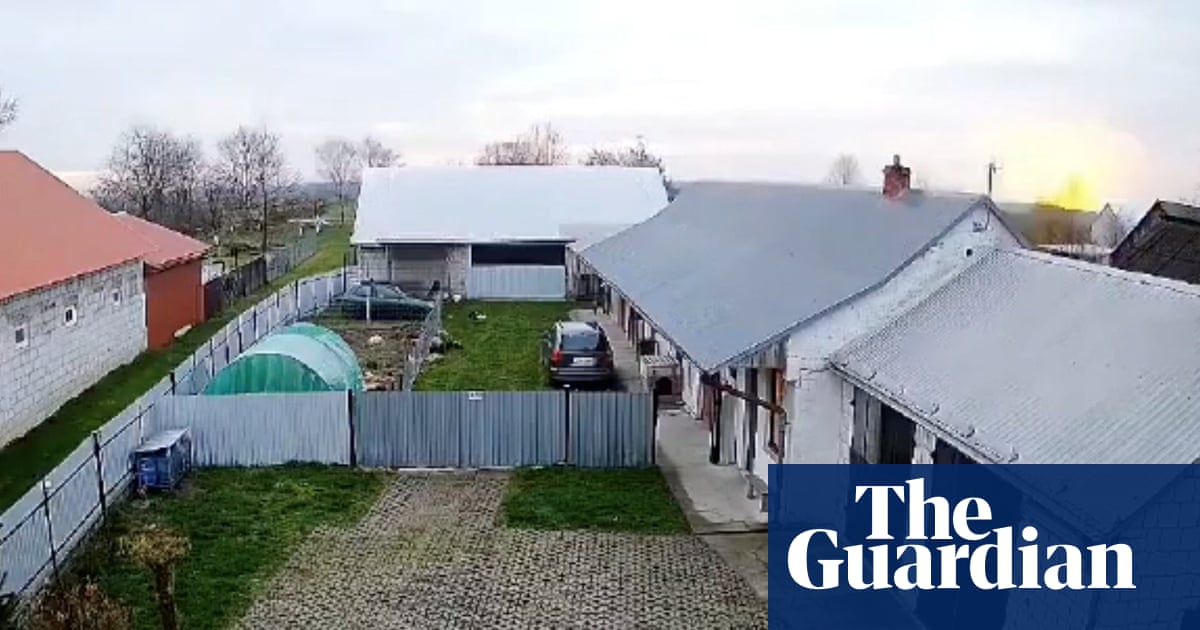
Russian cruise missiles and a jet-powered drone crossed into Polish airspace on November 19, 2026, landing in three villages in south-eastern Poland while eleven nations held major military exercises nearby. Poland’s defence minister confirmed three separate violations. No injuries were reported. The timing, however, was anything but careless.
The strikes came hours before large-scale exercises centred on Nowa Dęba — a town roughly 50 kilometres from the border with Ukraine. Polish Prime Minister Donald Tusk did not mince words. He called the incident “an intentional provocation.” NATO Secretary General Mark Rutte agreed, saying it “does not seem to be a coincidence.”
This is not the first time Russian ordnance has drifted across Polish soil. In July 2025, a Kh-101 missile fell in the Lublin region after straying off course during a nighttime barrage. In September of last year, more than twenty drones entered Polish airspace. And in November 2022, a Kh-55 missile cratered near Bydgoszcz, over 300 miles from Ukraine — buried and undiscovered until early 2023.
But those were incidents. What happened overnight on November 19 sits somewhere between incident and strategy.
The Scale of the Attack Was Designed to Be Noticed
Ukraine’s president, Volodymyr Zelenskyy, described the assault as one of the largest since Russia launched its full-scale invasion in 2022. At least eight people were killed and nearly thirty injured in Ukraine. Russia deployed seven bombers, fired 26 Kalibr cruise missiles, launched 72 Kh-101 missiles and released more than 500 drones across multiple Ukrainian cities targeting civilian infrastructure.
Air traffic control at Rzeszów-Jasionka airport — the primary transit hub for Western military aid flowing into Ukraine — was evacuated for the first time since the war began. Polish forces identified up to eleven objects posing threats to their airspace. Emergency meetings were summoned immediately.
The sheer volume of munitions used suggests Moscow wanted a result that could not be explained away as collateral damage from a single wayward missile. When you saturate the sky with seventy-plus cruise missiles and five hundred drones aimed at dozens of targets, some of them will land west of the border. That is mathematics, not misfortune.
The Real Question Is Not Whether It Was Accidental
Western officials and Polish leadership have already ruled out accident. The question now is what Moscow gains by making this look deliberate.
Zelenskyy offered one reading: that Putin is compensating for military and diplomatic impotence with terror attacks after failed meetings with Donald Trump and Xi Jinping. According to the Ukrainian president, Russia lost the chance to redraw the world order at those talks and chose instead to make noise.
That interpretation fits a pattern. Russia has grown increasingly unpredictable in its messaging and operationally constrained on the battlefield. Strategic ambiguity can mask weakness — or it can be used to probe alliances for fractures.
The second reading is more dangerous: that Russia is testing Article 5’s responsiveness by creating a situation where NATO must decide whether an airspace violation warrants collective defense action — or whether it should be treated as an unfortunate consequence of a distant war.
Article 5 has never been invoked in response to an accidental incursion. Its credibility depends on allies knowing that a deliberate attack on member territory triggers an immediate, unified response. Russia may be calculating that NATO hesitates when the line between accident and intent is blurry.
Exercises Were the Backdrop, Not the Target
The multinational drills in southern Poland involved troops from eleven countries, including the United Kingdom. Defence Secretary Wes Streeting attended in person and called the incursion “very serious,” noting that “the impact of Russia’s illegal war is being felt across Ukraine and increasingly in neighbouring countries.”
Russia could have chosen any moment for this strike. Instead, it picked the night before a high-visibility demonstration of NATO cohesion.
There are plausible explanations. The exercises generated electronic emissions, movement patterns and communications traffic that might have complicated Russian targeting or provided cover for probing sorties. Or perhaps the timing was simply psychological — a message to allies gathering on Polish soil that their presence does not guarantee their safety.
What matters is how NATO responds. If the alliance treats the violations as isolated incidents requiring vigilance rather than aggression demanding a strategic reply, Russia will know the difference and act accordingly next time.
Why This Changes the Conversation About Ukraine
Poland has long argued for a stronger voice in decisions about Ukraine’s future. Tusk stated plainly that Warsaw has “a better understanding” of the threat posed by Russia. The incidents of November 19 will only strengthen that position within NATO councils.
Ukraine’s foreign minister, Andrii Sybiha, framed the violations as proof that Russian aggression threatens the entire transatlantic community. He noted the contradiction between Moscow’s calls for a “new security architecture of Europe” and its continued bombardment of civilian targets and violation of sovereign airspace. The first step toward strengthening European security, Sybiha said, would be ceasing these attacks.
That framing carries weight beyond Eastern Europe. Germany and France are watching. So is Turkey. Every violation of Polish airspace adds evidence to the argument that containment alone is insufficient and that Russia views the post-Cold War security order as negotiable by force.
What Comes Next
Several outcomes are possible.
NATO may increase the tempo of its eastern flank deployments, station additional air policing assets in Poland and accelerate pre-positioned equipment stockpiles. This is the most likely response and the one most consistent with past behavior after previous incidents.
Alternatively, the alliance could treat the event as confirmation that Russia’s willingness to escalate beyond Ukraine’s borders is rising — and adjust its force posture accordingly, possibly integrating Polish territory more fully into forward defense planning rather than relying on reaction after violations occur.
A third possibility, less likely but strategically significant, is that NATO issues a formal statement clarifying what threshold of violation constitutes an Article 5 trigger. Some analysts have argued that such clarification would itself strengthen deterrence by removing ambiguity. Others warn it hands Moscow a checklist of lines it can test deliberately.
What is clear is that the gap between rhetoric and reality in European security just narrowed. Russia showed it can project force onto NATO territory during active alliance exercises. Poland showed it expects no special treatment. And the rest of the alliance faces a choice between managing drift and confronting escalation head-on.
The missiles landed in three Polish villages. The consequences will reach far beyond them.