Russia Probes NATO With Missiles in Poland — Testing Red Lines
Russian missiles struck Polish territory during large-scale NATO exercises, raising urgent questions about whether Moscow is testing the alliance's deterrence or merely conducting careless targeting. The incident could reshape Europe's defense posture.
The Missile That Broke Silence
Two Russian missiles and a suspected jet-powered drone came down on Polish soil last Friday, right in the middle of a major European military exercise. No one was hurt. Nothing caught fire. But the political aftershocks are already rippling across capitals from Brussels to Washington.
This is the sharpest test yet of whether NATO’s eastern flank holds together when pressed — not by tanks rolling over borders, but by munitions crossing them in ambiguity.
What Happened
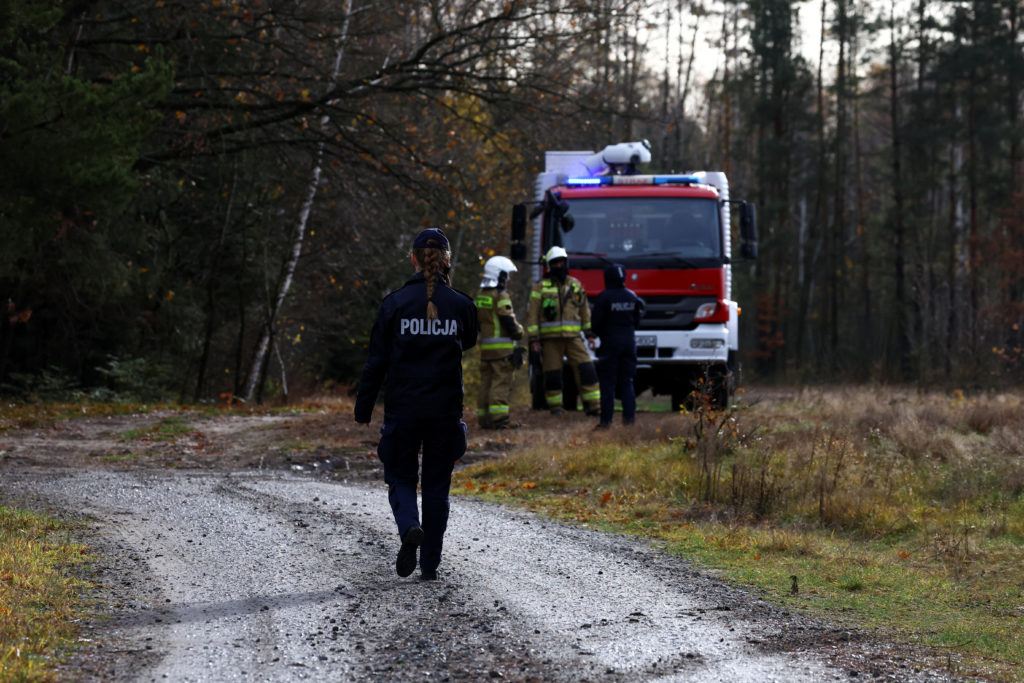
According to Polish officials, the strikes occurred roughly 30 to 50 kilometers from the Ukrainian border, within the zone where European forces had been training since November 9 for a possible postwar stabilization mission in Ukraine. One Kh-101 cruise missile reportedly crashed near the exercise area; another fell closer to the border. A third object — believed to be a drone — landed somewhere in between.
Images circulated by Poland’s PAP news agency showed bright flashes and loud explosions in wooded terrain. There were no immediate reports of damage or injuries, which makes this incident both less deadly and more dangerous than it sounds.
Tusk Reads It as Intent
Polish Prime Minister Donald Tusk did not mince words. He called it “an intentional provocation” — deliberately timed, he suggested, to coincide with the exercises and to send a message to the very countries gathering on his soil.
That framing matters. If Warsaw treats this as purposeful, then NATO’s response must reflect that assessment, even without proof of deliberate targeting. The alternative — treating it as negligence — rewards Moscow with plausible deniability and trains adversaries to push harder next time.
Tusk has been among the most forceful European voices supporting Ukraine throughout the war. His government has consistently argued that appeasing Russia only emboldens it. This incident will harden that position further.
The Exercise Was Already Political
The drills taking place in southeastern Poland weren’t just troop movements. They were preparation for something far more consequential: a possible postwar peacekeeping or stabilization force in Ukraine. European leaders have discussed deploying troops to help rebuild Kyiv’s security architecture once fighting stops.
Putin made clear last week that he views any such deployment as a red line. Russian forces would treat those troops as legitimate targets, he said. The Polish strikes, if timed intentionally, read as a preview of that threat.
NATO’s Language Is Carefully Measured
Secretary-General Mark Rutte called it a “grave violation” of Polish airspace — strong language, but carefully chosen. He did not invoke Article 5. He did not call it an act of war.
That distinction is not accidental. Article 5 is triggered by consensus of all member states, not by a single secretary-general’s declaration. And NATO members may well disagree on whether a missile stray into a forest constitutes an armed attack under the treaty.
Rutte is expected to visit Poland over the weekend, signaling the alliance takes this seriously. But serious and responsive are different things. NATO still faces the internal challenge of aligning 32 capitals on what counts as aggression against one of their own.
Washington’s Peace Push Meets Reality
The timing intensifies an awkward problem for the United States. President Donald Trump met recently in China with Vladimir Putin and Xi Jinping, according to his envoy Steve Witkoff, seeking to revive stalled negotiations. Jared Kushner told European leaders that Washington believes Russia is now “comfortable” with NATO-like security guarantees for a postwar Ukraine — a significant shift in posture, if true.
But Russia’s Deputy Foreign Minister Sergei Ryabkov dismissed the notion immediately, calling even quasi-membership for Ukraine unacceptable. Meanwhile, Russian missiles are striking inside NATO territory during allied exercises. The gap between diplomatic signals and battlefield behavior is widening, not narrowing.
Who Wins, Who Loses
If Moscow intended this as provocation, it achieves several aims at low cost. It tests whether NATO will overreact and destabilize the region further, or underreact and reveal hesitation. It reminds every European capital that the war is not contained. It complicates the political environment for any peace deal the U.S. might broker.
If it was unintentional — a guidance error, a navigational fault, a badly aimed strike — then the consequence is arguably worse for deterrence. Accidents in contested airspace are exactly how wars start. British defense intelligence acknowledged Friday that while Russia does not appear to seek war with NATO, miscalculation remains the greatest danger.
Either way, the incident exposes a vulnerability NATO has spent years acknowledging but never fully closed: the blurry line between defensive posture and provocative presence on the eastern flank.
What Happens Next
Poland is likely to accelerate its own military spending and deepen cooperation with U.S. forces stationed there. Several European capitals have already issued condemnations — Britain called it “utterly unacceptable,” Germany labeled it another provocation — but declarations alone do not change the calculus.
Ukraine’s president confirmed overnight strikes killed at least eight civilians and wounded more than two dozen, with Russia firing over 400 drones and 110 missiles, including ballistic variants with cluster warheads. Power outages spread to 11 regions as Russia continues its campaign against Ukraine’s energy infrastructure ahead of winter.
The question now is whether NATO translates indignation into action — expanded air policing, faster weapons deliveries to Poland, or a formal Article 4 consultation that forces allies to publicly reaffirm collective defense commitments. Symbolic steps matter less now than visible ones.
Five years into the war, Russia has learned that NATO responds with words before steel. The lesson Ukraine’s allies need to learn is the reverse: that restraint in the face of border crossings is itself a signal, and Moscow reads it fluently.