Russia Tests NATO's Eastern Flank, One Centimetre at a Time
A Russian helicopter dipped 300 metres into Polish airspace for 42 seconds. Poland scrambled jets. What happened next is not the point — the point is that this is becoming routine, and it is deliberately calibrated to stay just below the threshold that triggers a full NATO response.
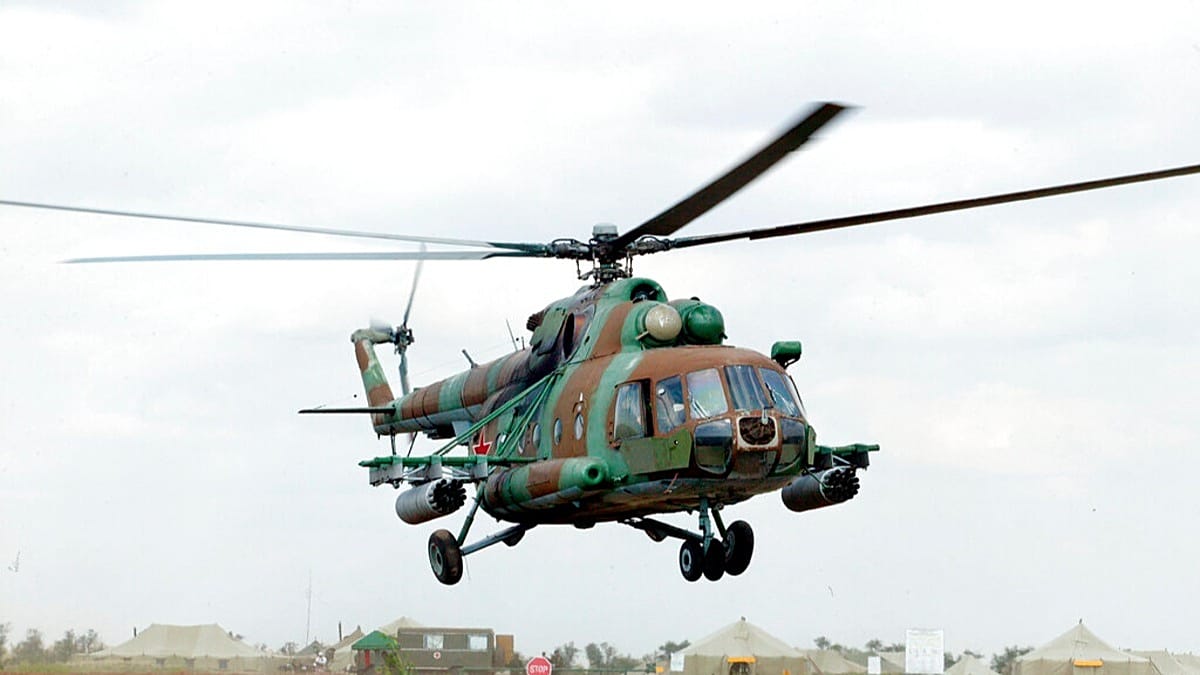
300 Metres, 42 Seconds
The numbers are deliberately small.
A Russian Mi-8 helicopter crossed the Polish border by approximately 300 metres on Wednesday morning, hovered inside Polish airspace for 42 seconds, then turned back toward Russia’s Kaliningrad Oblast. Polish F-16s scrambled. Radar tracked the aircraft continuously. No shots were fired. No one was hurt.
The military’s own assessment, released the same day, said the most likely explanation was a probe of Polish air-defence readiness.
That understatement deserves scrutiny.
The Math Behind the Provocation
Moscow appears to have calculated precisely how far it could go without triggering Article 5. Three hundred metres of airspace — roughly the length of three football fields — is enough to register on Polish radar, justify scrambling fighters, generate a press briefing, and produce a stern diplomatic note. It is not enough to constitute a clear act of armed aggression against a NATO member, which is the legal threshold for a collective-defence response.
That gap between “infringement” and “attack” is where Russia is operating now. And it is widening deliberately.
The Polish military reported a 250 percent increase in interceptions of Russian aircraft along the NATO eastern flank in recent weeks. That is not a trend. That is a campaign. Wednesday’s helicopter incident followed Tuesday’s interception of a Russian Il-20 reconnaissance aircraft, roughly 40 kilometres off the Polish coast. It came days after a Russian Gerbera-2 drone was recovered from a beach in West Pomerania. It coincided with repeated alerts in eastern Poland triggered by Russian strikes deeper into Ukraine.
Each incident is different in form. Each follows the same logic: test, measure the reaction, adjust, repeat.
Who Wins. Who Loses.
Russia wins in three ways that matter.
First, it gathers intelligence on response times. Every scramble reveals how quickly Polish radars lock onto a target, how fast F-16s reach intercept altitude, how long ground-commanders take to decide whether to escalate. That data has military value far beyond the 300 metres of airspace breached.
Second, it normalises the unacceptable. When airspace violations happen weekly and produce no structural consequences, they become background noise. Fatigue sets in at the political level. Media cycles move on. The cost of each subsequent provocation rises for Poland and NATO but falls for Russia, which has already absorbed the earlier ones.
Third, it keeps allies uncertain. Article 5 has never been tested by an external attack on land, sea, or air. It has never been invoked for anything short of a 9/11-scale assault. A helicopter dipping 300 metres into Poland creates exactly the kind of ambiguity Moscow wants — enough to alarm capitals, not enough to unify them.
Poland loses credibility at home if it responds disproportionately and risks starting a war it did not face. It loses credibility abroad if it under-reacts and signals that the eastern flank can be pressed without cost. Both traps are deliberate.
The NATO Threshold Problem
The alliance’s eastern flank faces a structural dilemma that no amount of additional troop deployments fully resolves.
Article 5 requires consensus. Twenty-six members must agree that an armed attack has occurred. A single dissenting voice can block it. Even without a veto, the political calibration is treacherous: respond too soft and deterrence looks hollow; respond too hard and a probing mission becomes a casus belli.
The United States, Germany, and France have invested heavily in forward presence since 2022. But forward deployment is designed for conventional invasion scenarios, not for hourly tests of nerve. A dozen squadrons of F-35s cannot easily answer the question: what happens when a Russian drone drifts across the border again next Tuesday, and the next, and the next?
NATO’s current posture assumes the red line is clear. Russia is proving it is not.
What Changes Next
Polish Defence Minister Władysław Kosiniak-Kamysz announced in early September that airspace protection would be expanded. That is the correct immediate response, but it addresses symptoms rather than the strategy behind them.
Three longer-term moves are likely.
First, Poland will probably push NATO to adopt a formal policy on repeated minor airspace violations — clarifying in advance what cumulative threshold, if any, triggers Article 4 consultations or Article 5 consideration. Ambiguity benefits the provoker; clarity does not.
Second, Poland will almost certainly accelerate its air-defence modernisation. The current mix of Patriot batteries, NASAMS systems, and F-16s is robust but was designed for high-altitude, high-speed threats. A slow-moving helicopter at low altitude requires a different kill chain, and Warsaw knows it.
Third, and most quietly, NATO may begin treating repeated violations as a single continuing act rather than isolated incidents. That shift in legal framing would change everything about how the alliance responds — and how Russia calculates risk.
The Real Test
Wednesday’s 42 seconds did not change the war in Ukraine. It will not trigger a NATO emergency summit. It will not produce sanctions.
But it confirmed a pattern that some analysts have warned about for months: Russia is no longer confined to the Ukrainian battlefield. It is actively testing the political and military cohesion of NATO’s eastern flank, one shallow penetration at a time.
The question is not whether Poland can intercept another helicopter. The question is whether the alliance has a strategy for a war that does not announce itself with tanks rolling across a border, but with drones drifting over beaches and helicopters dipping 300 metres past a line on a map.
Moscow is betting that NATO has no answer for that. Wednesday was only the latest rehearsal.