Russia Escalates Ukraine Strikes After Zelensky Refinery Vow
Moscow is ramping up attacks on Kyiv in direct response to Zelensky's pledge to intensify strikes on Russian refineries — a dangerous feedback loop that could redefine Western arms policy.
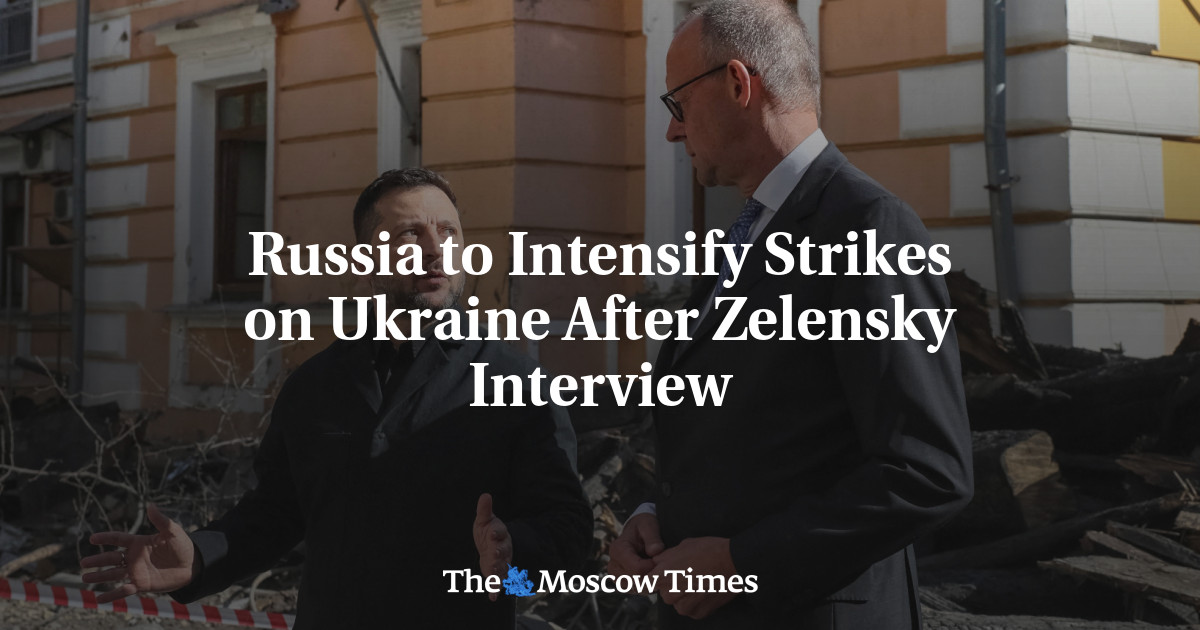
The Feedback Loop Has Started
Russia’s Defense Ministry announced on Sunday that it would intensify strikes on Kyiv and other Ukrainian cities. The trigger was bluntly straightforward: an interview with President Volodymyr Zelensky published the day before by Reuters, in which he vowed Ukraine would double down on attacks against Russian oil refineries.
This is not a coincidental timing. It is a deliberate message. Moscow is signaling that every Ukrainian escalation will be met with something worse — and it is targeting the capital specifically to make the point land.
The Russian statement said forces would step up attacks on military facilities, defense industry sites, and related infrastructure in Kyiv and elsewhere. Kyiv has roughly three million residents. Winter is weeks away. Every bridge hit across the Dnipro river in recent days has already begun slicing through the daily lives of those civilians — power, heating, transport — even though Russian officials deny targeting civilians and Ukrainian officials say the same of them.
Both sides claim they do not aim at civilians. Both sides keep building the case that they must punish the other for doing exactly what they are being punished for doing.
What Zelensky Said and Why It Mattered
In the Reuters interview, Zelensky framed Ukraine’s refinery campaign as a defensive necessity. He said Moscow had adopted a new policy of airstrikes designed to force people to abandon Kyiv and other cities. Ukraine’s response, he said, was to strike back harder at the economic infrastructure that sustains the Russian war machine — the refineries that produce the fuel for missiles, drones, and tanks.
The interview was published on a Saturday. By Sunday, Moscow had already moved.
That speed is significant. It suggests the Russian decision-making chain is already calibrated to treat Ukrainian rhetoric as an immediate casus belli — not something to sit on, not something to interpret charitably. The message to Kyiv is that words have costs, and Ukraine is about to pay them.
But the interview also sent a message to Washington and European capitals. Zelensky is telling his Western partners that the dynamic has shifted. Ukraine is no longer absorbing strikes passively. It is pushing back against the economic veins of the Russian military apparatus. And it expects that pushback to continue — even escalate.
Who Wins and Who Loses
Russia wins tactically in the short term. Striking harder at Kyiv ahead of winter puts maximum pressure on Ukrainian morale and infrastructure at the most vulnerable moment of the year. If bridges stay down and heating stays interrupted, the political cost of continued resistance climbs inside Ukraine — and the political cost of continued support climbs inside Europe.
Ukraine wins strategically by making the refinery campaign real. Every barrel of refined product denied to the Russian military is a limitation on Moscow’s ability to sustain its strike tempo. But the cost of that strategy is being externalized onto Ukrainian cities right now.
The West is the ambiguous loser here. European defense industries are still scrambling to meet ammunition commitments. The United States has faced repeated congressional gridlock over Ukraine funding. Every Russian escalation that hits Kyiv harder makes it easier for skeptics in Washington and Brussels to argue that aid is sinking into a black hole. And every Ukrainian counter-strike on Russian refineries gives those skeptics a new line: why are we letting Ukraine target civilian-adjacent infrastructure inside Russia?
That question is not abstract. It is already being asked in capital capitals. The answer matters for whether the next tranche of weapons goes out this winter or waits until spring.
The Energy Front Is Now the Main Front
The refinery war is the quiet escalation that has not yet gotten the attention it deserves. Russia’s oil processing capacity has been degraded significantly over the past two years of Ukrainian drone strikes. The Kremlin has responded by redirecting refined products to the military and by accelerating import replacements through Kazakhstan and other Central Asian routes.
Zelensky’s vow to double down is an acknowledgment that partial degradation was not enough. Ukraine wants to push Russian refining output below the threshold needed to sustain both the war in Ukraine and domestic energy supply. That is a credible strategy on paper. It is also a strategy that guarantees Russian retaliation against Ukrainian urban infrastructure.
Energy markets have already absorbed some of this. Russian crude discounts have widened. European gas prices have stayed relatively contained. But if the refinery campaign intensifies and Russian output drops further, the recalibration could be sharper than anyone expects — especially if alternative supply chains prove thinner than planners assumed.
What Happens Next
The immediate trajectory is clear. Russia will strike harder. Ukraine will strike back. The cycle will accelerate until one side breaks or external actors intervene.
The more important question is whether Washington and Berlin see this escalation coming and adjust their calculus accordingly. If Ukraine is going to sustain a refinery campaign, it needs longer-range precision munitions, more air defense coverage for energy infrastructure, and a clearer political signal that the West will not pull back when the fighting gets uglier in Ukrainian cities.
If those signals do not come, the escalation cycle will run unchecked — and winter will arrive with Kyiv darker and colder than it was before.
The interview was not just messaging to Moscow. It was a test of messaging to the West. The strike counter-order from the Russian Defense Ministry was the answer Moscow gave. Now the real question is what Europe and America will say — and whether their words match the reality on the ground.
Because right now, they do not.