Samsung Challenges Hyundai in the Humanoid Robot Race — But Cost Will Decide Who Wins
Samsung is entering the humanoid robot market against Hyundai's Atlas, signaling a chaebol arms race that could reshape Korea's industrial future. But the real battleground isn't AI — it's the price of actuators.
The Humanoid Arms Race Has Begun
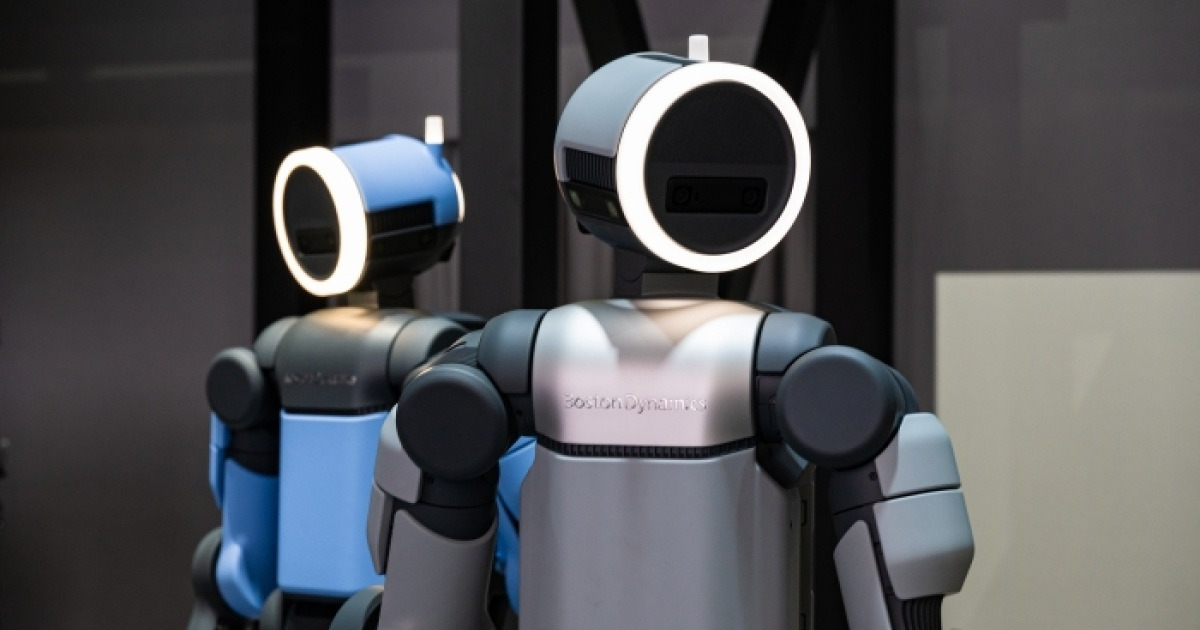
Samsung is no longer watching from the sidelines. After Hyundai kicked off the domestic humanoid robot race by showcasing Boston Dynamics’ Atlas at CES this year, Samsung announced plans to unveil its own humanoid robot next year. LG is not far behind, with a bipedal robot built on NVIDIA’s platform scheduled for a Q1 reveal. Three of Korea’s biggest conglomerates are now running the same race, all targeting 2028 for commercialization.
The convergence of timelines and ambitions is striking. Both Hyundai and Samsung plan to debut at CES and deploy in industrial settings first. Their schedules are so similar that competition is accelerating rather than diffusing. Every delay by one company becomes an opportunity for another to leapfrog ahead.
But the most important detail about this race isn’t the AI behind these robots. It’s something far less glamorous: how much each actuator costs.
Why Actuators Are the Real Battleground
An actuator is what turns electricity into motion — the mechanical equivalent of human muscle. Without it, a humanoid is just a shell. And actuators dominate the cost structure of any humanoid robot, accounting for 60 to 70 percent of total manufacturing expenses. Each robot requires dozens of them.
This is why the race for humanoid supremacy is really a race to drive actuator costs down through scale.
Hyundai is moving aggressively. Through its auto parts subsidiary Hyundai Mobis, the company is developing Atlas-specific actuators and has committed to building a manufacturing facility in the United States by 2028, capable of producing more than 350,000 units annually. That scale target is enormous — and it’s designed to squeeze per-unit costs through volume.
Samsung is taking a different path. In March, it established a Hand Lab under its Future Robot Promotion Team, focusing on miniaturized, precision actuators for robotic fingers. The approach suggests Samsung may be betting that dexterity — fine motor control — will matter as much as raw cost. That’s a nuanced strategy, but it also means Samsung hasn’t yet signaled the kind of mass-production commitment that Hyundai has laid out publicly.
LG sits somewhere in between, leveraging NVIDIA’s software and hardware ecosystem while keeping its own actuator development less visible.
The Stakes for Korea’s Industrial Future
Humanoid robots aren’t a sci-fi fantasy anymore. They represent the next wave of automation, extending beyond factory floors into everyday tasks that require human-like mobility and interaction. The software breakthroughs of the past few years — generative AI mastering language, vision, and reasoning — needed a physical body to act on that intelligence. Humanoid robots are that body.
For Korea, the implications go beyond corporate prestige. The country has long been a manufacturing powerhouse, but its growth model depends on staying ahead in automation as labor costs rise and demographics shrink. Whoever leads the humanoid robot market in Korea could reshape the entire industrial landscape — not just for Korean companies, but for global supply chains that depend on them.
The market size for industrial humanoid robots is still measured in the billions, but the trajectory is steep. IfSamsung, Hyundai, and LG can all bring viable products to market by 2028, the Korean ecosystem could become a major hub for humanoid robotics globally. But that’s a big if, and the bottleneck is clear: cost.
Who Wins When the Robots Arrive
The company that cracks actuator cost first will have a decisive edge. Not because its robots will be smarter — the AI layer is increasingly commoditized, with platforms like NVIDIA providing shared infrastructure — but because its robots will be affordable enough for enterprises to actually buy.
Hyundai has the advantage of scale and a clear production roadmap. Its 350,000-unit annual target is ambitious and could create real cost advantages if executed. But Hyundai is also betting heavily on a single actuator design for Atlas, which means it has less room to pivot if a different approach proves superior.
Samsung’s finger-level actuator focus could pay off in applications where dexterity matters more than brute strength — electronics assembly, healthcare, precision manufacturing. But that narrower focus may not translate into the kind of volume-driven cost reductions that define industrial markets.
LG occupies a curious middle ground. Its reliance on NVIDIA’s platform gives it a software head start, but it also means LG is dependent on a company that supplies every competitor in this race. NVIDIA’s own ambitions in robotics — including its acquisition of Hugging Face — suggest the platform provider may ultimately capture more value than any single robot manufacturer.
What Happens Next
The next 18 months will be critical. Samsung’s robot debut next year will set the tone. If it matches Hyundai’s capabilities while undercutting the cost, the competitive dynamics shift overnight. If it lags, Hyundai solidifies its first-mover advantage and the race becomes a two-horse contest again.
LG’s Q1 reveal will add pressure on both sides to move faster. A third major player entering the ring forces everyone to accelerate — and acceleration tends to expose weaknesses in cost structures and supply chains.
Beyond Korea, the world is watching. Japan, China, and the United States all have humanoid robot programs in progress. Korea’s three giants aren’t just competing against each other — they’re racing to establish a foothold in a market that could redefine industrial manufacturing worldwide.
The technology is impressive. But in this race, the winner won’t be the company with the smartest robot. It’ll be the one that makes the cheapest one.