Samsung's HBM Surge Tests SK Hynix Dominance and Reshapes AI Chip Politics
Samsung's HBM market share is closing the gap on rival SK Hynix, driven by faster adoption of next-generation memory chips. The shift signals a changing landscape in the AI supply chain, with global tech firms seeking alternatives amid geopolitical pressures.
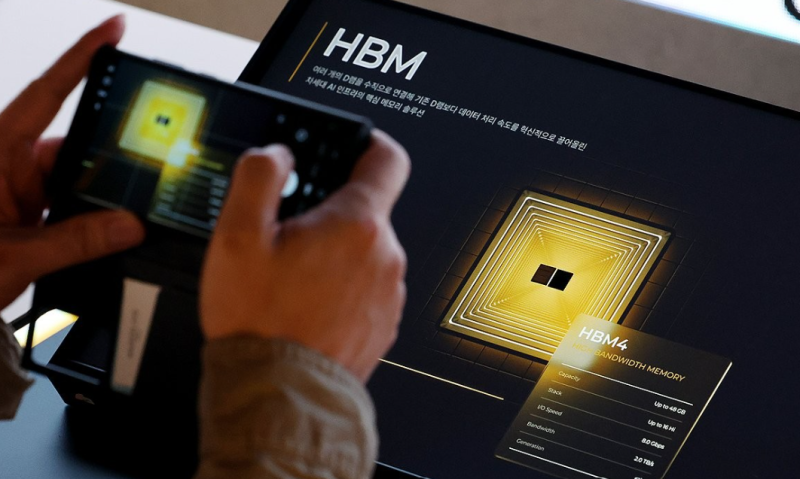
Samsung’s HBM Counterattack
The rivalry between Samsung Electronics and SK Hynix is no longer a one‑sided affair. In the high‑bandwidth memory (HBM) market—the critical component powering AI accelerators—Samsung’s share has surged while SK Hynix’s has slipped. According to Counterpoint Research, Samsung’s HBM market share climbed from 21% in the first quarter to 33% in the second quarter of 2026, a 12‑percentage‑point jump in a single quarter. Over the same period, SK Hynix’s share fell from 58% to 50%. A year earlier, the gap had been staggering: SK Hynix held 64% while Samsung languished at 15%. Now the divide has narrowed to 17 percentage points.
This reversal is not merely a statistical curiosity. It reflects a fundamental shift in a market that underpins the entire AI infrastructure buildout. NVIDIA, AMD, and custom‑chip designers from Microsoft to Google rely on HBM to feed their GPUs and TPUs. When one supplier gains traction, the entire supply chain recalibrates.
The Speed of HBM4 Adoption
The pivot point is HBM4, the sixth generation of high‑bandwidth memory. Counterpoint notes that most HBM revenue today still comes from HBM3E chips, but HBM4 shipments are expected to ramp through the second half of 2026. Samsung appears to have moved faster than its rival in transitioning to the new generation. Jung Woo‑sung, an analyst at LS Securities, observed that the share of sixth‑generation products in Samsung’s HBM shipments rose from roughly 5% in the first quarter to about 35% in the second quarter. That pace suggests Samsung has achieved relatively strong mass‑production yield on HBM4, whereas SK Hynix remains more reliant on the previous generation.
UBS analyst Nicholas Goedert went further, projecting that if current trends hold, Samsung could edge past SK Hynix in HBM bit shipments by 2027. Goedert’s forecast—based on unit volume rather than revenue—would see SK Hynix at 48% in 2026 dropping to 39% in 2027, while Samsung rises from 35% to 41%. Bit‑shipment figures emphasize total capacity supplied, a metric where Samsung’s manufacturing scale and rapid product refresh cycle give it an edge. Revenue‑based rankings, however, still favor SK Hynix because its customers often pay a premium for early‑generation HBM in high‑performance computing roles.
Who Wins, Who Loses?
For AI chipmakers, Samsung’s ascent is a double‑edged sword. On one hand, it introduces a second viable source for critical memory, reducing dependency on a single supplier and creating leverage in negotiations. On the other hand, the transition period is messy. HBM3E and HBM4 require different interface designs and qualification processes; qualifying a second source takes time and carries risk of performance variations. Companies that rushed to lock in SK Hynix’s output may find themselves renegotiating contracts as Samsung’s yield improves.
SK Hynix stands to lose the most in pure market share. Its partnership with NVIDIA—a cornerstone of its HBM business—remains intact, but the company’s dominance is eroding. If Samsung captures a larger slice of the AI memory market, SK Hynix’s pricing power weakens, and its ability to fund next‑generation R&D shrinks accordingly. The Korean duo’s shared destiny is now a competitive race rather than a coordinated duopoly.
Geopolitical Undercurrents
The Samsung–SK Hynix battle also plays out against the backdrop of U.S.–China technology tensions. American export controls restrict the sale of advanced AI chips to China, but they do not—and cannot—control memory production in South Korea. Yet Washington watches closely. A more diversified HBM supply reduces the risk that a single flashpoint in the Taiwan Strait or a dispute with Seoul could choke off AI hardware worldwide. For U.S. policymakers, Samsung’s catch‑up is quietly welcome: it reinforces the strategic value of a reliable, non‑Chinese partner and gives NVIDIA and other designers a fallback option that does not come with geopolitical baggage.
However, the narrative is not simply about reducing reliance on China. The real test is whether Samsung can sustain its momentum without sacrificing quality. HBM failure rates can be catastrophic for AI training runs; a single defective stack can waste weeks of compute time. Samsung’s rapid yield gains are impressive, but they remain under scrutiny from customers who have spent years validating SK Hynix’s chips. Every lost sale due to qualification delays is a missed opportunity.
What Happens Next
Counterpoint expects Samsung’s share to climb further as HBM4 volumes increase. UBS’s forecast of an overtake by 2027 hinges on continued execution. SK Hynix is not idle; it is investing heavily in its own HBM4 roadmap and in advanced packaging technologies to maintain its performance edge. The next 18 months will likely see a three‑way race that includes Micron, which currently holds about 18% of the market but has slipped from 21% in Q1.
For AI companies, the message is clear: supplier diversification is no longer optional. The era of single‑source memory dominance is ending. Firms that secure multi‑supplier agreements now will be better positioned to navigate the volatile transition between memory generations. Those that do not risk being caught between capacity constraints and price spikes.
The broader implication extends beyond corporate balance sheets. The HBM market is a microcosm of the global semiconductor landscape: fast‑moving, capital‑intensive, and deeply entangled with national security considerations. Samsung’s rise proves that a追赶 (catch‑up) strategy can work when executed with speed and precision. SK Hynix’s defense will determine whether the duopoly survives or fractures into a triopoly—with consequences for every AI startup, cloud provider, and government agency betting on the next generation of intelligent machines.