Saudi Arabia's €6 Billion Bet on Theme Parks Outside Paris
Riyadh is pouring €6 billion into three entertainment parks near Paris — including a manga-themed attraction — as part of a broader soft-power strategy that extends Saudi investment far beyond oil and the Middle East. The deal, sealed by Macron and MBS, is the biggest European entertainment real estate play from the Gulf yet.
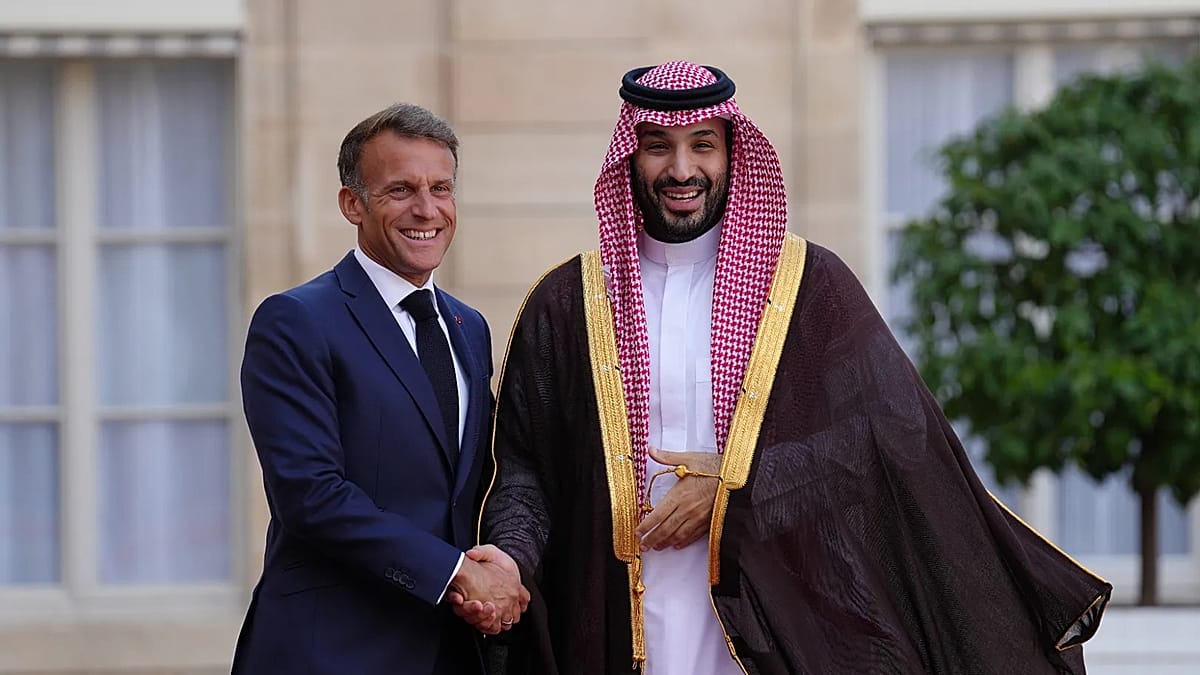
The deal that reframes the question
Saudi Arabia is putting €6 billion into three theme parks just outside Paris. That number should make anyone doing the math do a double take — it is a sum typically reserved for airports, railways, or entire new cities. Instead, it is going into amusement parks. The project, announced by President Emmanuel Macron alongside Crown Prince Mohammed bin Salman during a bilateral visit on 24 August 2026, will transform the former Mirapolis site in Cergy-Pontoise, northwest of the capital.
The most interesting detail is not the money. It is the lineup. According to the Élysée, one of the three parks will be themed around manga — the Japanese comic art form. A country that is still navigating a complicated relationship with cultural liberalism at home is building a cartoon fantasy park in suburban France.
That single fact tells you everything about what Riyadh is trying to do.
Soft power is not just about images
Saudi Arabia has spent the last five years trying to rebrand itself. Vision 2030 promised a country where gig concerts, cinema houses, and international sporting events are the norm. The stakes are existential. Oil revenues fund the state, and the world is slowly decarbonising. The kingdom has to build an economy before the money runs out.
But soft power requires more than domestic transformation. You also have to be present where the audience already is. Europe is the second-largest source of global tourism after Asia, and France is the most visited country on Earth. Putting three major entertainment destinations inside the Paris region puts Saudi capital literally at the doorstep of hundreds of millions of potential visitors each year.
Qiddiya, the investment firm leading the development, already operates Saudi Arabia’s largest entertainment and sports complex outside Riyadh. It includes a Formula 1 circuit, theme parks, and concert venues — all part of the same strategy. Building Qiddiya-style parks near Paris is not a departure from that model. It is an export of it.
Why a manga park?
The manga theme deserves attention. Japan and Saudi Arabia have been deepening cultural ties over the past several years. Riyadh signed agreements with Japanese animation studios and launched localised manga content platforms. The first Saudi comic convention took place in 2023. A manga-themed park in Cergy-Pontoise is a continuation of that line — aimed squarely at younger audiences who grow up with anime and manga across Europe.
It is also a subtle signal. France has a long tradition of embracing manga and anime culture, particularly among millennials and Gen Z. By anchoring one of the three parks in that genre, Riyadh is choosing the cultural language that resonates most with the demographic it needs to win over. This is not an accident.
The Mirapolis ghost
The choice of site matters. Mirapolis opened in 1988 as France’s answer to Disneyland. It failed within a decade, closed in 1997, and became a symbol of wasted investment. The land sat vacant for decades.
A €6 billion commitment to rebuild on that exact site says something about both the ambition and the political calculation. France needs visible, tangible projects that create jobs. Valérie Pécresse, president of the Île-de-France regional council, called the investment a response to a clear need: France is the world’s leading tourist destination, yet it was struggling to attract new major entertainment infrastructure. The regional government had been supporting the project for 18 months before the announcement.
This is not just Saudi money arriving. It is Saudi money arriving where local politicians have been waiting for it.
Who wins, who loses
The winners are clear. France gains an estimated 22,000 jobs, according to Macron. The Paris region gains a new international tourism pull. Saudi Arabia gains a permanent entertainment foothold in Western Europe and a platform to normalise its cultural presence among younger demographics. Qiddiya gains international credibility beyond the Gulf.
The losers are harder to identify immediately, which may be the point. There is no single European competitor that this displaces. It is not like a chip factory where you either win or lose. Entertainment real estate is additive — it creates new demand rather than capturing existing demand.
But there is a quiet cost to consider. The park sits on land that belonged to a failed French enterprise. The success of Mirapolis was undermined by mismanagement, not lack of interest. The difference now is that the investor is a sovereign wealth actor with billions to spend and a long time horizon. That changes the power dynamic in a way that local developers cannot easily match.
What happens next
The parks are still in the planning and negotiation phase. No construction start date has been announced. No detailed breakdown of the three parks exists beyond the manga theme. The timeline for completion remains unclear.
What is clear is the strategic direction. Saudi Arabia is no longer just building at home. It is exporting the Vision 2030 entertainment model to the places where the world’s consumers already live. The €6 billion figure is large enough to dominate headlines and small enough to be absorbed into the Paris metro area’s ongoing transformation. It is precisely the kind of investment that shifts perceptions without triggering political resistance.
For Europe, the lesson is straightforward. Sovereign wealth from the Gulf is no longer limited to football clubs, luxury real estate, and technology startups. It is moving into cultural and entertainment infrastructure — the kind of places that shape what entire generations of visitors grow up experiencing.
The manga park outside Paris is not just a theme park. It is a statement about where Saudi Arabia believes its future lies, and how far it is willing to reach to claim it.