Saudi Arabia's Oman Pipeline Reroute Exposes Fragile Oil Supply Chains
A pipeline attack and Houthi gains in Yemen are forcing Saudi Arabia to reroute crude through Oman — a sign that global oil supply chains have never been this brittle. The brunt of the pain will fall on the Global South.
The Pipeline That Wasn’t Supposed to Break Again
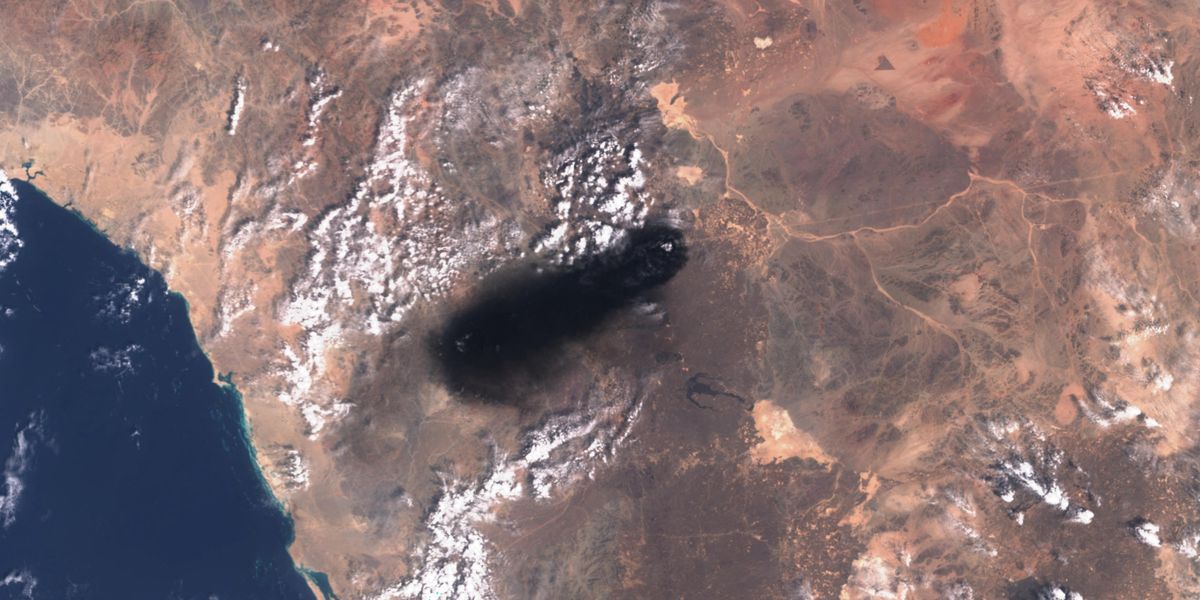
Saudi Arabia was quietly cancelling September crude shipments to European refiners this week. Some orders have been pushed into October. Others into November. It is not the kind of thing that makes headlines on its own — until you realize that one of the pipelines feeding those shipments was struck by drones from Iraq just days earlier, and Riyadh estimates it could take six weeks to restore full capacity.
The attack came on the East-West pipeline, which moves an estimated 4 to 5 million barrels a day from the interior to the Red Sea coast. Half that capacity may be back in a few days. Full restoration is another matter entirely, and it depends on there being no further attacks — a condition that currently seems wishful.
But the real story here is not the pipeline itself. It is what the scramble to keep oil flowing reveals about the state of global energy supply chains: they are thinner, more fragile, and more concentrated than at any point since the war began over six months ago.
Why the Buffer Is Gone
When the conflict first escalated, there were reasons markets felt relatively calm. Seaborne tanker storage absorbed the shock. The U.S. Strategic Petroleum Reserve released roughly 130 million barrels. Prices dipped. A sense of management returned.
That cushion is now largely depleted. The world’s largest oil importer, China, is pulling in 7.2 million barrels per day — up from a June low of 6 million, still well below the prewar pace of almost 12 million, but enough to tighten markets further. Seaborne storage is hollowed out. There is nowhere left to hide.
Benchmark Brent crude has bounced back above $105 a barrel, climbing from $80 as recently as August 4. The market has effectively erased much of the relief gained after the partial restoration of flows through the Strait of Hormuz, which carried roughly 20 percent of global oil supplies before the war.
The Oman Detour
With the East-West pipeline damaged and Houthi rebels now controlling the port of Mokha and offshore islands in the Bab al-Mandeb strait, Saudi Arabia has had to reroute significant volumes of crude through Oman’s Musandam corridor — a longer, costlier path that bypasses both the Red Sea and the damaged pipeline infrastructure.
This is not a marginal adjustment. It is a structural rerouting of one of the world’s most important energy arteries, and it carries implications far beyond Riyadh.
Asian buyers, already reoriented away from the Strait of Hormuz, now face further disruption. India receives 51 percent of its oil from Saudi Arabia’s Red Sea coast. The Philippines is at 37 percent. Pakistan at 36 percent. When that coast becomes harder to access — whether from pipeline damage or Houthi harassment of shipping — those countries have fewer alternatives and longer distances to cover.
The reroute through Oman is a stopgap. It confirms that the system has no spare capacity for this kind of repeated shock.
Diesel Is the Weapon
The price of refined products is moving faster than crude itself. Diesel in the United States has hit all-time highs above $6 a gallon. The spike reflects compounding disruptions: Russian refining capacity has been hammered by strikes from Ukraine, and seaborne refined product exports from Russia and the Middle East have fallen from roughly 8 million barrels daily to about 4 million since February 2026, according to Atlantic Council’s Ben Cahill.
Washington is already arguing over what to do. Senate Majority Leader John Thune floated a ban on diesel exports, though critics note that throttling demand at home could force refineries to run less — potentially pushing gasoline prices higher. Energy Secretary Chris Wright is pushing supply-side measures instead, but U.S. refineries are already running at 98 percent capacity. There is very little room to move.
American farmers are feeling the pressure directly, with some reporting diesel cost increases of up to $1,000 a day. With midterms approaching, this is a political time bomb. But the real explosion will not happen in Washington.
The Global South Pays the Bill
Diesel powers trucks, buses, and agricultural equipment — the backbone of transportation in countries where car ownership is low and public transit is unreliable. India consumes twice as much diesel as gasoline. In South Africa, diesel use has overtaken gasoline as railways have faltered and power outages have forced businesses and households onto private generators.
When diesel prices surge, these economies do not simply absorb the cost. They reprice everything. Food prices rise. Freight costs climb. Inflation follows. The impact is regressive by definition: the poorest households spend the largest share of their income on energy and transport.
Some households have found partial relief. The collapse in solar panel prices has let countries like Pakistan install distributed generation that reduces reliance on diesel generators for backup power. But solar cannot run a truck. It cannot power a bus fleet. It cannot replace diesel in agriculture or small manufacturing.
Leaders in the Global South are not mincing words about who is responsible. At the BRICS summit, Malaysian Prime Minister Anwar Ibrahim blamed the “initial aggression of the United States, initially of course with Israel” for the conflict — a framing that reflects a widening perception across the developing world that this war is an American choice with global consequences.
Fertilizer, Food, and the Coming Storm
The damage extends beyond fuel. The war in the Persian Gulf has disrupted fertilizer supply chains, particularly phosphate production, which depends on sulfur from the region. Egypt and Nigeria have increased urea output to partially offset the gap, but phosphate prices remain elevated, according to the Council on Foreign Relations’ Michael Werz.
The consequence could be sobering: farmers already skimping on phosphate for a second straight season may underinvest again, exacerbating food shortages in 2027. That threat arrives on top of what the World Food Program projected in early August as another potential crisis — almost 50 million more people pushed into acute hunger by what could be the strongest El Niño phenomenon on record.
In the United States, the administration has been pointing to insufficient competition as the cause of higher fertilizer prices. Economists disagree. The primary driver, they say, is a global supply shock emanating from the Persian Gulf — a direct link between the war and the cost of feeding the world.
What Comes Next
The rerouting of Saudi crude through Oman is a symptom of a system running without margin. Each new disruption — a pipeline strike, a port seized, a strait harassed — tests the next weakest link. There is no spare capacity. There is no strategic reserve left to draw on. The buffers that existed six months ago are gone.
For the Global South, the equation is stark: higher diesel prices, weaker food security, and fewer options. For the United States, the question is political rather than purely economic — how long can $6-a-gallon diesel and rising farm costs be managed before they reshape electoral outcomes?
And for Washington, the broader implication is uglier still. The absence of a coherent strategy in the Middle East — let alone a clear exit plan — is generating waves of destabilization that are now echoing through energy markets, food systems, and alliances worldwide. The war of choice continues to produce consequences that no single government planned for and few can contain.