Saudi FII Postponement Reveals MBS's Investment Dilemma
Saudi Arabia's potential FII conference delay exposes the gap between MBS's global branding ambitions and the reality of regional instability. What happens when the world's most aggressive investment summit meets its least predictable security environment?
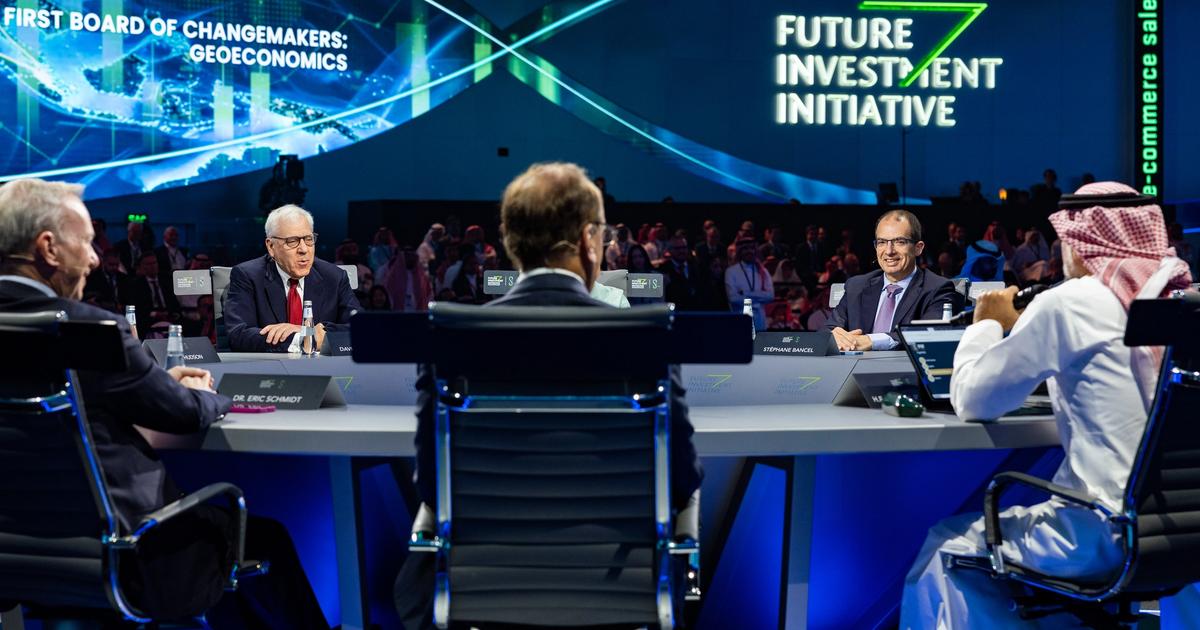
The Summit That Won’t Summit
Riyadh’s financial world normally fills the Ritz Carlton for the Financial Initiatives Forum. This year, the rooms are available for public booking.
That single detail tells the story better than any press release. Saudi Arabia is weighing whether to postpone its flagship investment conference after Wall Street executives began canceling meetings, triggered by Houthi attacks that have escalated throughout the region.
The dominoes are falling fast. Alongside the potential FII delay, an exhibition tennis tournament tied to Crown Prince Mohammed bin Salman, a charity event linked to the royal family, and Riyadh Fashion Week have all been postponed. The airport remains closed. The central business district has ordered tenants to work from home. Schools have shifted to remote learning.
What looks like a scheduling conflict is actually a stress test of Saudi Arabia’s entire investment proposition.
The Loyalty Test That Backfires
Saudi officials have long treated attendance at major events like FII as a loyalty metric. The message to global business leaders has been implicit but clear: show up during turbulent times, and you’ll be rewarded with access to sovereign wealth deals. Stay away, and you’re branded a fair-weather friend.
This logic assumed investors had no alternative but compliance. That assumption is cracking.
Wall Street executives aren’t skipping Riyadh out of ideological opposition to Vision 2030 or disdain for the kingdom’s social reforms. They’re following risk assessments. The U.S. State Department recommends against all but essential travel to Saudi Arabia. Most Western governments say the same. Insurance premiums for business travel to the region have spiked. Internal security teams at major firms are flagging the destination as high-risk.
When the world’s most powerful asset managers treat a Saudi invitation as optional, the kingdom’s coercive diplomacy loses its teeth.
A Safe Haven in an Unsafe Neighborhood
The irony cuts deep. Saudi Arabia and its Gulf neighbors have spent years marketing themselves as fortresses for capital — not just sources of investment but destinations where trillions in financial assets can park safely, where data centers can be built, where new industries can take root away from geopolitical volatility.
This positioning works until an event like FII forces the world to look at the actual security environment.
Houthi missile and drone attacks on Saudi infrastructure have exposed the gap between branding and reality. The kingdom wants to be seen as a business hub. But when the airport closes and executives are told to work from home, the narrative fractures.
The UAE and Qatar face the same challenge. Both have positioned themselves as regional alternatives to Saudi risk, offering superior logistics, better connectivity, and more predictable business environments. The question for Riyadh isn’t whether it can attract capital — it’s whether capital trusts Riyadh enough to visit.
The Bigger Play Beyond the Postponement
A delayed FII doesn’t end Saudi Arabia’s investment drive. It recalibrates it.
The kingdom isn’t going back to square one. Vision 2030 remains the guiding framework. NEOM continues to consume capital. The Public Investment Fund still deploys billions in targeted acquisitions. The difference is tactical: Saudi officials may shift from big, public, in-person summits to smaller, invite-only gatherings that prioritize deal flow over photo opportunities.
This approach actually makes sense. The era of spectacle-driven diplomacy is colliding with an era where physical presence is increasingly optional. Virtual participation options — already floated in recent weeks — could become the default for high-level investment conferences. Executives get access to Saudi ministers without booking flights through contested airspace.
The risk is reputational. Every postponement reinforces the image of a kingdom struggling to maintain normalcy. Every virtual-only event reinforces the perception that Saudi Arabia is too risky for face-to-face business.
Who Wins, Who Loses
For Saudi Arabia, the immediate loser is credibility. The kingdom spent a decade building an image of unstoppable momentum. Each cancellation chips away at that narrative. The longer FII stays postponed, the harder it becomes to convince global investors that Riyadh is ready for prime time.
For Gulf competitors, the winner is whoever captures the executives who would have flown to Riyadh. Dubai and Doha are positioning themselves as the logical alternatives — closer to Europe, better connected, equally wealthy, and significantly safer. The post-FII scramble will test whether those pitches land.
For Wall Street, the win is leverage. The ability to opt out of Saudi events without consequences signals a shift in power dynamics. Global financiers no longer need to prove loyalty through attendance. They can justify absence through risk assessments and insurance policies.
What Comes Next
The decision on FII postponement will reflect whether Saudi Arabia prioritizes symbolism over substance. Pushing forward with a half-empty conference signals desperation. Delaying indefinitely signals weakness. The sweet spot is extending the timeline, reducing the scale, and replacing spectacle with substance.
That approach requires accepting a new reality: Saudi Arabia can’t command global attention through force of personality alone. It needs to offer investment terms that justify the risk.
The kingdom’s branding ambitions outpace its security reality. Until those two forces align, the most important deals will happen quietly, behind closed doors, without cameras or tennis tournaments.
Vision 2030 isn’t dead. It’s just facing the messy intersection of ambition and geography.
The question isn’t whether Saudi Arabia will recover from this postponement. The question is whether it can rebuild credibility before the next crisis forces the same calculation.