What the JoongAng Ilbo Sale Means for Korean Media Freedom
A Dow Keyoom-CJ consortium has been named preferred bidder for JoongAng Ilbo, raising questions about chaebol consolidation of news media and editorial independence in Korea.
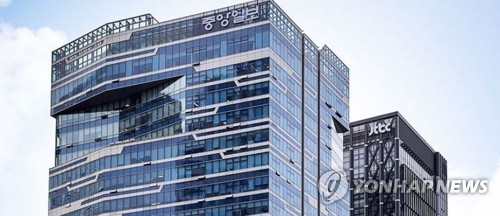
A Premium Price for a Paper in Trouble
Dow Keyoom and CJ have been selected as the preferred bidder for JoongAng Ilbo, Korea’s second-largest national newspaper, in a deal that signals a dramatic reshaping of the country’s media landscape. The consortium’s offer in the 5 billion won range exceeded the 3 billion to 4 billion won bids from five other suitors, including Orion, Global SEA, OK Financial Group, Eve Broadcasting, and Geumbso Development.
The sale comes roughly three months after JoongAng Ilbo entered a financial workout — a Korean restructuring process similar to Chapter 11 — after years of mounting debt and declining ad revenue. One Financial, the bank leading the ownership sale, evaluated the bidders on price, funding capability, debt-restructuring impact, and employment stability before naming the joint venture ahead of a formal auction.
The transaction will proceed through a third-party allocation of paid-in capital, meaning new shares issued to the buyer would inject funds directly into JoongAng Ilbo’s coffers rather than into existing shareholders’ pockets. That structure is designed to reduce leverage and pull the paper out of workout status. The target is completion by year end, contingent on a conditional share purchase agreement and approval from creditor committees.
Who Is Buying a Newsroom
Dow Keyoom had initially intended to bid alone. It pivoted to a consortium with CJ close to the cutoff — a move that likely boosted its financial credibility and helped justify the higher offer. CJ brings deep experience in entertainment, broadcasting, and content distribution through its CJ ENM and CJ O Shopping divisions. Dow Keyoom operates primarily in financial services and industrial materials. Neither company has a mainstream news operation, which makes the deal somewhat unusual compared to typical media acquisitions in other markets.
But the absence of an existing media arm may be exactly what worries analysts. In South Korea, major newspapers have long been viewed as extensions of the business groups that own them. The JoongAng Ilbo has historically aligned with conservative political currents and has faced criticism from press freedom advocates over past ownership disputes. A sale to a diversified chaebol consortium — one that already controls cable channels, production studios, and streaming platforms — could further concentrate editorial and commercial influence in a single corporate architecture.
Why the Premium Matters
The consortium’s 5 billion won bid represents a meaningful premium over competing offers and likely reflects a strategic calculation. In Korean media M&A, a higher price does not automatically translate into greater editorial independence. It can signal the opposite: a buyer confident that the acquisition will generate returns beyond newsroom influence.
CJ’s existing media footprint is the relevant datum. The group already controls CJ ENM, which operates cable channels, film production, and music streaming, as well as CJ O Shopping and various digital content businesses. Adding a national newspaper to that portfolio creates a vertically integrated media-and-content engine — rare in Korea’s current regulatory environment, where cross-ownership rules have historically limited the same family from controlling both broadcast and print. A consortium structure may sidestep some of those restrictions, since the two parent groups are technically separate corporate entities.
That is precisely why regulators and media watchdogs will be watching the post-deal structure closely. If CJ and Dow Keyoom use the consortium to gain effective editorial control over JoongAng Ilbo while keeping their ownership claims legally distinct, the transaction could become a blueprint for circumventing Korea’s media concentration rules.
The East Asian Context
The JoongAng Ilbo sale should not be read in isolation. Across East Asia, media ownership has been consolidating in ways that parallel economic restructuring. In Japan, major newspapers remain deeply tied to keiretsu financial networks, though direct chaebol-style ownership is less common. In China, state control over media outlets is absolute and unchanging. In Taiwan, media ownership debates have flared periodically over perceived commercial or political influence. South Korea occupies a middle ground — formally free press, but with a history of government pressure on outlets and a business culture where media ownership and corporate power have long overlapped.
What makes the Korean case distinctive is the scale and visibility of the remaining independent titles. JoongAng Ilbo, along with Chosun Ilbo and Dong-a Ilbo, forms what is often called the “conservative trilogy” of Korean newspapers. Each has faced periodic ownership turmoil, each has drawn criticism for editorial slant. The Chosun Ilbo has been owned by the same family for decades. The Dong-a Ilbo changed hands in a highly publicized dispute in 2015 that drew government scrutiny. JoongAng Ilbo’s workout and sale mark the latest installment in a recurring pattern: a major newspaper becomes financially fragile, and a business group steps in.
Who Wins, Who Loses
The creditors win if the deal lands at 5 billion won and the consortium can deliver on its restructuring promises. Employees win if job protections are preserved — a factor One Financial explicitly weighted in its evaluation. Dow Keyoom and CJ win by adding a prestigious national newspaper to their portfolios at a discount to its historical market value, with potential synergy gains across content distribution.
Journalists and readers lose the most if editorial independence erodes. There is no evidence yet that the consortium plans to alter JoongAng Ilbo’s editorial line. But the structural incentives are clear: a media company owned by a conglomerate that also controls entertainment and e-commerce platforms has every commercial reason to shape coverage in ways that protect or promote group-wide interests.
Regulators face a test. Korea’s Fair Trade Commission and the Ministry of Culture, Sports and Tourism will need to assess whether the consortium arrangement violates spirit if not the letter of cross-ownership rules. Civil society organizations will be urging the same scrutiny. In a region where press freedom indices have been sliding, a high-profile sale like this sets a tone.
What Happens Next
The immediate next step is the conditional share purchase agreement. After that, creditor committees must approve the restructuring terms, and the workout exit requires court and bank coordination. If all proceeds on schedule, JoongAng Ilbo could emerge from financial restructuring before the year ends — a fast turnaround that would underscore how quickly a media asset can change hands in Korea’s distressed M&A market.
The longer-term story is whether this deal accelerates a broader trend. If Dow Keyoom and CJ successfully integrate JoongAng Ilbo into a wider content and distribution strategy, other chaebol groups may see newspaper ownership as an attractive play — not merely as a prestige asset, but as a lever for shaping public discourse. The alternative scenario is that antitrust or regulatory pushback slows the process and raises the cost of entry, preserving a more fragmented ownership structure.
Either outcome will reverberate beyond South Korea. East Asia’s news audiences are among the most digitally engaged in the world, and the newspapers that shape their political conversation remain disproportionately influential. When a consortium led by a financial services group and a entertainment conglomerate buys a flagship newspaper, the question is not just who owns it — it is what that ownership tells us about the future of journalism in the region.