Saudi Pipeline Shutdown Could Trigger a Global Oil Catastrophe
Saudi Arabia's East-West pipeline is offline after a drone strike, and if the shutdown drags into a month, it could remove 120 million barrels from global supply at a moment when Iran has already blockaded the Strait of Hormuz. The window for preventing a catastrophic energy crisis is closing fast.
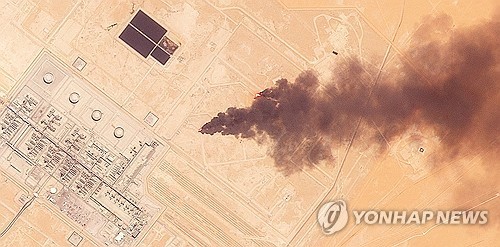
The Pipeline Problem No One Was Prepared For
Saudi Arabia’s East-West pipeline — the critical alternative route that keeps its oil moving when the Strait of Hormuz is threatened — has gone dark. A drone strike attributed to Iranian-backed militant positions in southern Iraq forced the shutdown on September 10. That date matters more than the damage itself. The pipe was not just another piece of infrastructure. It was the insurance policy.
Now that policy has evaporated.
According to analysis by maritime research firm Kepler cited by The New York Times, a full month-long shutdown of the pipeline would remove approximately 120 million barrels from global supply. That is roughly 4 percent of monthly worldwide consumption — a shock magnitude that most models of the current oil market simply do not price in. Goldman Sachs has warned that sustained military attacks in the Persian Gulf and Red Sea could push crude toward $120 a barrel. The market is now testing whether that scenario is already underway.
Two Chokepoints, One Crisis
The severity of this moment comes from the coincidence of two failures happening simultaneously. Iran has blockaded the Strait of Hormuz, through which roughly one-fifth of global oil transit traditionally flows. Under normal conditions, when Hormuz is disrupted, Saudi Arabia can divert production through the East-West pipeline to its Red Sea terminal at Yanbu, bypassing the strait entirely.
That bypass is now compromised. With both the sea route and the land route under active threat, Saudi Arabia’s ability to sustain export levels has narrowed dramatically. The window between a partial disruption and a full-scale supply collapse has effectively closed.
Amena Bakr, Kepler’s head of Middle East and OPEC analysis, described the situation bluntly: “With two major sea lanes blocked, Iran escalating attacks, and Iranian proxy forces actively moving, there are zero signs of diplomatic engagement.” From an energy security standpoint, she called it catastrophic. The word is not Hyperbole — it is the technical description of a market that has lost its redundancy.
Who Wins, Who Loses
The immediate winners of this disruption are limited and narrowly defined. Holding companies with crude inventory already offloaded at current prices see paper gains. Nations with strategic petroleum reserves — Japan, South Korea, China — gain leverage as import-dependent economies scramble for cargoes. But these are fleeting advantages in a crisis that threatens to rewrite the pricing architecture for oil itself.
The losers are far more broadly distributed. Import-dependent Asian economies, which already face inflationary pressure from supply chain fractures, now confront a second shock. Japan and South Korea, which depend on the Gulf for the overwhelming majority of their crude, face a direct vulnerability: their sea lines of communication pass through the exact waters now contested by Iranian forces and Houthi fighters. India, Turkey, and China face similar exposure, though Beijing has been quietly diversifying its sources through deals with Russia and Kazakhstan — a strategic hedge that may look prescient rather than cautious by next month.
The United States, despite becoming a net exporter in the past decade, is not immune. American refining capacity is optimized for specific crude grades, and a disruption of Arabian Light grades ripples through diesel and jet fuel markets domestically. The Federal Reserve’s inflation calculus just absorbed a variable it spent months trying to ignore.
The Deeper Strategic Shift
There is a secondary dimension to this crisis that English-language coverage has largely missed. Saudi Arabia’s reliance on Chinese-made missile systems for its air and missile defense has come under strain during the current escalation. Reports indicate the kingdom is operating below its required interceptor inventory for defending critical energy infrastructure, forcing it to draw on systems that were never designed for sustained high-intensity conflict against a decentralized adversary.
This reveals a structural vulnerability in the Gulf security architecture. The United States has long served as the security guarantor for Saudi Arabia and the wider Gulf, providing the missile defense layers and naval presence that make energy exports possible. But Washington’s willingness to extend that guarantee has become increasingly conditional — tied to political reforms, Yemen policy disagreements, and domestic priorities that shift with each election cycle. Riyadh’s turn toward Beijing for certain defense systems is not an ideological choice. It is a pragmatic admission that the American security umbrella has gaps, and the Houthis do not negotiate about which supplier’s technology shoots down their drones.
The implication is that Middle East security architecture is fragmenting along great-power lines. The Gulf states are no longer embedded in a single security system anchored by the United States. They are building parallel systems, and those systems are not interoperable. That fragmentation makes crisis management harder, because there is no single authority that can de-escalate or enforce cessation.
What Happens Next
The near-term trajectory depends on whether the pipeline repair — currently underway — holds or whether further attacks interrupt it. The Houthis have demonstrated an ability to strike Saudi territory with drones and missiles over multiple years, and this conflict has elevated their capabilities rather than diminished them. Every month the pipeline remains offline deepens the supply deficit. Every week without diplomacy makes escalation more likely.
The strategic reserve releases coordinated by the International Energy Agency may buy time, but reserves are finite. The market will move from anxiety to pricing fear within weeks if no diplomatic breakthrough emerges. $120 a barrel is not a fantasy scenario. It is the price that appears when the market stops believing in redundancy.
For the global economy, the question is whether policymakers treat this as a temporary disruption or the beginning of a structural realignment. The answer will determine whether the next quarter brings volatility management or a full-blown energy crisis.
The oil market does not forgive complacency. And right now, the insurance policy has expired.