Why Saudi Pipeline Strike Is a Quiet Crisis for Korea's Refineries
A drone strike on Saudi Arabia's east-west pipeline won't cause immediate fuel shortages in South Korea, but it will force refineries to compete for pricier crude starting in November — compressing margins and ratcheting up chemical supply-chain risk.
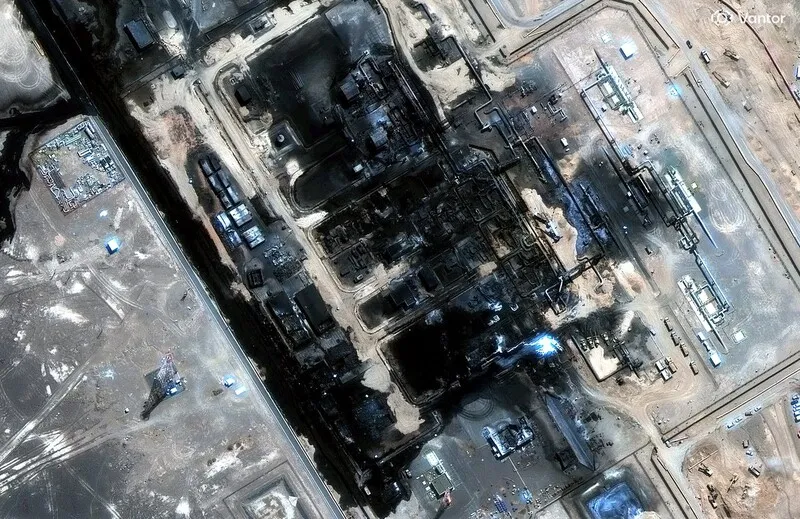
The pipeline is broken. The tanks are full — for now.
South Korea’s panic about Saudi Arabia’s east-west crude pipeline won’t show up at the pump this month. The government confirmed on the 14th that refiners have locked in more than 90% of their September and October crude import targets — well above normal coverage levels. Immediate shortages are unlikely.
But the relief is seasonal. What breaks next month is far more expensive to replace, and the math is stacking against Korean refiners.
The pipeline attack — struck by a drone carried by an Iraqi pro-Iranian militia — severs the primary artery that moves crude from Saudi Arabia’s Eastern Province fields to the Red Sea port of Yanbu. That route exists precisely to bypass the Strait of Hormuz. When it goes down, the crude that was supposed to flow westward has nowhere to go but back through the Strait, into tankers, and across the longer Arabian Sea route.
Six weeks is the estimated repair window. Six weeks in a market where Dubai crude jumped 21.3% in a single week to $123.66 a barrel — nearly 24 dollars more than West Texas Intermediate at $100.05.
The premium problem
The headline number everyone is watching is the spread between benchmark crude and what Korea actually pays. That spread is the “premium” — the surcharge attached to a particular grade or origin based on scarcity, risk, and logistics.
When the east-west pipeline is operational, Saudi crude arriving at Yanbu is relatively cheap to ship to Korea: a straightforward voyage down the Red Sea, through the Suez Canal, across the Mediterranean, and into the Pacific via the usual routes. When the pipeline is out, that crude must be rerouted through the Strait of Hormuz — a chokepoint already tense after March’s US-Israel-Iran confrontation — and then shipped the longer way around.
Every detour adds cost. Every added risk adds a premium on top of the premium.
“The premium is rising,” one refiner executive told Han Kyung. “The risk of having to buy expensive crude is growing.”
That sentence understates the problem. It’s not just that Saudi crude is getting more expensive relative to other benchmarks. It’s that Korea’s entire import basket is shifting upward. The country sources roughly 70% of its crude from the Middle East. When one of the largest suppliers — Saudi Arabia accounts for about a quarter of Korean crude imports — faces a supply disruption, there isn’t an idle surplus elsewhere to absorb the gap.
Why this feels worse than March
Some industry sources are drawing a direct comparison to the March escalation between the US, Israel, and Iran. Back then, the market’s central fear was a Hormuz blockade. Today, the fear is broader and the cushions thinner.
In March, alternative sea routes were still usable. Global crude inventories were more generous. Russian refining output, while strained by sanctions, had not yet fully adjusted to the new trade patterns that would dominate the second half of 2024.
Now, multiple supply shocks are compounding. Russian refined products are flowing into alternative markets, displacing Middle Eastern product flows and tightening those corridors. Iranian sanctions enforcement has shifted shipping patterns. And the Saudi pipeline — a critical piece of infrastructure designed exactly to reduce Hormuz dependency — is vulnerable to the kind of asymmetric attack that has become routine in the region.
“In March you could route around it,” one refiner said. “Now you can’t. And global inventories are tighter.”
The November cliff
The timeline is the dangerous part. Korean refiners order crude roughly two to three months ahead of delivery. That means contracts signed in August or September for November delivery are the first batch exposed to full pricing uncertainty.
By November, refiners will be competing for Saudi crude on a market where the alternative route adds days of transit time, insurance costs climb, and the Hormuz channel remains politically fragile. Oman-brokered talks between Iran and Gulf state foreign ministers — meant to discuss Hormuz navigation safety — were postponed on the 13th, one day before they were supposed to start. No replacement date has been announced.
The government is offering support for Suez Canal rerouting and has convened emergency meetings with refiners and shipping companies. But state assistance can ease logistics; it cannot manufacture physical crude that no longer exists on the east-west pipeline.
Who bleeds first: refiners or chemicals?
The cascade doesn’t stop at fuel. Korean petrochemical producers — HD Hyundai, LG Chem, Hanwha Ocean’s chemical division, SK Innovation’s integrated complex in Yeosu — buy naphtha and other feedstocks that are derived from the same Middle Eastern crude. When crude premiums rise, naphtha rises with them. When naphtha rises, the margin between feedstock cost and polymer selling price narrows.
This is not an abstract risk. Korean chemical exports are a structural pillar of the trade balance. A sustained period of elevated Middle Eastern crude costs would compress plant utilization rates and push some marginal capacity offline — exactly when global demand for petrochemical products is already softening from China’s property sector slowdown.
The first companies to feel the squeeze will be those with the thinnest existing margins and the least ability to pass costs downstream. Independent refiners without integrated chemical operations will absorb the hit differently than giants like SK and Hyundai Oilbank, which can hedge across both fuel and petrochemical endpoints.
The quiet bet
What English-language wire desks are likely missing is the nuance in how Korean industry is reading this moment. The government’s 90%-plus import coverage figure for September and October is being treated as reassuring. Refiners are treating it as a narrow window — a buffer that buys time to secure November cargoes but does not eliminate the cost risk attached to those cargoes.
The real question is not whether Korea runs out of oil this quarter. It is whether Korean refining and chemical margins can withstand a sustained period in which Middle Eastern crude trades at a widening premium over other global benchmarks.
If the east-west pipeline stays down for six weeks or more — and repair timelines in this region have routinely exceeded initial estimates — the answer becomes clear by the time November contracts are settled. The tanks will still be full. The bills will not be favorable.