Saudi Arabia's Oil Lifeline Choked as Red Sea Burns
As the US-Iran war blocks Hormuz, a parallel crisis erupts at Bab el-Mandeb. Saudi southern cities are under Houthi attack and Brent crude has touched $99.46 — the market is pricing in a two-front energy chokepoint collapse.
The Second Chokepoint Just Closed
While the world’s eyes have been fixed on the Strait of Hormuz — effectively sealed since the US-Iran war erupted in February — a second critical maritime chokepoint is now under sustained fire. The Bab el-Mandeb strait, the narrow gateway between the Red Sea and the Gulf of Aden, has become the latest flashpoint in a conflict that could reshape global energy flows within weeks.
Saudi Arabia and Iran-backed Houthi forces are engaged in what analysts are describing as de facto full-scale war along the Yemeni coastline and Saudi southern border. The death toll exceeds 500. Some 20,000 people have fled their homes in just the past three days alone. And on global commodity markets, the numbers tell an equally stark story: Brent crude touched $99.46 per barrel on September 8, on track for levels not seen since 2022.
What makes this escalation different from previous rounds of Houthi-Saudi violence is the geographic reality. For years, Riyadh has treated the southern Yemeni frontier as a proxy battlefield — one where Saudi-led coalition airstrikes and Yemeni government ground forces could contain the threat without it touching Saudi soil. That illusion ended in August. The Houthi drone and missile strikes that hit Khamis Mushayt, Abha, Najran, and Jizan on September 7 represented the largest direct attack on Saudi territory since the Iran conflict began.
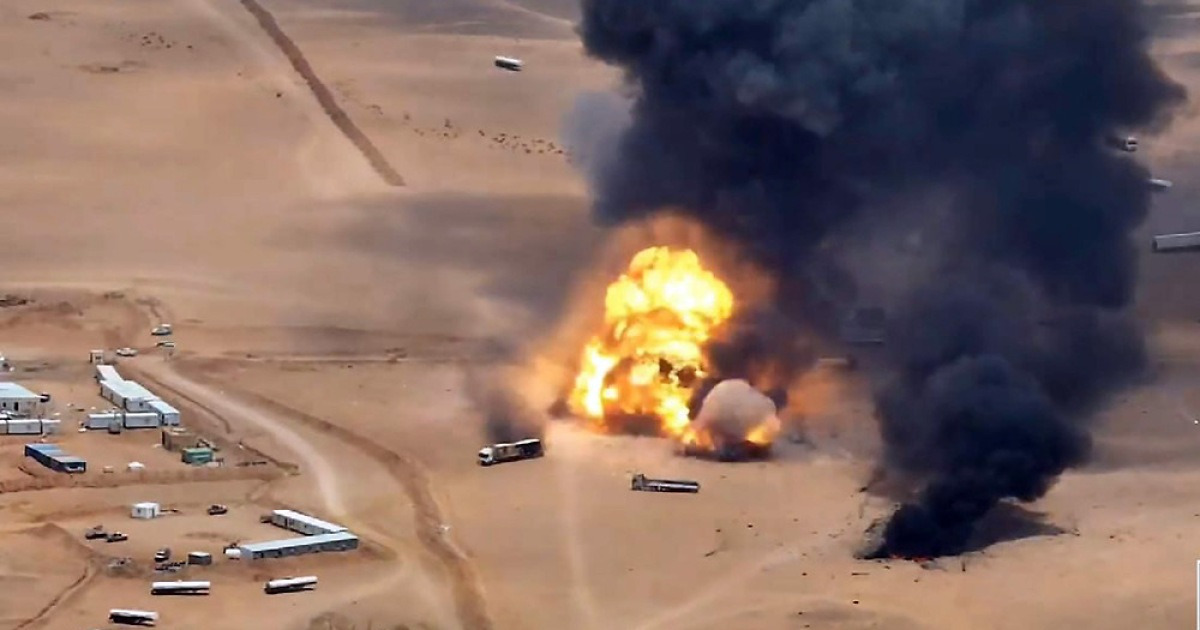
NASA satellite imagery captured the aftermath: thick black smoke rising from the Jizan refinery and the Abha oil distribution center, both critical nodes in Saudi Arabia’s southern energy infrastructure. The strikes injured at least 73 people, including women and children, according to Saudi authorities.
Who Is Fighting and Why Now
The Houthi movement, formally known as Ansar Allah, has been fighting a grinding war against the internationally recognized Yemeni government since 2014, with Saudi Arabia backing the government side through a coalition that launched its first airstrikes in 2015. The conflict entered a period of relative calm in 2023, and for a while it seemed the world was moving past Yemen as a crisis zone.
That changed in early August when the Houthis declared an end to their truce and simultaneously imposed a maritime blockade on Saudi shipping in the Red Sea. What followed was a rapid escalation: Saudi coalition forces launched extensive airstrikes across Yemen, targeting Houthi positions in Marib, Al Beida, Hodeidah, Taiz, and Al Jawf. The Houthis claim they suffered 121 strikes over three days alone.
But the deeper driver here is the Iran factor. The US-Iran war that began in February has effectively closed the Strait of Hormuz, through which Saudi Arabia traditionally routes the vast majority of its oil exports. With that artery blocked, the Red Sea corridor via the Bab el-Mandeb strait has become Saudi Arabia’s remaining lifeline — and the Houthis, backed by Iranian weapons and tactical support, are determined to sever it.
Saudi Foreign Minister Faisal bin Farhan made the stakes unmistakably clear in a statement on September 8: “We will not hesitate to take the measures necessary to defend ourselves, protect our interests, and ensure the security and stability of our brotherly country Yemen.” The language of “not hesitate” carries particular weight coming from a kingdom that has historically sought to avoid direct military entanglement.
The Numbers Behind the Crisis
The human cost is already severe and climbing. According to the International Organization for Migration, 18,500 people fled their homes along Yemen’s western coast in a single three-day window. Combined figures from Houthi and Yemeni government sources put total fatalities above 500, with government forces at 216 dead, Houthi fighters at 278, and at least 29 civilians killed.
The economic cascade is faster. Oil markets do not price in possibility — they price in probability. With Hormuz effectively closed and Bab el-Mandeb now contested, the scenario that traders are discounting into Brent is one where Saudi Arabia’s total export capacity through both corridors is disrupted simultaneously. At current production levels of roughly 9 million barrels per day, even partial disruption of these routes would create a supply gap that would send prices sharply higher.
$99.46 is not a speculative peak. It is the market’s current assessment of a region where two of the world’s most critical energy chokepoints are either closed or under active military threat.
What Happens Next
The most likely near-term trajectory is further escalation, not de-escalation. The Houthis have demonstrated both the capability and the willingness to strike deep into Saudi territory. Riyadh has responded with promises of decisive retaliation and has already launched counterstrikes into Houthi-held areas around Sanaa, Jibla, and Taiz. Neither side has shown signs of returning to the negotiating table.
For global energy markets, the danger is compounding. If the Houthis succeed in disrupting Red Sea shipping at scale — as they have threatened since July — the bottleneck effect becomes existential for Saudi export logistics. The kingdom has spent years diversifying its export routes through pipelines to the Persian Gulf and the Red Sea coast, but none of those alternatives have the capacity of the traditional Hormuz route, which is now offline.
The United States faces a difficult calculus. Washington is already committed to the Iran conflict. Opening a second front by directly engaging Houthi forces in Yemen risks drawing the US deeper into a war it never intended to fight on that ground. But doing nothing while a key ally’s energy infrastructure comes under attack carries its own political costs.
For ordinary consumers in Europe, Asia, and beyond, the message is simple: the era of cheap and abundant Middle Eastern oil is not recovering as quickly as markets hoped. The Hormuz closure was bad enough. The Red Sea escalation makes things materially worse.
The 500 dead in Yemen are a human tragedy. The 20,000 displaced are living it. But the $100-per-barrel price tag on Brent crude is the number that will determine how many more people feel the consequences — in inflated transport costs, higher food prices, and slower economic growth across every continent that depends on Middle Eastern energy.