Sekiro Anime's Unusual Release Order Reveals Japan's Gaming Pipeline Is Running Fast
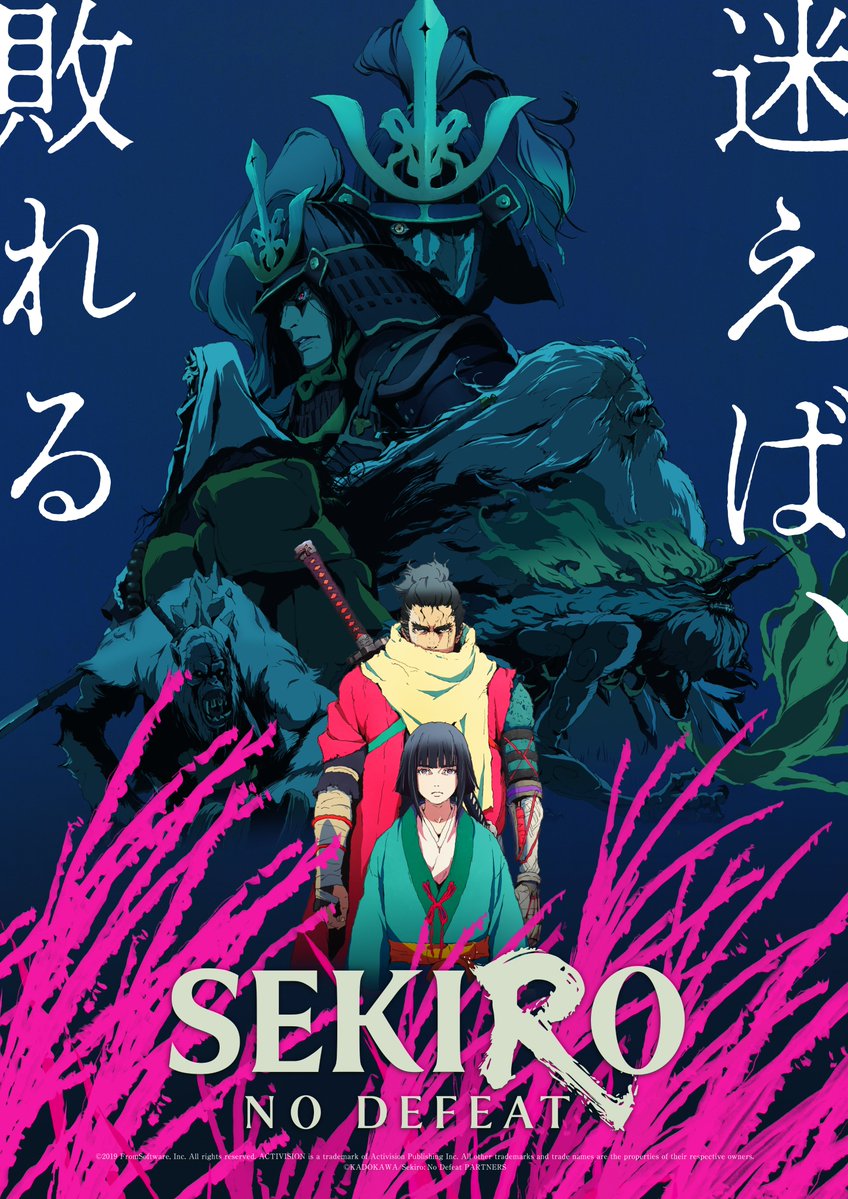
Qzil.la confirmed the Sekiro: No Defeat TV series will air January 2027, but the real story is how it was produced: as a television show first, with a theatrical cut carved out as a marketing test. That sequencing exposes how Japan's gaming-to-animation pipeline is quietly changing.
The Apology Nobody Expected
The most revealing line in Qzil.la’s September 25 announcement is not the headline about the eight-episode Sekiro: No Defeat TV series debuting in January 2027. It is the apology. ARCH, the production arm representing the animation committee, wrote: “We apologize that the currently screening film is an edited version, and that we were unable to inform you about the TV series.” Translation: they built a television show first, then stitched together a theatrical cut from it, sent that cut to Japanese cinemas as if it were a standalone film, and only after the three-week run ended did they reveal the full 8-episode package was already in production.
That sequencing is unusual enough to stop anyone paying attention to how Japan’s entertainment supply chain actually works. Normally, a theatrical anime film is the prestige product; a TV series, if it comes later, is a spin-off or sequel. Here, the TV series is the primary artifact. The film is a trailer with legs. The implication is that Qzil.la and KADOKAWA, which co-owns the copyright, wanted to test audience appetite in a controlled, revenue-generating environment before committing the broader promotional spend a January 2027 TV slot demands. The theatrical run starting September 4, and the extended screening added on October 2 after what the release calls “strong audience support,” functioned as a live focus group.
Eight Episodes, Not Twelve
The TV series will run eight episodes, not the standard twelve or thirteen. Each episode adds new scenes and new cuts not present in the theatrical version. The production committee frames the TV build as “a work with a different experience and appeal” that uses the film’s narrative as its spine. In practical terms, viewers who saw the movie will encounter expanded material; viewers who did not will get the complete story in weekly installments.
Eight episodes for a contained narrative is a format choice that signals confidence. The Elden Ring anime by WIT Studio ran six episodes across two seasons. The Jujutsu Kaisen game tie-ins have stretched to full seasonal arcs. A tight eight-episode order for a Sekiro adaptation says the story they want to tell does not need filler. It also keeps the production cost manageable for Qzil.la, a studio that describes itself as combining “latest technology with creativity” and is headquartered on the ninth floor of a building in Kanda-Shin-kiho-machi, Chiyoda, Tokyo. This is not MAPPA or Wit. The studio has been building name recognition through smaller projects, and an eight-episode order with a major game IP attached is a proof-of-concept that will determine whether it gets another FromSoftware or KADOKAWA title.
The Cast and the Sakamoto Anchor
The voice cast leans into prestige. Daisuke Nagawa voices Wolf. Kenjiro Tsuruda, a fixture in post-apocalyptic and military anime for nearly two decades, plays the warlord Ibasho Isshin. Shizuka Ito takes Emma. The theme music is Ryuichi Sakamoto’s “Blu,” pulled from his 2014 orchestral collection. Sakamoto died in 2023, so licensing a posthumous track for a game adaptation anime is a bold curatorial choice: it elevates the project above the typical idol-voice or j-rock soundtracks that dominate Japanese streaming. It tells the audience this is not a kids’ show. It is, in the vocabulary of Japanese media distribution, a property aimed at existing Sekiro players and adult anime viewers.
The director, Katsuki Kaname, and series composer Takuya Sato are not household names internationally, but the character designer Takahiro Kishida and the action animation supervisor Takashi Mukoda suggest a production weighted toward choreography and visual spectacle rather than dialogue-driven drama. That matches the source material: Sekiro is a game about posture, feints, and a single death-looping boss fight. An anime that translates that into weekly television episodes is a genuinely difficult tonal problem. The theatrical cut gave the team one concentrated hour-and-a-half to solve it. Eight weekly installments force the problem open.
What It Means for FromSoftware’s IP Strategy
FromSoftware does not own the anime. KADOKAWA sits in the copyright chain, and the game itself is licensed through Activision (the title is listed as ©2019 FromSoftware, Inc., published by Activision). What FromSoftware is doing with the Sekiro license, alongside the earlier Elden Ring anime, is expanding a universe that no longer requires a new game sale to generate revenue. The Sekiro game sold in 2019; the anime revenue stream in 2027 is pure margin on an existing asset. The company is effectively treating its game roster as a content shelf, pulling titles forward into animation at a pace that no longer requires the game to be commercially hot. Sekiro is not the Elden Ring of the FromSoftware catalog in terms of sales, yet it got a dedicated anime. The threshold for which games become animated properties is dropping.
For the broader Japanese media ecosystem, this is the gaming-to-animation pipeline accelerating past its previous rhythm. In 2024, Demon Slayer and Jujutsu Kaisen dominated box office and streaming, but both are manga originals. Game adaptations remain the underdog category, hampered by the assumption that gamers will not sit through a 24-minute episode when they could just play the game. The Sekiro TV series is a bet that the theatrical-premiere hook, combined with weekly new material, converts the existing player base into television viewers without needing to attract newcomers. If January 2027 ratings hold, expect KADOKAWA to greenlight another FromSoftware or similar IP by 2028.
The Risk Nobody Is Pricing In
The theatrical run’s success looks solid, but a three-week window in a domestic Japanese release, even extended to October, is a thin sample. Japanese theatrical anime data is heavily skewed by release-day weekends and holiday periods. September 4 to early October is a soft season. The extension tells you the audience showed up; it does not tell you whether a weekly TV commitment starting in January, competing against a packed winter anime slate, will hold. Qzil.la’s apology for the confusing rollout is also a small reputational risk. Japanese fans are fiercely protective of product transparency, and a release that makes viewers feel they bought a partial product can generate goodwill erosion that no key visual recovers.
Still, the structural shift is clear. Japan is no longer asking “should this game become an anime?” It is asking “which release format lets us test the market cheapest before committing to the expensive one?” The Sekiro TV series answers that question with a format most western gaming journalism has not yet learned to track. The pipeline is moving, and it is moving faster than the English-language coverage of Japanese media production is structured to follow.