Seoul's Record Climate Budget Is an Industrial Play, Not Just Green Policy
South Korea's new Climate Ministry gets a 26 trillion won budget — the biggest ever — with roughly 4 trillion won targeted at EVs and mega-project infrastructure. The real story is what this says about Seoul's strategy to hold its battery and semiconductor edges against China.
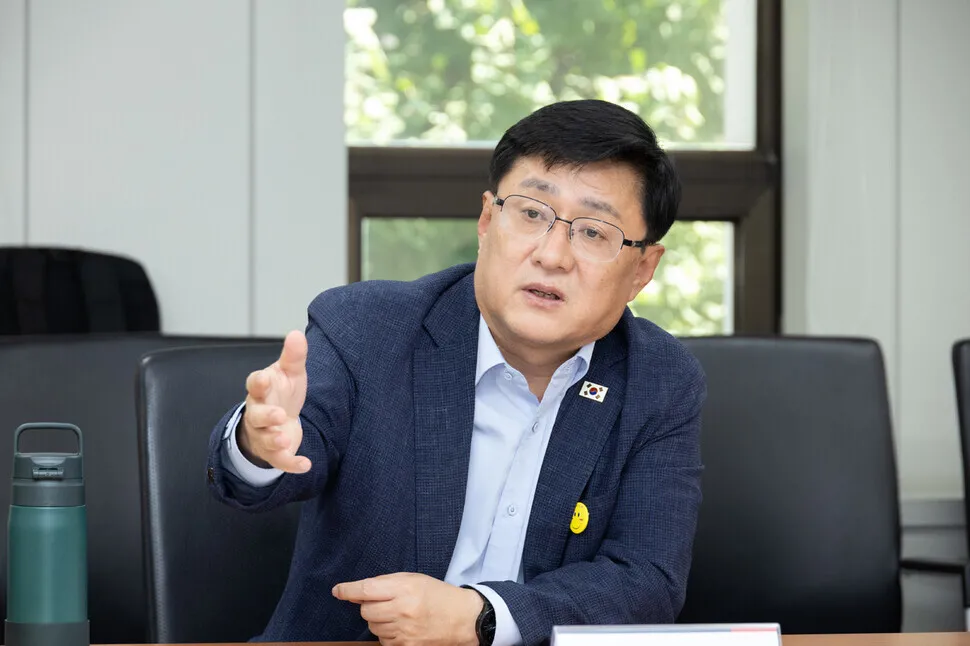
A climate ministry with an industrial-policy budget
South Korea has created a Climate Energy Environment Ministry and handed it 25.73 trillion won for fiscal year 2027 — roughly $19 billion at current rates — an 18.3 percent increase over this year’s allocation. By any measure, that is the single largest budget the government has ever assigned to climate institutions. But reading it as a climate story is the mistake. Read it as an industrial strategy, and it starts to make a sharper sense.
Roughly 4 trillion won — about 15 percent of the total — is earmarked for two purposes that have almost nothing to do with traditional environmental protection and everything to do with keeping Korea’s two most vital export industries competitive: electric vehicles and the semiconductor complex that consumes staggering amounts of power and water.
This is the architecture of a country that has watched its lead in EVs and batteries erode faster than its climate targets have improved, and is now trying to spend its way out of a corner.
The power problem no one wants to name
The single most revealing line item is the 1.55 trillion won allocated to the power sector under the mega-project funding umbrella. That money goes to grid-scale energy storage systems, new substations in non-metro regions where industrial demand is outpacing infrastructure, and — perhaps most tellingly — an 85 billion won contribution to ease the debt burden of Korea Electric Power Corporation, the state utility that has been eating around 1 trillion won annually in interest payments while subsidizing electricity for vulnerable households.
Semiconductor fabs in the Honam and Chungcheong regions will receive targeted water-supply funding of nearly 1.3 trillion won combined. A 2.5 trillion won capital injection flows to Korea Water Resources Corporation. These are not climate investments in any conventional sense. They are industrial survival measures.
China’s state-controlled utilities can offer semiconductor plants electricity at subsidized rates that Korean manufacturers simply cannot match. Every month that Korea delays building transmission lines and substations near new fabrication sites, LG Energy Solution and Samsung SDI lose ground to CATL and BYD, which already benefit from integrated domestic supply chains and preferential energy pricing.
The EV subsidy bet
The 2.14 trillion won for electric vehicles is the largest single program in the entire budget and represents a 32.8 percent jump from this year. The government plans to support 430,000 EV purchases next year — up from 300,000 — including a new conversion subsidy for taxis and a fivefold increase in the subsidy for delivery scooters, from 10 percent to 50 percent of the vehicle cost.
Passenger car subsidies alone will cover 368,000 units. Truck subsidies will roughly double to 61,000 vehicles. The math is simple and desperate: Korea’s domestic EV market share has lagged behind China’s by a wide margin, and without aggressive subsidy expansion, local automakers risk losing the very customer base their battery suppliers depend on. GM Korea and Ford have already exited. Hyundai and Kia are the only ones left standing, and they need volume to amortize the massive capital expenditure required to build next-generation solid-state and sodium-ion cells.
The commercial-vehicle angle is particularly strategic. Delivery scooters and trucks run high mileage, which means battery degradation hits commercial operators hard. Korea’s goal is not just to sell more EVs — it is to create a guaranteed domestic demand floor for its battery producers. Every kilometer driven by a Korean-made EV on Korean roads is a data point and a market that CATL cannot easily replicate in China’s hypercompetitive domestic scene.
Renewables as industrial policy
Renewable energy financing more than doubled to 1.51 trillion won. Rooftop solar lending for factories jumped 4.4 times to 544 billion won. Household solar support will reach 200,000 homes, up from 100,000. Heat-pump electrification — replacing gas and oil heating in apartment complexes — is being piloted nationally after years of single-family-home focus, with budget rising from 15.7 billion to 85.9 billion won.
This matters because Korea’s manufacturing competitiveness increasingly depends on the carbon intensity of its electricity. European Union regulators are finalizing the Carbon Border Adjustment Mechanism, which will levy duties on imports based on embedded emissions. Korean steel, chemicals, and semiconductors — all energy-intensive — face some of the highest exposure in Asia. If Korean factories cannot demonstrate that their power comes from low-carbon sources, EU tariffs will erase the cost advantage Korean manufacturers currently enjoy over Chinese rivals who are themselves rushing to decarbonize.
The renewable budget is not just about hitting 2030 emissions targets. It is about preserving export market access.
What the numbers leave out
The environmental portion of the budget — the part that falls outside the climate ministry’s new mandate — grew only 4.5 percent, from roughly 13.4 trillion to 14 trillion won. That is a stark contrast to the double-digit growth elsewhere and suggests the government is consciously prioritizing industry-support spending over traditional environmental programs.
Urban flood prevention received a healthy bump, tripling to 81.5 billion won, with major tunnel and underground reservoir projects targeting the 2029 flood season. Algae bloom monitoring expanded from 5 to 28 super-spectral sensor stations. These are legitimate investments, but they sit in the shadow of the industrial budget lines and should not be confused with the government’s primary intent.
Who wins and who loses
Korean battery makers — LG Energy Solution, Samsung SDI, SK On — are the clearest winners. Government subsidies that boost domestic EV adoption translate directly into cell demand. The power and water infrastructure spending protects the semiconductor cluster that is both their largest customer and their most important partner in next-generation manufacturing.
Chinese EV and battery exporters are the implicit losers. Korea’s subsidy expansion is calibrated to keep Hyundai, Kia, and GM’s remaining Korean operations competitive against BYD and other Chinese brands already flooding the Southeast Asian and European markets. Every subsidized Korean EV sold domestically is one less unit a Chinese competitor can displace in Korea’s high-margin home market.
Korea Electric Power Corporation wins a direct fiscal lifeline, but the conditional nature of the support — tied to grid expansion and industrial electrification targets — gives the government leverage it did not previously have. The utility’s decades-long model of cross-subsidizing residential rates while underinvesting in grid modernization is finally being restructured, for better or worse.
Traditional fossil-fuel heating suppliers lose. The fivefold increase in heat-pump electrification budget signals that gas and oil heating in apartment complexes will be phased out at scale within the decade. Homeowners who expected to keep gas furnaces face mandatory conversion costs that the subsidy only partially offsets.
The timeline that matters
The budget will be finalized by December after National Assembly review. Mega-project power and water infrastructure is already underway, but substations and transmission lines typically take two to four years to complete — meaning the semiconductor and EV benefits will not fully materialize before 2028-2029. The EU’s carbon border tax takes effect in its transitional phase now and becomes financially binding in 2026, which means Korea has almost no time to spare.
China’s battery cost advantage is widening, not narrowing. CATL’s seventh-generation麒麟 battery and BYD’s Blade battery continue to undercut Korean cells on price per kilowatt-hour. Korea’s only remaining edges are energy density in premium applications and supply-chain relationships with Western automakers who prefer diversifying away from Chinese suppliers. The climate budget is an attempt to reinforce those edges before they vanish entirely.
The real question
A 26 trillion won climate budget sounds ambitious until you compare it to the total national budget of 821 trillion won — roughly 3.1 percent. That is not a small commitment, but it is also not the kind of spending that reverses structural disadvantages on its own. The infrastructure projects are necessary but slow. The EV subsidies are blunt instruments that raise questions about fiscal sustainability if global demand softens. And none of this addresses the deeper productivity gap between Korean and Chinese manufacturers that no budget line item can close.
What the budget does signal, however, is a clear pivot. South Korea is no longer treating climate policy and industrial policy as separate tracks. They are the same project, and the Climate Ministry is now the instrument through which Seoul intends to fight it.