Serbia's Student Revolution Just Upended the Balkans
Aleksandar Vučić's ouster by a student movement is the most consequential political shift in Southeastern Europe in a generation — and it's reshaping EU enlargement, Russia's foothold, and the logic of authoritarian resilience across the region.
The Day Serbia Chose Its Future
Aleksandar Vučić lost. After twelve years of consolidating power, bending institutions, and steering Serbia through a carefully calibrated game of East-West balancing, the former strongman has been voted out — not by an opposition coalition of seasoned politicians, but by a student movement that began as a protest against a collapsed railway station roof and ended as a political earthquake.
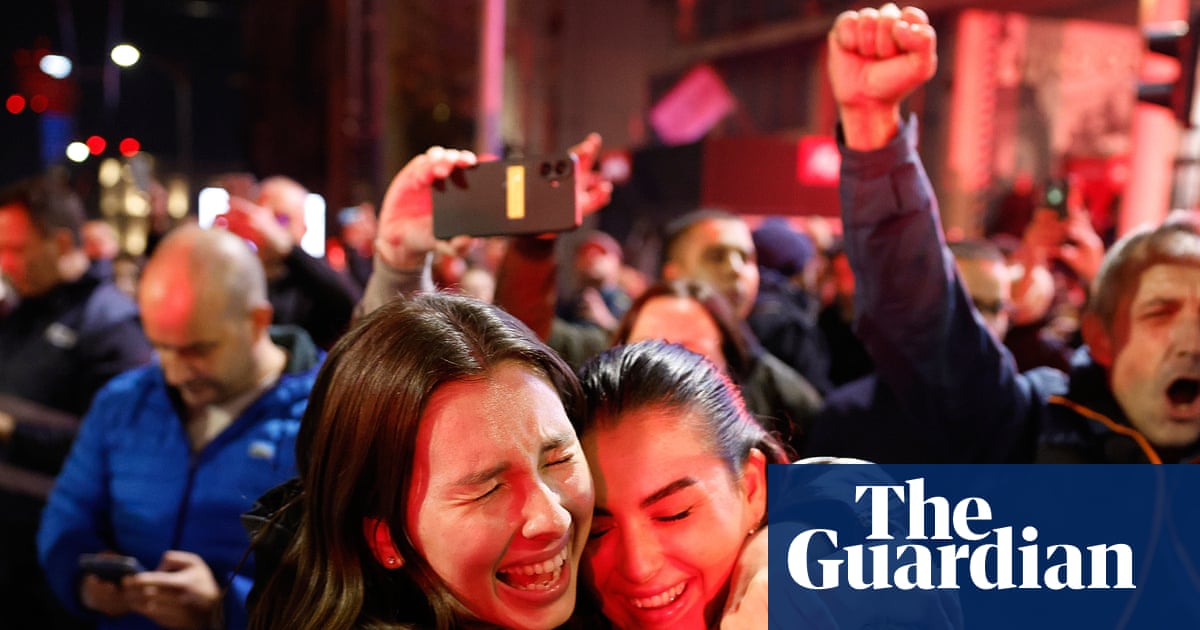
The preliminary results are staggering. The Student List, fielding 250 candidates for a 250-seat parliament, is projected to win between 135 and 140 seats. Vučić’s Serbian Progressive Party (SNS), which controlled the state’s broadcasting apparatus, ministries, and much of the administrative machinery, is down to roughly 105. Turnout hit 67.6% — the highest since Yugoslavia broke apart in 1992. One hundred and fifty thousand people packed Belgrade’s streets for the students’ final rally. On election night, voters hugged police officers. In the city center, car horns wailed for hours.
This is not a narrow political defeat. It is the collapse of a system.
How a Tragedy Became a Revolution
The chain of events began in November 2024, when a concrete canopy at Novi Sad railway station collapsed during a storm, killing sixteen people. The initial outrage was grief — ordinary citizens demanding accountability for shoddy construction. But as investigations revealed patterns of fraud, corruption, and institutional negligence that traced back through years of SNS governance, the protests grew. Students, who had always been the conscience of Serbian civil society, organized. They moved from the universities into the neighborhoods. They went door-to-door in rural villages that had voted SNS for over a decade. They held up signs that asked a single, devastating question: Serbia or Mafia?
Vučić responded with the repertoire of every authoritarian who has ever faced a genuine popular surge. He accused the students of being foreign agents — a standard accusation across the region, from Budapest to Ankara. He flooded the airwaves with pro-government messaging. His party machine deployed every institutional lever at its disposal. None of it worked.
In September, he resigned the presidency and called snap elections, apparently believing he could survive as a parliamentary prime minister while shedding the direct accountability of the head of state. He miscalculated. The students transformed their movement into a political force with unmatched discipline — 250 candidates, diverse and credible, ranging from academics to former NBA players like Dejan Bodiroga to farmers and athletes. Their message was simple and impossible to counter: this country has been hijacked, and we are taking it back.
The Orbán Mirror and What It Means for the Region
Vučić’s swift concession of defeat — he told supporters before final results were even certified — was the most significant signal in the entire night. For years, analysts have pointed to Hungary’s Viktor Orbán as the template for durable authoritarianism in Eastern Europe: capture the media, pack the courts, bend the electoral rules, and hold power indefinitely. Serbia under Vučić followed that model closely. The similarities were not accidental — the two men are allies, and Vučić has long looked to Budapest for strategic guidance on how to manage the gap between formal EU candidacy and substantive democratic backsliding.
Six months ago, Orbán himself held a dramatic election in Hungary that many interpreted as the first crack in the authoritarian right’s regional dominance. Now Vučić has followed. The symbolism is enormous. Two of the Balkans’ most entrenched leaders, both closely aligned with each other and with Moscow’s preferred diplomatic posture, have fallen in the same year. That sequence matters because it rewrites the assumptions that have guided Western policy toward the region for a decade: that these leaders were too embedded, too skilled, too deeply connected to the patronage networks that made them immune to electoral challenge.
They were not immune. They were just waiting for the right catalyst.
The Geopolitical Shift No One Is Fully Grappling With
Serbia’s election has implications that extend far beyond Belgrade’s city limits, and many of the most important ones are still underwater.
The EU enlargement question. Serbia has been a candidate country since 2014, and negotiations have crawled forward with frustrating slowness. The new government will almost certainly accelerate its reform agenda — particularly on rule of law, judicial independence, and media freedom, all of which have been persistent blocks to opening new negotiation chapters. But the deeper implication is psychological: for the first time in years, the EU’s conditionality framework looks like it might actually work. A government that came to power through a democratic rupture is far more likely to implement the reforms Brussels demands than an SNS administration that treated accession talks as something to manage rather than something to achieve.
Russia’s foothold. Serbia has long been the Western Balkans’ most reliable non-NATO partner for Moscow, maintaining energy ties, diplomatic support at the UN, and a population with genuine cultural and religious affinity for Russia. The student movement has been consistently pro-European and skeptical of Russian influence — a position that would mark a significant realignment if sustained. But the transition will not be automatic. Russia has deep institutional ties in Serbia, and any abrupt pivot risks a backlash that opponents of the new government will exploit. The smart play for Belgrade is gradual but unmistakable orientation toward Brussels, which is also the play that maximizes economic and security benefits.
Kosovo. This is the hardest question. Vučić built much of his political identity around defending Serbian positions on Kosovo, and any government in Belgrade that appears weak on the issue risks losing credibility with nationalist voters. The Student List has been deliberately vague on Kosovo’s status, focusing instead on domestic reform. That ambiguity may hold for a while, but eventually every Balkan government must confront it. The new leadership’s advantage is that it faces no structural incentive to inflate the issue for political gain — which means a pragmatic settlement, however painful, becomes more possible than it has been in years.
The regional domino effect. Montenegro, North Macedonia, Bosnia and Herzegovina, and even Albania all watch Serbia closely. A successful student-led revolution in Belgrade changes the calculus for opposition movements everywhere in the region. It proves that even entrenched authoritarian systems can fall to organized civic energy. It also raises the stakes for every ruling party that has been watching — and preparing responses.
What Comes Next
The immediate challenges are enormous. The Student List has won a historic mandate, but governing Serbia requires skills that protesting does not. The economy is fragile, the public debt is high, and the institutions Vučić’s party spent twelve years weakening will need rebuilding — not just replacing with loyalists, which is the SNS playbook. There will be demands for accountability for the old regime, and the new government must navigate those carefully: genuine justice matters, but blanket purges will drive talented administrators away and invite retaliation from entrenched interests.
The international community’s role should be supportive but not prescriptive. Serbia’s students proved they can organize, mobilize, and govern themselves. The last thing the region needs is for Western capitals to impose a transition team or treat the new government as illegitimate because it lacks the polish of traditional politicians. The legitimacy comes from the ballot box, and the ballot box was generous.
What happened in Serbia on Sunday is the most significant democratic breakthrough in the Balkans in thirty years. It began with a collapsed roof and a handful of grieving students. It ended with a people reclaiming their country. The world should pay attention.
The students aren’t just celebrating tonight. They’re about to build something.