How Silicon Valley’s Three Titans Bought Themselves an AI-Free Zone
Jensen Huang, Mark Zuckerberg, and Elon Musk allegedly persuaded Donald Trump to scuttle a proposed AI regulatory body — one that experts said would have concentrated power in OpenAI, Anthropic, and Google. The move exposes a raw clash between Big Tech’s survival instincts and the growing push for algorithmic accountability.
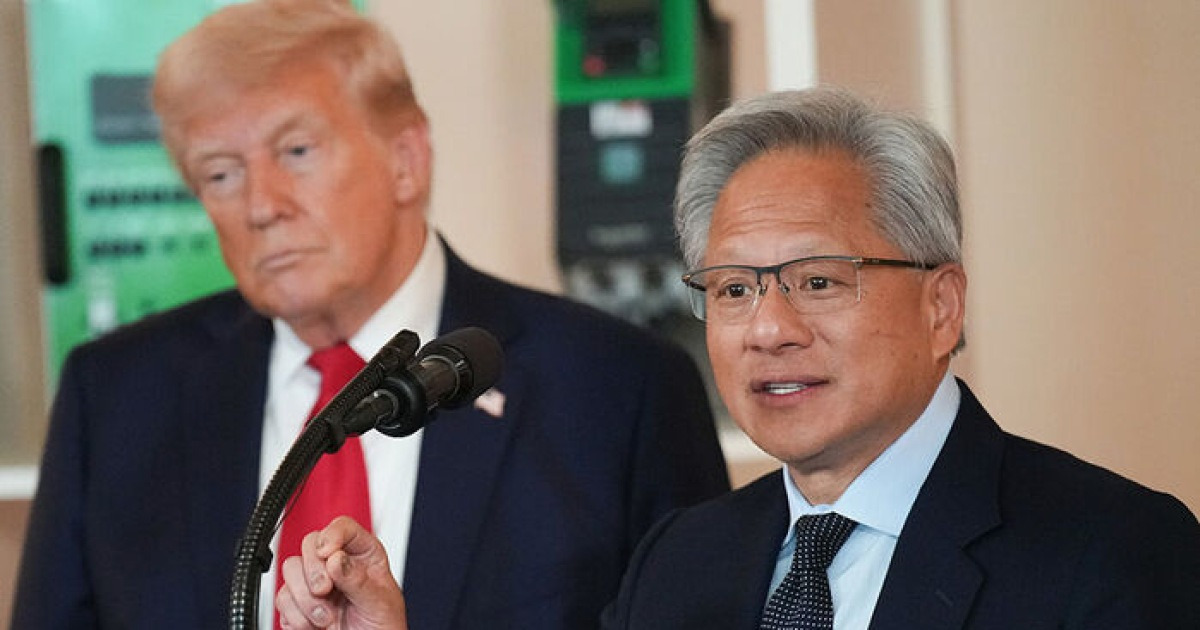
The three CEOs who walked into the Oval Office — and changed everything
Jensen Huang, Mark Zuckerberg, and Elon Musk did something remarkable this week. They persuaded Donald Trump to kill a regulatory body that hadn’t even been formally proposed yet. According to a report by the Wall Street Journal citing multiple sources, the trio told the president that a private-sector-led AI oversight agency would not make the United States safer — it would hand the keys to three competitors: OpenAI, Anthropic, and Google.
The intelligence came from an unexpected quarter: Demis Hassabis, Google’s chief scientist, who had floated the idea of an AI watchdog modeled on FINRA, the financial industry’s self-regulatory powerhouse. The proposal sounded reasonable in academic circles. Regulated entities report to an independent body. Standards are set collaboratively. The system keeps predators in check while allowing business to flow.
Hassabis thought he was building guardrails. He may have been building a trojan horse — one his own employers never signed up to.
Why the opposition was so fierce
The three CEOs who opposed the proposal had very different motivations, but they converged on the same conclusion: any independent AI regulatory body would entrench the very companies that already dominate the field.
Here is the mathematics behind their fear. OpenAI, Anthropic, and Google collectively hold an overwhelming share of the frontier model market. Any new agency would inevitably draw its membership and leadership from the ranks of incumbent players — people who sit on boards, publish white papers, and set technical standards. The barriers to entry for smaller competitors — or newcomers with different philosophical orientations — would rise overnight.
The report suggests the skeptics also worried about composition: who would sit on the proposed body’s leadership? If the answer included figures aligned with Google’s ecosystem — and Hassabis is both a Google executive and a prominent voice in the AI safety movement — then the playing field tilts before the first rule is written.
This is regulatory capture in real time. The question is whether the captures happened to notice, or whether they orchestrated it deliberately.
The Trump factor
Trump’s relationship with Big Tech has always been transactional. He does not like regulators telling him what to do. He also does not like being associated with constraints on industries that generate headlines — and AI is the biggest headline generator in American industry right now.
His response on Truth Social was characteristically blunt. He called the push for AI regulation a “pathological conspiracy” and said the only beneficiaries would be China. It is a framing that has political utility: regulation is weakness, speed is strength, and anyone suggesting caution is handing a competitive advantage to America’s greatest rival.
The administration’s existing posture toward AI has already been described as “light-touch.” The three CEOs made sure it stayed that way.
Who else was in the room?
The report notes that Dario Amodei, Anthropic’s CEO, also argued publicly for slowing development. Amodei occupies a complicated position: he runs a company that has built its brand partly on safety claims, and whose model has been used to generate content that critics say undermines journalistic integrity. His advocacy for caution reads differently when you understand who pays his bills and who competes against him.
This is not hypocrisy. It is strategy. Companies that cannot win on speed will try to regulate their way to relevance.
What was almost created
A FINRA-style model for AI is not a radical idea. The financial sector’s self-regulatory organizations have existed for decades. They audit brokers, enforce trading rules, and maintain market integrity without direct government operation. The concept translates reasonably well to AI: an industry body that sets safety standards, audits model outputs, and penalizes bad actors.
But the translation also reveals a deeper tension. AI is not finance. Financial transactions are discrete, auditable, and governed by clear contracts. AI outputs are generative, probabilistic, and increasingly indistinguishable from human creation. You can audit a trade. Can you audit a thought?
The difficulty of measurement is precisely why the three CEOs opposed the body. If the regulatory framework requires quantifiable standards, the framework will be written by those who control the quantification — and that means the incumbents.
The geopolitical angle
Trump’s China framing is not incidental. The United States is locked in a technological cold war with Beijing, and AI is the primary battlefield. Every policy decision is filtered through that lens: does this make America stronger or weaker relative to China?
The administration’s answer has been consistency: deregulation is patriotism. Constraints are surrender. And the CEOs who profit from unconstrained deployment are, by extension, patriots themselves.
But the calculus ignores a complication: an unregulated AI arms race benefits the fastest deployer, not necessarily the most stable one. China’s approach has been state-directed, with clear guardrails on deployment. America’s approach is accelerationist, with no brakes. The question is whether speed without stability is an advantage or a liability in a conflict that could escalate faster than any human operator can respond.
Who wins, who loses
The immediate winners are the three CEOs and their companies. They have bought themselves another year of unfettered development, unlimited access to compute, and zero oversight from any independent body.
The losers are everyone else: journalists whose work is being scraped without compensation, creators whose output is being replicated by models trained on their labor, voters whose information ecosystems are being reshaped by systems no one is required to audit, and citizens who may one day need to know whether the AI interacting with them was built responsibly or built quickly.
There is also a longer-term loser: the idea that technology can regulate itself. The financial industry learned that lesson after Enron, after 2008, after the repeated collapses of firms that trusted their own auditors. AI is generating similar risks — concentration of power, opacity of decision-making, systemic instability — and the regulatory response has been to dismiss the analogy rather than confront the reality.
What happens next
The WSJ report does not suggest the proposal is dead forever. Hassabis and his allies are likely to return with revised frameworks — perhaps with narrower mandates, perhaps with different governance structures. The three CEOs will oppose them with the same arguments: concentration of power, who controls the board, and the geopolitical imperative of speed.
What has changed is the transparency of the conflict. The backroom negotiations are now public. The motivations are now on the record. Future proposals will face a higher bar for legitimacy — and that is not necessarily bad.
But the immediate outcome is clear: the United States has chosen acceleration over accountability, and the companies that benefit from that choice have secured their position at the top of the pile. The question is whether that position is defensible when the technology they control becomes powerful enough to reshape democracies, economies, and conflicts — all without a single regulatory body having been given the chance to write its first rule.