SK Hynix HBM4 Yield Lead Is Buying Time, Not Guaranteeing Victory
SK Hynix claims an industry-leading HBM4 yield that lets it ship more chips from existing fabs — but Samsung has slashed the market-share gap from 37 percentage points to just 17 in a single quarter. Who wins the memory race for AI.
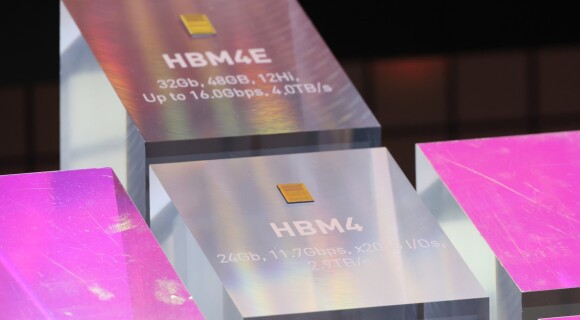
The number that matters isn’t market share — it’s the space between two percentages
SK Hynix says its HBM4 cumulative yield has reached the mid-60% range, the best in the industry. That’s a useful fact. The more useful fact is what it masks: Samsung’s HBM market share jumped from 21% to 33% in a single quarter, closing a 17-percentage-point gap that once looked comfortable. For an industry where single-digit shifts move billions in annual revenue, the velocity of that catch is what alarms people inside SK Hynix’s Wahecheon campus more than any press release can convey.
Yield leadership buys margin. It does not buy monopoly.
The two Korean memory giants are locked in a race that will define which company supplies the bottleneck chips for the next generation of AI accelerators. HBM is not a luxury component — it is the difference between a data center that trains models and one that does not. Whoever controls the higher-yield, higher-volume supply chain controls the leverage point for everyone downstream: Nvidia, AMD, Google, and the dozens of startups building inference services on top. The stakes extend beyond profit margins. They touch geopolitical balance sheets — South Korea’s semiconductor sector accounts for roughly a fifth of the nation’s total export revenue, and the leadership of either firm ripples through supply chains in Taiwan, Japan, and the United States.
What the yield number actually means
Cumulative yield is the percentage of wafers that survive every stage of HBM production — front-end DRAM fabrication, vertical stacking of individual chips, and final testing — and emerge as saleable units. It is different from a single-step yield because it compounds losses across dozens of process layers. A wafer might look fine after the front end, but if stacking introduces defects, those chips are dead weight. Each Additional die added to the HBM stack multiplies the probability of failure. That is why a jump from 55% to 65% cumulative yield is not incremental — it represents a structural improvement in how many of those expensive 3D stacks survive to shipping.
SK Hynix says its HBM4 yield exceeds its original plan and that it is supplying customer requests stably. The implication is straightforward: the company can pull more good dies out of the same factory footprint without buying new equipment. In a capital-intensive business where a single new fab can cost $20 billion or more, that kind of organic output growth is unusually valuable. It also means the company can defer capacity decisions — a prudent move when demand forecasts shift every six months.
The math is telling. Moving from a 60% to a 65% cumulative yield increases the output of saleable products by roughly 8.3% on the same production volume. In an environment where customer demand for HBM is more than double what SK Hynix can currently supply, that 8.3% is not abstract. It is the difference between turning away orders and filling them. More importantly, it is the difference between building relationships with Nvidia and watching Samsung build them instead.
There is a second-order effect that rarely makes it into earnings calls. High yield also means fewer engineering support cycles with customers. When a fab produces consistently good parts, the application engineering teams spend less time debugging silicon issues and more time helping designers optimize their architectures. That relationship capital is difficult to quantify but profoundly important. Samsung is aware of this — its recent push to match HBM4 volumes is not only about revenue. It is about embedding itself in the design wins that will lock in the next several generations of accelerator boards.
Samsung is not standing still
Samsung reported that HBM4 revenue in the third quarter more than tripled compared with the previous quarter, and that HBM4 now accounts for 60% of its total HBM revenue. The company stated it has reached its target of matching HBM market share to its overall DRAM market share — a claim that, if accurate, puts Samsung at or near parity with its own base DRAM position in the HBM segment.
The share movement tells the story more clearly than any press release. Second-quarter figures from Counterpoint Research show SK Hynix at 50%, Samsung at 33%, and Micron at 18%. But the quarter before, SK Hynix held 58% and Samsung 21%. In one cycle, Samsung gained 12 points while SK Hynix lost 8. The gap halved. Analysts note that Samsung’s gains came disproportionately from customers who had been waiting on HBM4 allocations — buyers who needed volume guarantees and found them, at least temporarily, on Samsung’s production line.
Industry observers quoted in the source material say SK Hynix is likely to retain the top position in the upcoming third-quarter share report. That is a prediction, not a fact, and it rests on the assumption that yield advantages translate directly into shipped volume. The assumption is reasonable but not guaranteed — especially if Samsung’s yield trajectory matches its revenue trajectory. Samsung’s reputation for rapid volume ramp has precedents in HBM3E and GDDR6X. Every time the market assumed SK Hynix had secured an insurmountable lead, Samsung closed the gap faster than the consensus predicted.
The hidden cost of yield chasing
There is a dimension to this competition that does not appear in yield percentages. Pushing cumulative yield toward 70% and beyond requires tighter process control, more aggressive defect detection, and increasingly expensive inspection equipment. The marginal cost of each additional percentage point of yield rises exponentially. SK Hynix’s current mid-60% position may represent the most efficient point on that curve — where yield gains are still meaningful but not yet prohibitively expensive. Samsung, coming from behind, may be willing to accept lower yield in exchange for volume velocity, banking on the idea that yield will catch up once the lines are fully optimized.
This divergence in strategy matters because it shapes the competitive landscape over multiple quarters, not just one. If Samsung ships more HBM4 at lower yield, it captures share now. If SK Hynix holds the line on yield-first philosophy, it may lose ground in the short term but preserve gross margins that fund the next round of capacity investment. Neither approach is wrong. They simply bet on different timelines.
Who wins, who loses, and what comes next
The immediate winner is SK Hynix’s ability to convert process excellence into supply without capital expenditure. The loser, for now, is Samsung’s timeline. But the longer-term dynamic is more nuanced than a headline about yield percentages suggests.
AI chip demand is not a fixed pie. If SK Hynix’s yield edge keeps its share stable while Samsung’s climbs, the absolute volume each company ships could both grow — but the distribution of that growth shifts. Every point of HBM share is worth far more now than it would have been two years ago, because the number of qualifying AI GPU and accelerator designs has exploded. Each new design win represents a multi-year supply relationship. Losing a design win today means losing share for three or four generations of products.
Micron, meanwhile, sits at 18% and is the outside option for any buyer wanting to diversify away from the Korean duopoly. Its margin of growth is larger in percentage terms but smaller in absolute market impact. Microsoft’s recent supply agreement with Micron underscores this — the deal was as much about creating a credible third source as it was about securing capacity. That dynamic benefits both SK Hynix and Samsung indirectly; it keeps the entire HBM market expanding rather than fracturing into zero-sum competition.
The next inflection point is the fourth quarter, when SK Hynix expects HBM4 shipments and revenue to overtake HBM3E — its previous mainstay. If that happens, SK Hynix signals that it has successfully migrated its highest-margin product line ahead of schedule. If Samsung achieves a similar transition first or simultaneously, the narrative flips. The migration timing is critical because HBM4 commands a significant price premium over HBM3E, and the company that shifts production mix first captures disproportionate margin expansion.
SK Hynix is also accelerating its Cheongju M15X facility toward maximum capacity by year end, while plans for the M17 fab continue to advance. Samsung has its own expansion pipeline, including investments at its Hwaseong complex. The factory decisions made now will determine supply positions through 2027 and beyond — a horizon that extends well past the current generation of AI chips into whatever architecture follows. Every billion dollars committed to HBM capacity is a bet that demand will sustain, and both companies are betting aggressively.
Yield leads to volume. Volume leads to customer lock-in. Customer lock-in leads to the next generation’s design wins. That is the chain SK Hynix is trying to reinforce. Whether it holds against Samsung’s momentum is the question the third-quarter share numbers will start to answer — and whether that advantage proves durable will depend less on this year’s yield figures and more on which company’s fabs are running at full speed when HBM5 qualifying cycles begin.