SK Hynix's Japan Fab Bet Is a Quiet Earthquake in Global Chip Politics
SK Hynix CEO Choi Tae-won is weighing a new fab in Japan and deeper cooperation — or even a full exit — with Kioxia. The move reshapes East Asia's chip supply chain and signals Seoul's hard-nosed recalibration.
The Offer on the Table
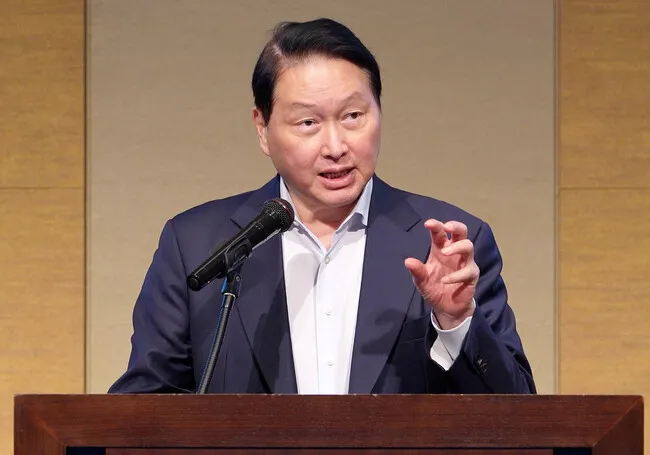
Choi Tae-won did not mince words. Speaking to the Asahi Shimbun from Tokyo on June 1, the chairman of SK Group told reporters that SK Hynix is actively considering building a new semiconductor fab in Japan — a country that has been sending serious investment attraction offers to Seoul. Multiple Japanese municipalities have reportedly made formal proposals, each one trying to capture a slice of what could be the most significant memory chip investment in the region this decade.
He also floated something more consequential: a joint production arrangement with Kioxia, the Japanese NAND flash memory maker in which SK Hynix is effectively the largest shareholder. And then came the warning shot — if meaningful cooperation cannot be achieved, SK Hynix will walk away from its investment entirely.
That last line is the one worth sitting with. Choi was openly discussing a possible full exit from a company SK Hynix has held stakes in since 2018. In the history of Korea-Japan industrial relations, that kind of public ambiguity around a strategic asset is unusual. It signals either genuine frustration with the pace of renegotiation or a calculated move to tighten leverage before any formal talks resume.
Why Japan Makes Sense
The timing is hardly accidental. AI data center demand for high-performance memory is running 20 to 30 percent short of supply, according to Choi’s own assessment. That gap is not going to close by building fabs in Seoul alone, where land is scarce, water is constrained, and the geopolitical calculus is complicated by proximity to China. Every new facility in South Korea carries an implicit risk: if the Taiwan Strait heats up or Washington imposes broader export controls that sweep in Korean production feeding Chinese customers, Seoul-based fabs become exposed in ways Tokyo-based ones do not.
Japan offers something increasingly rare in this landscape: political alignment with the United States on export controls, a stable regulatory environment, and a government willing to subsidize advanced chip manufacturing at scale. The Japanese subsidies program, administered through the Semiconductor Supply Chain Strengthening Foundation, has already committed billions to TSMC’s Kumamoto complex. SK Hynix is now positioning itself to tap into the same pipeline — with the added advantage of being a domestic partner rather than a foreign entrant.
A domestic announcement is expected before year’s end, according to people familiar with the matter. But the location remains an open question, and the subsidy negotiations will determine whether the economics work for SK Hynix or merely look good on paper.
The Kioxia Problem
SK Hynix’s relationship with Kioxia is structurally awkward in ways that deserve closer examination. The Korean company became Kioxia’s largest shareholder not through a direct purchase but through a chain of convertible bonds held via a Cayman Islands vehicle — BCPE Pangaea Cayman 2, controlled by Bain Capital. SK Hynix controls most of the voting rights through those bonds, making it the de facto largest owner despite Bain technically holding 14.19 percent and Toshiba sitting at 14.12 percent. Kioxia itself reports roughly 43 percent in floating shares, which means the boardroom dynamics shift with every institutional trade.
This arrangement was always a workaround. It was never clean governance. And it was never designed to survive a long-term strategic partnership — at least, not without renegotiation. The bond structure gives SK Hynix influence without the accountability of outright ownership, which creates perverse incentives on both sides. Kioxia knows it cannot make major strategic decisions without considering Seoul’s position. SK Hynix knows it cannot fully commit to Kioxia’s future without owning enough to be blamed if things go wrong.
Choi’s comments suggest that renegotiation may be exactly what SK Hynix is preparing for. The phrase “one of the options” for joint production, R&D sharing, and supply chain cooperation reads like diplomatic language for: we are thinking about this, but we are also thinking about leaving. The more specific offer on the table appears to involve co-developing next-generation NAND processes and sharing production capacity, potentially centered on a new Japanese facility. But the alternative — a clean break — is now visibly on the table as well.
What This Means for Seoul
For South Korea, the implications cut in two directions, and both matter simultaneously.
On one hand, a Japanese fab would insulate SK Hynix from the most volatile scenarios in the China-US tech rivalry. If Washington tightens restrictions on Chinese buyers of Korean memory chips — a realistic possibility given the current trajectory and the growing pressure from American lawmakers who see Seoul as too tolerant of Chinese market access — having production outside the Korea-China orbit becomes an advantage, not a concession. It is the same logic that drove TSMC to Arizona and Samsung to Texas: diversify geography to hedge against political risk.
On the other hand, deepening industrial ties with Japan is politically fragile in Seoul. The historical grievances around colonial-era labor and comfort women are not going away, and they resurface with predictable regularity whenever Korean elites appear to be cozying up to Tokyo. Any government seen as handing strategic assets to Japan will face immediate backlash from opposition parties, labor groups, and civic organizations. Choi’s bluntness about potentially selling his Kioxia stake may be calibrated precisely to show he is not being naive about this relationship — that he is treating the Japan play as transactional rather than sentimental.
Second-Order Effects
The ripple effects extend well beyond SK Hynix and Kioxia. Samsung Electronics, which has been quietly investing in Japan through its Himeji facility and exploring additional capacity, will now face a sharper competitive dynamic. If SK Hynix secures a Japanese fab and deepens its Kioxia ties, Samsung loses its positional advantage in Japan and gains a rival with closer integration into the world’s second-largest NAND ecosystem. Samsung’s response will likely involve accelerating its own Japanese expansion or strengthening its own partnerships — possibly with Western brands or even European memory competitors.
Japan’s semiconductor ambitions, which have languished for decades, receive a significant boost if SK Hynix commits. The Japanese government has been trying to rebuild a domestic memory chip industry since the early 2000s, when Sony, Toshiba, and Hitachi collectively ceded ground to Korean rivals. A SK Hynix fab on Japanese soil would represent the first time a Korean memory champion has chosen Japan as its primary expansion destination — a reversal of the trajectory that has defined the industry for thirty years.
TSMC’s position in Japan also becomes more complicated. The foundry giant’s Kumamoto fabs are designed for mature and specialty nodes, not cutting-edge memory production. SK Hynix’s potential entry into the same ecosystem could create both collaboration opportunities — shared supplier networks, workforce pipelines, infrastructure — and friction, particularly if Japanese policymakers begin to view SK Hynix as the more strategically valuable partner given its memory specialization and its willingness to integrate with a domestic champion.
Who Wins, Who Loses
SK Hynix wins if it can secure subsidies from both Tokyo and Washington for a Japanese facility while retaining leverage over Kioxia’s technology roadmap. It wins again if the Kioxia exit happens on favorable terms — which would require the Japanese side to value SK Hynix’s remaining stake more highly than it currently appears to. The convertible bond structure, with its voting rights but limited equity exposure, gives SK Hynix a asymmetric position: it can influence Kioxia without bearing the full downside of a decline. Exiting cleanly would convert that advantage into cash, but only if Tokyo is willing to pay a premium for continuity.
Kioxia loses if SK Hynix walks. The Korean company’s voting power gives it outsized influence over Kioxia’s strategy, and without that anchor, Kioxia would be left contending with a rival — Samsung Electronics — that dominates DRAM and is closing the gap in NAND. Samsung has been quietly investing in Japan as well, which makes the Kioxia question even more urgent for Japanese executives who fear a Korean duopoly consolidating around their shores.
China loses the most. Any further geographic diversification of Korean memory production away from Chinese sourcing patterns narrows Beijing’s options for leveraging semiconductor dependencies — an option the PLA has discussed openly in recent years. Chinese data centers, which consume a significant share of global NAND and DRAM output, would face reduced access to Korean supply under tightening export control regimes. A Japanese-based SK Hynix fab would likely fall under US-Japan technology transfer frameworks that exclude Chinese end-users, effectively removing a portion of Korean capacity from the Chinese market entirely.
The Quiet Part Is the Point
What makes this story significant is not any single announcement. It is the pattern: a Korean conglomerate weighing a Japanese fab, flirting with a Japanese joint venture, and threatening to sell its largest Japanese holding — all in the same interview cycle. The message is deliberate and unambiguous. SK Hynix is testing the boundaries of what Tokyo and Washington will accept, and it is signaling to Seoul that it will not tie Korea’s semiconductor future to a single geographic or political axis.
The English-language press will likely cover this as corporate strategy. The actual story is geoeconomic. Seoul is building a hedge against a world where the US and China are decoupling their tech ecosystems, and Japan — a former colonizer, an American ally, and a NAND flash powerhouse — is emerging as an unlikely pivot point. The fab decision could reshape East Asia’s chip supply chain within months. The Kioxia question could reshape it within years. And neither outcome serves Beijing’s interests.
Choi Tae-won’s words should be read as both a negotiation tactic and a strategic forecast. The earthquake has not yet hit. But the tremors are already being felt.