Why Trump Is Forcing South Korea Into a $50 Billion Alaska Bet
Trump is pinning an Alaska LNG deal on Seoul as part of a broader energy-and-trade play that could reshape Korean industry and the US alliance. The $50 billion commitment is more than an investment—it's a political lever.
A $50 Billion Note With Strings Attached
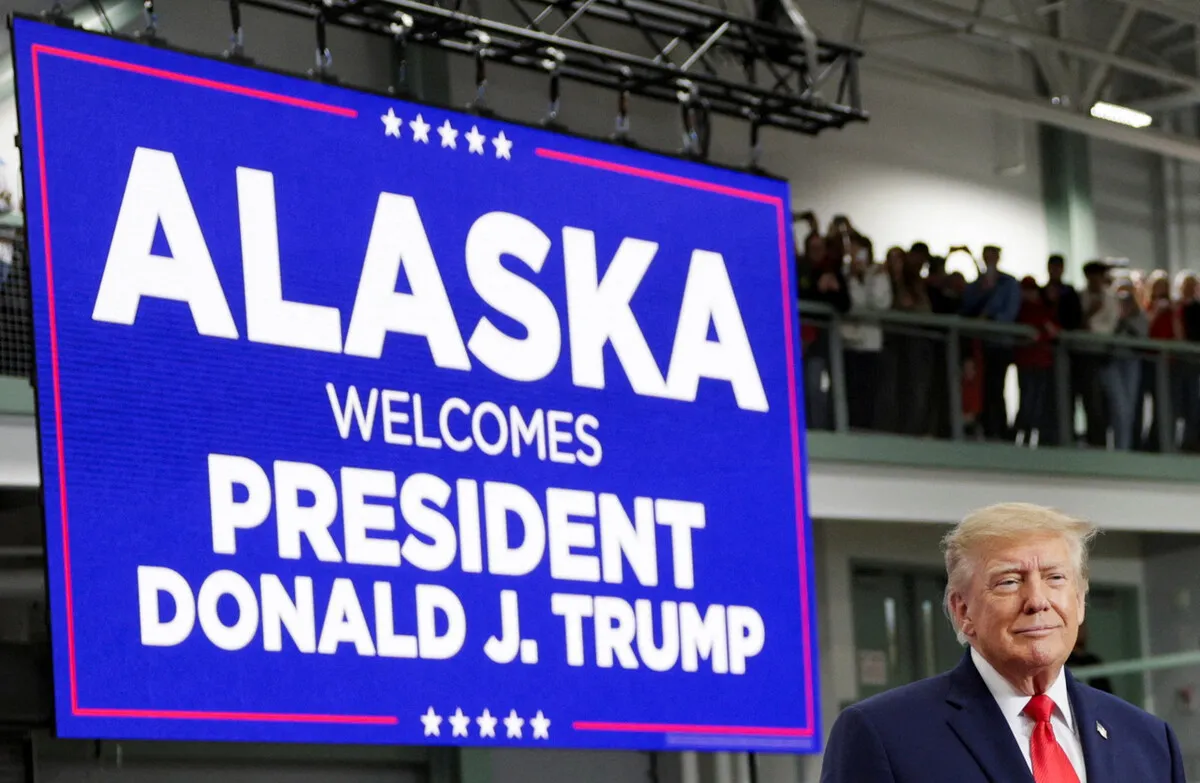
Donald Trump returned from Alaska this week with a headline ready-made for his Truth Social feed: South Korea is investing $50 billion in what he called the largest energy infrastructure project in the state’s history. He wrapped the number in language about trade agreements, job creation, and national security—exactly the kind of package he has been peddling across Asia in the run-up to the midterm elections.
But look past the press-release gloss and you find something more consequential. Trump is not simply courting capital for an Alaskan pipeline. He is converting Korean dependence on Middle Eastern and Southeast Asian LNG imports into a geopolitical bargaining chip—one that ties Seoul’s energy future directly to Washington’s domestic politics.
Who Is Being Pressured, and How
Trump did not single out South Korea alone. On the same trip he announced Taiwan’s $44 billion equity stake in the Alaska LNG project and a separate off-take agreement worth $700 billion to $800 billion that would lock in roughly 30 percent of the pipeline’s capacity for two decades. He also revealed that Japan would fund two new GlobalFoundries semiconductor fabs in New York state—a $210 billion commitment that the US government would partially absorb through a $9.55 billion direct investment in advanced chip packaging technologies.
The pattern is unmistakable. The US administration is asking each major Asian economy to bankroll American industrial projects while positioning those same economies as guaranteed buyers of the output. It is a closed loop: Korean money builds the pipe, Taiwanese money buys the gas, Japanese money funds the fabs, and American politicians take credit for all three.
What Seoul Stands to Lose
South Korea imports the vast majority of its LNG from Australia, Malaysia, Qatar, and the United States—already a significant supplier. The question is whether swapping one set of suppliers for another, under terms set in Washington rather than negotiated at arm’s length, actually strengthens Korea’s position.
Alaska LNG, if it ever materializes, will carry gas from the North Slope across Canada or via a new marine terminal on Alaska’s coast. Either route adds complexity and cost compared with established Middle Eastern and Australian supply chains. The $50 billion figure Trump cited is almost certainly a back-of-the-envelope projection rather than a signed contract. Still, the political commitment is real—and that is where the trap lies.
Korea’s large conglomerates, particularly the LNG trading arms of Samsung and SK, have already made significant investments in Alaskan gas development. Extending that exposure to a $50 billion infrastructure pledge would concentrate a massive share of Korea’s industrial capital in a single project in a single jurisdiction. If Trump reneges, if the pipeline is delayed, or if global gas prices collapse, the bill falls squarely on Korean balance sheets.
The Alliance Angle
This is not new. The US has long used energy deals as leverage in its alliances across Asia. What is different now is the explicit bundling of energy investment with broader trade concessions. Trump’s framing—Korea’s $50 billion as part of a “trade and investment agreement”—suggests Washington may be conditioning future cooperation on defense sharing, technology export restrictions, or procurement preferences in exchange for the capital.
Taiwan’s deal is particularly revealing. The $700 billion to $800 billion off-take agreement guarantees Alaska LNG a buyer while simultaneously giving Taiwan energy access that bypasses chokepoints vulnerable to Chinese coercion. For Seoul, the parallel is clear: align with the US on energy means aligning with the US on everything else. The question is whether Seoul has room to say no.
The Semiconductor Side Deal
Japan’s $210 billion commitment for two GlobalFoundries fabs in New York is the quiet counterpart to the LNG story. Trump stated explicitly that Tokyo would fund the construction while the US government absorbs a portion of the cost through its existing stake in GlobalFoundries. The $9.55 billion Pentagon-linked investment in silicon photonics and advanced packaging is the sweetener that makes the deal politically viable for Washington.
For Japan, the arrangement transforms a domestic industrial policy failure—years of lost ground in semiconductor manufacturing—into an American-led venture. For Korea, the implication is stark: Tokyo is willing to spend $210 billion to secure a place in the US tech ecosystem. Seoul faces the same pressure, but without the same level of commitment on display.
What Comes Next
The midterms are next month. Trump is clearly treating these announcements as campaign proof points—evidence that his economic nationalism delivers tangible results. The details, however, remain thin. Alaska LNG has been discussed for over a decade. Taiwan’s off-take agreement covers gas volumes that may not be available for years. Japan’s fab funding structure has not been legislated.
Korea’s government will face immense pressure to follow through on at least the appearance of commitment. Refusing outright would look like a rebuke of the alliance at a time when Beijing is actively exploiting fractures in the US-Japan-Korea trilateral. But signing a blank check for $50 billion without firm contractual terms would expose Korean industry to disproportionate risk.
The most likely outcome is a negotiated middle: Seoul announces a smaller, phased investment tied to specific performance milestones, coupled with promises of future capital once the project reaches financial close. Trump will claim victory. Korea’s businesses will absorb the cost. And the rest of Asia will watch to see whether this model—extractive, bundled, and politically timed—becomes the template for US alliance economics going forward.