South Korea Is Trading Defense Spending for Nuclear Subs — and It Could Reshape the Alliance
President Lee Jae-myung offered Trump increased defense contributions in exchange for accelerating nuclear submarine cooperation, a deal that signals Seoul's urgent pivot toward a more sovereign deterrent. The implications reach far beyond Seoul-Washington.
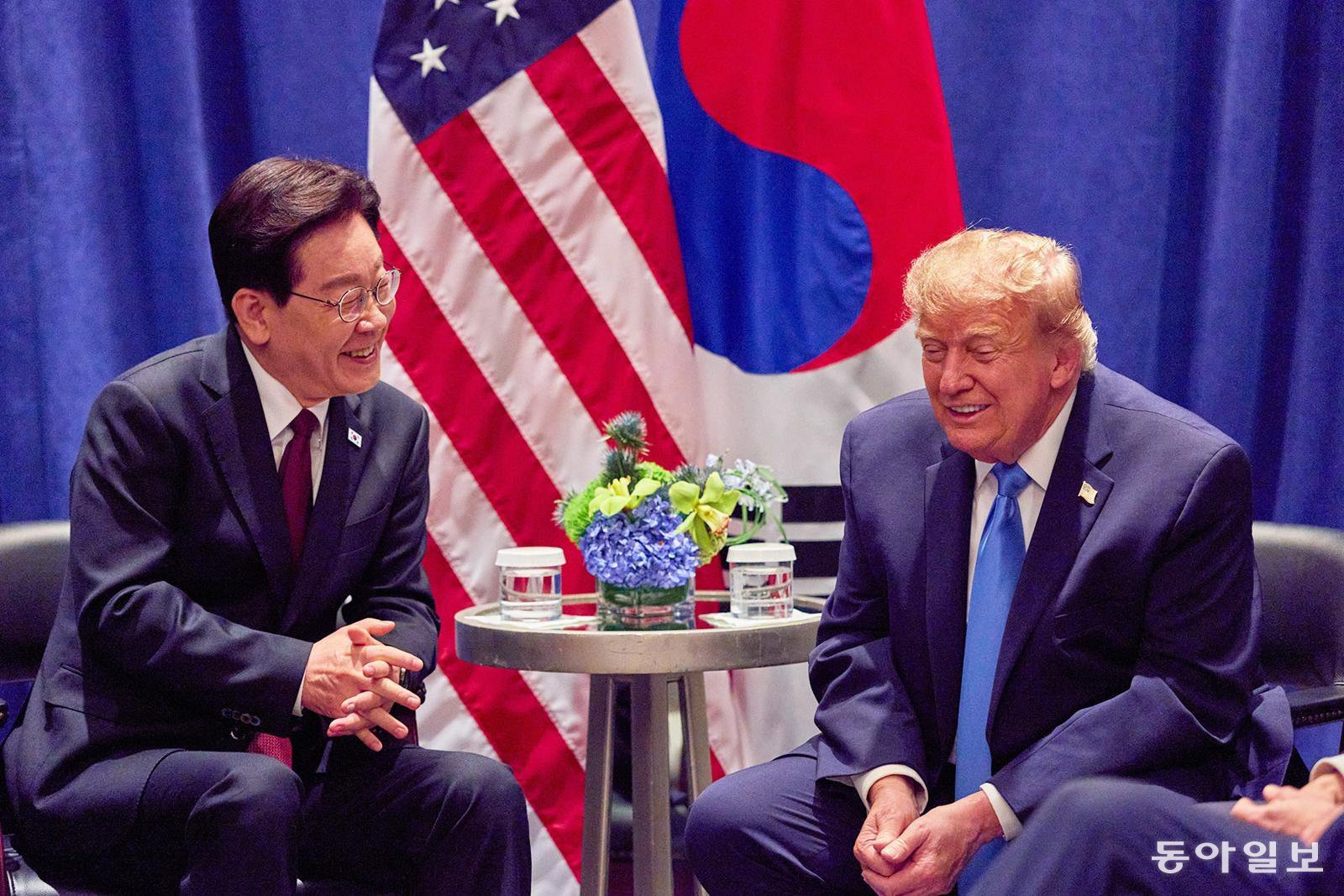
Seoul’s Bold Trade
In a 30-minute meeting at a Manhattan hotel during the UN General Assembly, South Korean President Lee Jae-myung delivered a proposition that would have been unthinkable even two years ago: increase defense spending, and the United States should accelerate talks on nuclear-powered submarines for the Republic of Korea.
It was not a request wrapped in vague alliance solidarity. It was a line item. South Korea pays more; the US speeds up the nuclear sub file. The framing — repeated in multiple Blue House briefings — signals a clear recalibration in Seoul’s calculus. For decades, the ROK accepted American strategic generosity within the nuclear taboo. Now it is trying to buy its way out of that restriction by spending its way up.
The numbers matter. South Korea has been ratcheting up its defense budget contributions under the bilateral Special Measures Agreement, but the core technology gatekeeping — governed by the 1977 US-ROK Nuclear Energy Agreement — remains untouched. That agreement restricts uranium enrichment and reprocessing, and it effectively blocks the kind of nuclear propulsion technology Seoul now wants. Trump’s openness to reconsidering these barriers would be historic, whether through renegotiation or executive flexibility.
Who Wins, Who Loses
South Korea wins the most if this deal lands. A nuclear-powered submarine fleet would transform the ROK Navy from a regional coastal defense force into a true blue-water capability — capable of extended patrols across the Pacific, independent of refueling constraints, and carrying a payload far beyond conventional diesel-electric boats. The strategic mathematics of the Korean Peninsula change dramatically when Seoul owns submarines that can operate undetected for months at a time.
The United States gains a predictable ally that shoulders more of its own burden — a selling point to any skeptical Congress member. But there are real risks. Nuclear proliferation advocates in Washington and Tokyo will see this as a dangerous precedent. Japan, already constrained by its pacifist constitution and US nuclear policy, will watch Seoul acquire capabilities that Tokyo cannot match through formal channels. The non-proliferation regime, built over decades, frays further.
North Korea, predictably, loses. The entire rationale for its nuclear weapons program — deterrence against a superior conventional force — erodes if the ROK gains stealthy, long-endurance strike platforms. Pyongyang’s calculus is already strained by its own economic fragility. A ROK nuclear submarine fleet would add another layer of strategic anxiety.
The Wartime Control Question
If the nuclear submarine track succeeds, the second major item on the agenda — transfer of wartime operational control, or Wonjeon-gwak — becomes the real test of alliance maturity.
South Korean negotiators spent significant time on this topic during the summit, according to Blue House sources. President Lee made the case that ROK conditions for taking back command of its own forces in wartime were being met, and that the transition should be accelerated. Trump reportedly listened.
This is not new demand. The ROK has sought full wartime control for over a decade, with multiple timelines proposed and delayed. The obstacles have always been both practical and political — the US wants to preserve a chain of command it trusts, and South Korean governments have hesitated to cross the finish line amid North Korean threats. The current framing, however, is different. Seoul is explicitly tying the two issues together: nuclear sub cooperation accelerates with defense spending increases, and the same logic applies to operational control.
That linkage is significant. It suggests Seoul is no longer willing to wait for Washington to set the pace. The ROK is offering something tangible — more money, more investment — in exchange for strategic autonomy.
The North Korea Dimension
One detail from the summit deserves attention. According to the Blue House, President Lee asked Trump to take a more active role in reopening North Korean dialogue. Trump’s response, paraphrased by officials, was essentially that he understood — and notably, he claimed that Kim Jong Un himself had described their relationship as positive, something Trump framed as virtually unique.
No specific communications channel was confirmed. But the mere fact that the ROK president is asking the US to lead on North Korea — rather than insisting on direct Seoul-Pyongyang engagement — marks a notable posture. It reflects either a pragmatic acknowledgment that Washington holds the leverage with Pyongyang, or a calculation that the timing is not yet right for direct inter-Korean diplomacy.
Either way, it signals that Seoul’s immediate priority is strengthening the bilateral defense architecture, not solving the North Korea question alone.
What Comes Next
The two leaders reportedly agreed to deepen consultations on nuclear submarine fuel, enrichment and reprocessing, and the operational control transition. A follow-up summit in November is expected to produce more concrete outcomes.
The timeline is tight. If the US agrees to reopen the Nuclear Energy Agreement discussions — a political decision that would require Trump’s personal involvement — the technical work could begin within months. But legislation, interagency coordination, and congressional consultation would slow everything considerably. The ROK Navy is unlikely to see a nuclear-powered vessel before the early 2030s at the earliest.
Still, the symbolic shift is enormous. South Korea entered the 21st century accepting a nuclear umbrella it did not help build. It is now trying to build its own nuclear-powered edge, and it is paying for the privilege. Whether Washington accepts the trade depends on whether Trump sees strategic value in a more empowered Seoul — or whether he sees only a complication his non-proliferation establishment would fight.
The golf invite at the G20 in December was reported as a casual aside. In alliance diplomacy, casual often means something.