South Korea's Landmine Crisis Is a Proxy War Over Reality Itself
A single landmine blast in the DMZ has ignited accusations, conspiracy theories, and domestic political fracture — revealing how inter-Korean tensions now play out as competing narratives rather than conventional military confrontation.
The Wound That Won’t Heal
President Lee Jae-myung visited three wounded soldiers at the National Capital Area Military Hospital on September 30, moving quietly through rooms without cameras, without photographs, without the usual theatrical display of presidential duty. The reason was telling: the families had asked for it. Children would see the images. The soldiers themselves had become ammunition in a war that had nothing to do with the mines that maimed them.
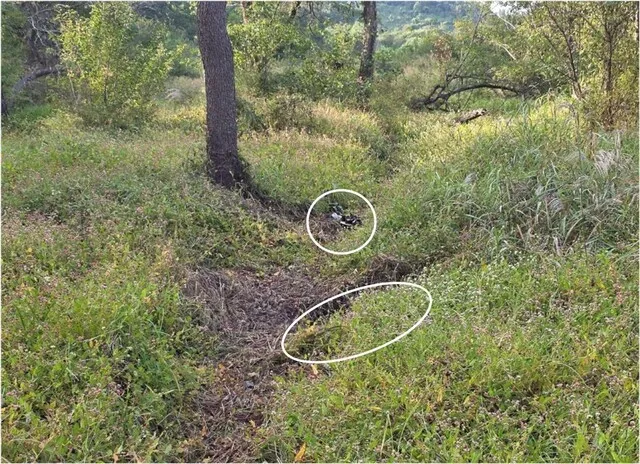
The landmine blast occurred during a routine patrol in the Demilitarized Zone on September 28, a narrow strip of land that has not seen a true peace treaty since the Korean War armistice collapsed in 1953 — though technically it never officially ended. One soldier survived with serious injuries after his team dragged him from the blast radius. His own words, relayed through the president’s office, were simple: the team stayed together, and that kept them alive.
What happened next was anything but simple.
Pyongyang’s Theater
Kim Yo-jong, the powerful younger sister of North Korean leader Kim Jong-un and effectively the regime’s chief propaganda operator, held a press conference that resembled something between a state funeral and a political execution — except the targets were abstraction. She declared that North Korean forces had never crossed the border, that the mine was either planted by South Korean operatives or dropped by a drone, and that Seoul was staging a provocation to justify military escalation.
The language was precise and carefully calibrated. Not denial — accusation. Not rebuttal — counter-narrative. Kim Yo-jong did not simply say Pyongyang had nothing to do with the blast; she offered an alternative explanation that shifted blame onto Seoul itself. This is a well-worn playbook: when you cannot deny an event, redefine its origin. The theatricality was the point. A televised press conference where a woman in a dark suit dissects a military incident with the gravity of a war criminal trial is designed for one audience — not the world, but the North Korean public, and the regional actors watching for signs of desperation or strength.
The Investigation That Undermined Both Sides
South Korea’s joint investigation team reached a conclusion that satisfied no one. Investigators recovered one landmine at the blast site. It was a North Korean-made device — but not the same type the wounded soldiers had described under interrogation. This discrepancy matters more than it initially appears. If the mine did not match the soldiers’ account, either the soldiers misidentified it, the mine was moved, or something else is being concealed. The investigation results were announced alongside the president’s hospital visit, as if the two events — the human cost and the bureaucratic response — could be separated.
They cannot.
The United Nations Command, which oversees the armistice framework, classified the incident as a breach of the 1953 armistice agreement. That designation carries legal and diplomatic weight: it moves the event from the realm of “incident” to the realm of “violation,” which in turn justifies military posture adjustments, alliance consultations, and potentially sanctions. But the UN Command’s assessment exists in a vacuum of enforcement. The armistice has no mechanism for punishing violations. It can only name them.
The Domestic Fracture
Here is what Western reporting has largely missed: the landmine blast has become a proxy battlefield for South Korea’s own political wars. The ruling party and the opposition have already begun weaponizing the incident. Conspiracy theories have erupted on social media — some claiming the blast was fabricated, others insisting it proves the government is too soft on the North, a third camp arguing it reveals a deeper conspiracy involving military intelligence. The wounded soldiers’ families explicitly told President Lee that people were exploiting their pain for political ends.
This is the new shape of inter-Korean conflict. It no longer plays out only across the border or in missile tests. It migrates inward, poisoning the information space that a democratic society depends on. When a landmine wound becomes fuel for domestic political narratives, the damage extends beyond the physical injury. The soldiers who survived may recover their bodies; the society that consumed their suffering may not recover its shared sense of reality.
President Lee’s response was deliberately restrained — a quiet hospital visit, an instruction to review compensation protocols, a warning against those who would stir conspiracy theories. But the restraint itself became a political statement. In a country where the conservative opposition has spent years attacking Lee’s handling of North Korea, doing nothing flashy is itself a position.
What Happens Next
The immediate trajectory is clear: Seoul will intensify DMZ patrols and likely increase military readiness along the border. Pyongyang will escalate its rhetorical temperature, possibly testing the new posture with its own provocations. The UN Command’s breach designation will circulate through diplomatic channels without producing concrete consequences.
The deeper trajectory is harder to chart. South Korea is navigating a period of unprecedented political fragility. Lee Jae-myung, elected on a platform of managerial competence and inter-Korean pragmatism, now faces a crisis that defies both approaches. Concession reads as weakness. Escalation risks war. The middle path — the one he appears to be choosing — satisfies no one.
The landmine blast was an accident of geography and history — a weapon left behind by a war that never ended, triggered by chance, claimed by competing narratives. What makes it dangerous is not the mine itself but what it reveals: in 2026, a single explosion can ignite a proxy war over reality before the wounded have stopped bleeding.
The soldiers in that hospital want to return to duty. Their families want the conspiracy-mongers to stop. President Lee wants to govern. None of those wishes are impossible. But the incident has exposed a fault line that runs deeper than the DMZ — through the center of South Korean society itself.