South Korea's Ruling Party Collapses From Within As Prosecutors Seek 20 Years For Martial-Law Saboteur
A landmark prosecution demand of 20 years against a top ruling-party figure for allegedly sabotaging the National Assembly vote to lift martial law signals the deepest crisis in South Korean politics since democratization — and the governing party's majority is now a shell.
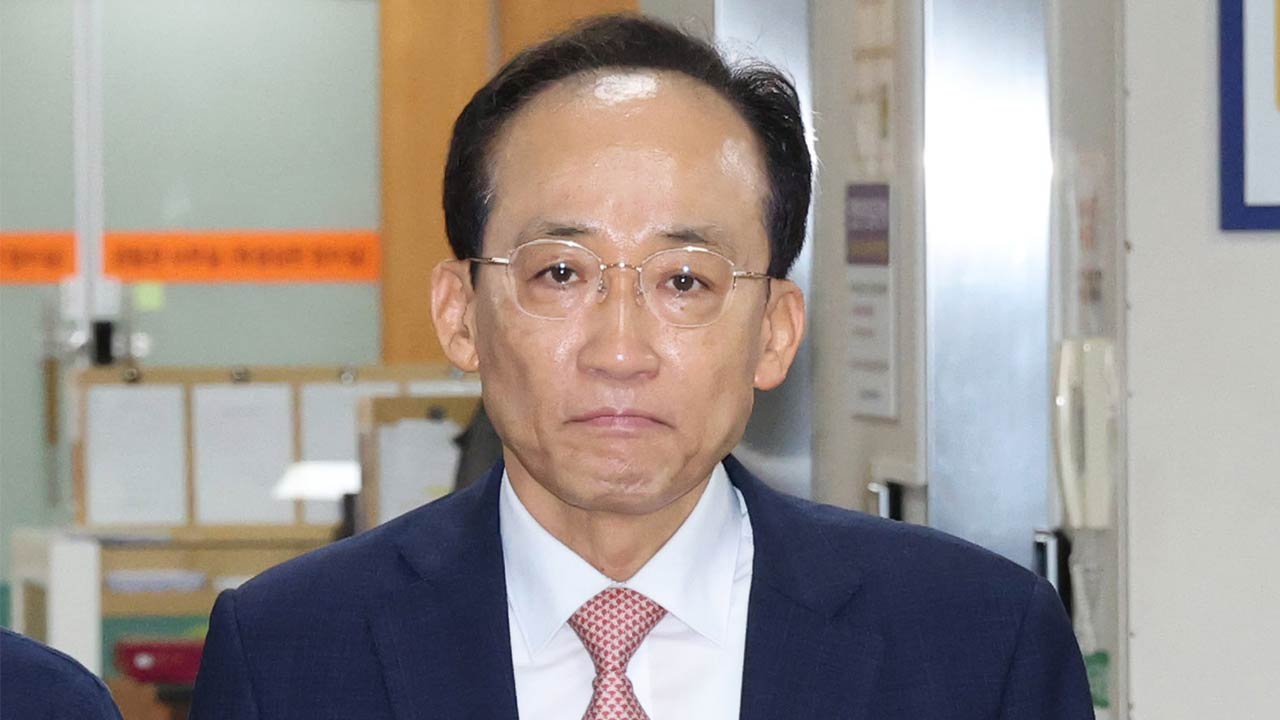
The Number That Redrew Seoul’s Map
On the morning of December 3, 108 members of the People Power Party sat in the National Assembly roll call. Eighteen showed up to vote on lifting martial law. Ninety remained outside — many at the party headquarters, paralyzed, waiting for their whip to tell them where to go.
That gap, between what the Constitution demands and what a parliamentary majority delivered, is now the centerpiece of the most consequential trial in South Korea’s democratic history. Prosecutors have asked the court to sentence Cho Kyoung-ho, the party’s former floor leader and current mayor of Daegu, to 20 years in prison.
Twenty years. That is not a sentence for obstruction. It is a sentence for complicity in an act the prosecution defines as treason.
What the Prosecutors Are Saying
The special counsel’s case, laid out at Cho’s first-instance trial today, does not stop at the vote count. The prosecution argues Cho personally engineered the failure of a constitutional check on executive power.
According to the indictment, Cho received a phone call from President Yoon Suk-yeol and then spent the next hours bouncing the location of an emergency legislative caucus multiple times. The result was chaos among PPP lawmakers: some headed to the Assembly, some to the party office, some nowhere. By the time order emerged, the window for a meaningful vote had narrowed to a fraction — and only 18 of the party’s 108 legislators had crossed the Assembly threshold.
Cho himself did not enter the plenary session room where the vote took place, even though he remained inside the National Assembly building. He gathered colleagues outside, at the party headquarters, issuing instructions that steered them away from the constitutional duty of oversight.
The prosecution’s characterization is stark: Cho performed the same function as the martial-law troops outside, but from within. The lawyers described it as internal collaboration — someone who, instead of checking executive overreach, made sure the check failed.
Why the Vote Was the Battleground
The special counsel’s opening statement framed this not as partisan maneuvering but as a constitutional line. The National Assembly’s authority to demand lifting of martial law is, in the prosecutors’ words, the last bulwark against what they called the “imperial presidency” — a warning shot aimed squarely at the structures that allowed December 3 to unfold.
President Yoon’s decision to seal the Assembly and move against political leaders was, the prosecution argued, calibrated to the same calculus: whoever controls the legislature’s ability to speak controls the outcome. That is why the vote was the battlefield, and why Cho’s role inside it is now the crime.
The math is unforgiving. Of the 108 ruling-party legislators, 18 voted. That is 17 percent. In any other democracy, a delegation that small would not be described as the governing majority. It would be described as a fragment.
The Implications for Governance
South Korea’s parliamentary arithmetic has been shattered by this investigation. The ruling party entered the current term with a comfortable majority. It leaves the trial with a cohort that includes a sitting provincial mayor facing two decades behind bars, a former floor leader effectively disqualified from legislative leadership, and dozens of colleagues whose names were cited in prosecutorial documents as participants in the obstruction.
What does this mean for policy continuity? Almost everything.
South Korea is navigating a fragile equilibrium on two fronts simultaneously: the economic realignment demanded by Washington’s tariff pressures and the military balancing act required by a North Korea that has accelerated its own weapons programs. Both require a government that can pass budgets, coordinate with allies, and project stability.
Right now, the executive branch operates without a dependable legislative partner. The judiciary, through the special counsel’s office, is conducting trials that effectively audit the ruling party’s parliamentary operation. This is not a opposition-party challenge — it is a judicial review of whether a majority party chose to govern or to obstruct.
The market will price that uncertainty. The alliance architecture will adjust to it. Regional partners, especially Tokyo and Washington, will watch closely to see whether Seoul can field a coherent foreign-policy voice during a period when its own governing coalition is being disassembled in open court.
Who Wins, Who Loses
The immediate loser is the People Power Party as an institution. Whether it survives as a viable parliamentary force depends on how many of the 90 legislators absent on December 3 are drawn into subsequent indictments — and how many of those already named are acquitted.
The winner, provisionally, is the Constitutional Court’s architecture: the system of checks that December 3 was designed to short-circuit has, through the special counsel’s prosecution, reasserted itself. Not through force, not through protest, but through procedure. That is the more durable outcome.
President Yoon faces his own trajectory. The special counsel’s focus on Cho is part of a broader inquiry that traces the chain of command from the presidential palace to the parliamentary floor. Whatever sentence Cho receives, the verdict will illuminate who gave the order and who carried it out — or, in Cho’s case, who failed to carry it out in the direction the Constitution required.
What Comes Next
The trial will run for months. Sentencing recommendations from the prosecution are not binding; judges can and do depart from them. But the 20-year demand sets a ceiling that will define the political temperature regardless of the final number.
If Cho is convicted and sentenced at or near that level, the ruling party’s remaining majority in the Assembly evaporates. Budget votes stall. Legislative priorities — tax reform, defense spending, China trade calibration — become exercises in negotiation with a government that no longer commands its own floor.
If the court acquits, or imposes a fraction of the requested term, the signal goes the other way: the obstruction was political, not criminal, and the ruling party retains its institutional integrity even as the scandal stains it.
Either outcome will reshape South Korea’s political landscape. The question is whether it reshapes it before or after the next election cycle — and whether the region can absorb the shock of a major ally experiencing a constitutional crisis of this magnitude without recalibrating its own posture.
The answer to that will not come from Seoul alone.