Why South Korea Is Burning Its Russia Bridge Over Ukraine POWs
South Korea is recalling its ambassador to Ukraine in its most dramatic diplomatic escalation against Moscow's ally in 18 years. The move signals a decisive break from Seoul's old balancing act and puts Washington's Indo-Pacific strategy in sharper focus.
The Recall That Isn’t About Ukraine
South Korea is recalling its ambassador to Ukraine — a move that carries far more weight than the headline suggests. It is the first such escalation since 2008, when Seoul yanked its envoy from Tokyo over a sovereignty dispute over the Dokdo islets. Eighteen years later, the instrument is the same but the gravity is different. This time, the real target is not Kyiv. It is Moscow.
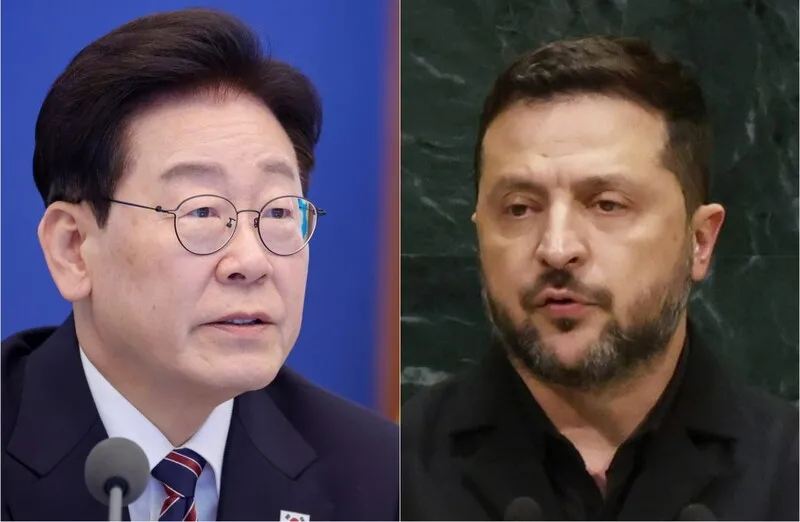
The trigger is a leaked video of North Korean soldiers captured fighting for Russia in Ukraine. President Lee Jae-myung had quietly arranged the repatriation of two POWs through a confidential agreement with Kyiv. On September 23, at the UN General Assembly in New York, President Volodymyr Zelensky publicly disclosed the arrangement — and then denied the confidentiality pact ever existed. That was the moment Seoul decided the cost of restraint had outweighed the cost of escalation.
The breach was not merely diplomatic impropriety; it was a direct violation of an agreement that involved the return of North Korean citizens, a population South Korea considers its own. Under Seoul’s National Security Act, any transaction involving North Korean nationals requires government oversight and approval. Kyiv’s unilateral disclosure effectively rendered the entire process void in South Korean law and exposed two soldiers to potential execution if repatriated without proper protocols. The denial of the confidentiality pact was, in Seoul’s view, an attempt to rewrite history in real time — a move no government can tolerate when sovereignty is involved.
Diplomatic sources in Seoul described the moment of decision as swift and virtually unanimous within the presidential office. The calculus was straightforward: accepting the breach would establish a precedent that Ukraine could treat South Korea as a information-free zone, sharing sensitive arrangements with Moscow or the international press at will. The alternative — escalating — sent a message to all of Seoul’s partners that breaches of this magnitude would carry consequences.
A Strategy of Equidistance Is Dead
For years, South Korea has walked a deliberate middle path. It joined Western sanctions on Russia after the full-scale invasion of Ukraine in 2022, but it did not cut off trade. It continued supplying Russian oil refining products — diesel and fuel oil — through third-country channels. Beijing watched. Moscow watched. Seoul told itself it was keeping options open, protecting its economic interests, and avoiding the kind of provocation that would push Pyongyang and Moscow closer together.
That strategy produced a result no one wanted. North Korea sent at least 12,000 troops into Russia’s Kursk region. They fought. Some were captured. The footage was brutal. And when Seoul tried to manage the fallout quietly, Kyiv put it on the world stage — then refused to own the agreement that had made the quiet solution possible.
The ambassador recall is Seoul’s answer. It is also a signal to Washington and Tokyo that the era of hedging is over.
The end of equidistance carries immediate second-order consequences. South Korean refineries that had been processing Iranian and Venezuelan crude into diesel for re-export to Russia through Malaysia and the UAE now face a political environment where any continuation of that trade would invite not just American sanctions but domestic political retaliation. Opposition lawmakers have already called for investigations into which companies benefited from the Russian-adjacent supply chains. The financial sector is bracing for compliance reviews that could reshape export licensing for dozens of firms.
Perhaps more significantly, the recall removes South Korea’s ability to serve as a backchannel between Ukraine and Russia in the future. Seoul had cultivated relationships with both sides precisely to preserve this option. With the ambassador absent and diplomatic温度 clearly dropped, that role evaporates. Any future mediation effort will require a new architecture — one that likely excludes Seoul entirely.
Who Wins and Who Loses
Washington wins. The United States has long pushed South Korea to treat the Russia–North Korea–China triangle as a single threat and to align its defense posture accordingly. The recall removes the last credible excuse for Seoul to claim it is still balancing between capitals. Defense coordination with Japan — which has been hampered by historical grievances and occasional American foot-dragging — now sits on a cleaner political foundation.
American officials privately acknowledged that the recall was overdue, regardless of the trigger. The Pentagon’s Indo-Pacific posture documents had long identified the Russia-North Korea military cooperation as a strategic alarm bell. South Korea’s participation in that cooperation — even indirectly, through trade — had been a persistent friction point in trilateral planning. With Seoul now publicly aligned, the operational tempo of U.S.-ROK-Japan exercises can increase without the awkwardness of pretending otherwise.
Japan wins too, though quietly. Tokyo has been pressing Seoul to harden its stance on North Korean abduction issues and missile threats, and a South Korea that has broken with Moscow’s partner removes a diplomatic obstacle. Japanese Prime Minister Sanae Takaichi’s recent comments calling for stronger trilateral coordination now carry more weight in Seoul than they have in years.
Kyiv loses credibility. Zelensky’s team appears to have calculated that revealing the POW transfer would generate international sympathy and pressure on Russia. Instead, it generated anger in Seoul and exposed a pattern of unilateral moves that make future cooperation nearly impossible. The Ukrainian military may gain nothing from alienating a country that supplies weapons and ammunition through Europe.
Ukrainian officials have not yet responded publicly to the recall, which is itself telling. Moscow’s propaganda apparatus is already working the angle — state media frames the incident as proof that the West treats its partners as expendable. Whether Kyiv apologizes, stays silent, or doubles down will determine the next phase of this rupture.
Moscow wins the short game and loses the long one. The footage of captured North Korean troops is propaganda gold for the Kremlin — proof of deepening alliance. But South Korea’s exit from the supplier seat is not reversible. Diesel and fuel oil exports to Russia through Southeast Asian refining hubs were already under scrutiny from U.S. sanctions enforcers. Seoul’s public break makes any future supply chain arrangement politically toxic in Seoul and unlikely to survive a second American administration that demands compliance.
The Europe Question
Here is where the calculation gets riskier. South Korea’s biggest trading partner is still the European Union. Ukraine receives the vast majority of its military aid from EU member states. If Kyiv decides to press the complaint in Brussels — which is entirely possible — Seoul could face diplomatic pressure from two directions at once. European officials may view the recall as disproportionate to a diplomatic spat and push for de-escalation.
German and French diplomats have reportedly begun informal inquiries into whether Seoul’s response was calibrated correctly. The concern in Berlin, in particular, is that the recall could undermine the broader Western consensus on supporting Ukraine. If key partners begin treating diplomatic disagreements with Kyiv as grounds for escalation, the normative framework that holds the coalition together weakens.
The South Korean government seems to have accepted that risk. Foreign Ministry official Cho Hyun confirmed that humanitarian aid to Ukraine will continue despite the recall. That is the bridge-building language, and it matters. But the military dimension — ammunition supply, intelligence sharing, coordination on North Korea — is where the real shift will be measured.
What Comes Next
Ukraine is expected to respond. Analysts at the Eurasia Strategy Institute Park Byung-hwan warned that Kyiv is likely to take countermeasures. The question is whether those countermeasures target South Korea directly or simply stall the quiet channels that handle weapons transit and funding.
There are also domestic political dimensions to consider. President Lee Jae-myung’s approval ratings have fluctuated, and the recall could become a wedge issue in upcoming legislative battles. Opposition parties may argue that the president escalated unnecessarily, while his allies will frame it as necessary sovereignty defense. The narrative war inside South Korea will run in parallel with the diplomatic one.
The timeline for the ambassador’s return is unclear. Diplomatic recalls are rarely permanent — they signal disapproval until the offending party offers something that satisfies the offended. Seoul has already stated that a proper apology is required. If Kyiv offers one through back channels, the ambassador can return within weeks. If not, the gap becomes structural.
What is clear is that the balancing act is over. South Korea has chosen a side. The question now is whether it has chosen early enough — or whether the costs of alignment will outweigh the benefits before the next crisis arrives.