Trump's Iran Pause Is a Midterm Play, Not a Peace Gesture
Korean media are reading Trump's de-escalation rhetoric as straight electoral arithmetic — a calculation Western desks largely miss by fixating on the military signal. The oil price implications may matter more than any strike timeline.
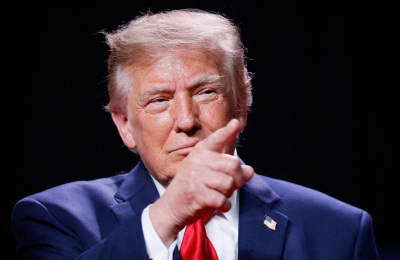
A pause with a price tag
Donald Trump told Truth Social on October 8 that the United States would not attack Iran before the November 3 midterms. At the same time, he said naval blockades would remain in place and described ongoing discussions with Tehran as productive. The framing was deliberately dual: restraint on one flank, pressure on the other. Korean media picked up on something Western desks have been slower to connect — this is not simply a military decision. It is an electoral one.
The Reuters/Ipsos poll released that same week told the story plainly. Trump’s approval rating sat at 32 percent, a low he has not recovered from since September. Republican support among his own base fell from 86 percent in January to 73 percent. Support for military action against Iran dropped to 31 percent from 37 percent in March. Eighty-three percent of respondents said they expect any war to be long. And in the generic ballot question, Democrats led 43 percent to 35 percent — the widest gap recorded in this year’s Reuters/Ipsos series.
Those numbers do not suggest a president free to escalate. They suggest a president calculating exactly how much pressure he can apply without handing the opposition a referendum on his judgment.
What makes the Korean reading distinctive is that it treats the oil market as a primary variable rather than a secondary externality. In Seoul, where energy security shapes foreign policy instinct, the Hormuz question is not abstract. It is a household budget issue. NewsPim and other outlets have traced how Trump’s rhetoric shifts in lockstep with gasoline price forecasts — the same feedback loop that has shaped American presidential strategy since the 1979 oil crisis. The West has tended to analyze the Iran pause through the lens of deterrence theory and alliance management. Korea has been watching the pump price.
The Axios leak and the timing puzzle
The political reading gains weight when placed against the military signaling that preceded it. Axios reported the day before that the Pentagon had instructed CENTCOM to complete preparations for a large-scale operation against Iran, though no date was set and Trump had not made a final decision. That sequence — leak first, declaration of restraint second — is not accidental. It tests the waters while leaving room to pivot.
Washington and Israeli sources floated the possibility that any actual strikes could come before the Israeli election on November 27, well ahead of the American midterms. That timeline creates a narrow window. If Trump wanted military action to serve his re-election posture, the Israeli clock gives him an earlier opportunity to claim action without directly linking it to the November ballot. If he did not want that linkage, the pause announced on October 8 buys him exactly that distance.
But the timing also serves a more mundane political function. A pre-midterm strike carries the risk of becoming a post-midterm liability if the operation drags. Even a successful raid generates follow-up questions about reconstruction costs, regional escalation, and the fate of any prisoners taken. By pausing now, Trump removes the possibility of an embarrassing entanglement on his watch while preserving the option to act after the voters have gone home.
Korean analysts have also noted that the leak itself — coming from Axios, a publication that has cultivated relationships with both sides of the American political establishment — functions as controlled pressure. It signals to Iran that the threat is real without committing the United States to follow through. That calibrated ambiguity is a bargaining tool, not a blunder.
What the oil numbers actually say
Here is where the Korean coverage sharpens a point often lost in Western reporting. Trump claimed that 22 million barrels passed through the Strait of Hormuz in a single night, and not one barrel originated in or bound for Iran. That figure matters less for its symbolism than for what it reveals about the blockade’s actual economic toll.
Iranian oil was already largely excluded from global markets before the blockade tightened. The claim therefore functions as a rhetorical trophy — proof that sanctions are working — rather than evidence of a new squeeze. But the broader implication is real: the blockade is disrupting transit volumes without yet collapsing them, which means markets are absorbing the shock rather than breaking under it. That distinction matters for a president worried about gasoline prices heading into an election.
A genuine disruption to Hormuz flows would spike Brent crude sharply and hand Democrats a ready-made campaign issue. A blockade that constrains but does not choke allows Trump to claim strength while avoiding the price pain that would translate into polling damage. The Korean press has picked up on this tension because it sits at the intersection of foreign policy and household budgets — exactly where American voters feel it.
The second-order effect is worth tracking. Energy traders have begun pricing in a prolonged pause scenario, which means futures curves are adjusting downward from their previous fear premium. That adjustment benefits American consumers and, by extension, the political calculus. But it also creates a trap: if Trump escalates later, the market repricing could be sharper and more punitive than if the escalation had come out of a higher baseline of uncertainty. A calm oil market is a political asset, but it is also a vulnerability.
What Western coverage is missing
Most English-language reporting treats Trump’s Iran statement as either escalation or de-escalation. The reality is messier and more politically literate. He is applying maximum pressure while removing the option of a pre-election military spectacle that could backfire. The blockade stays. The rhetoric hardens. The kinetics pause.
This is not peace. It is phased coercion calibrated to an election calendar. And it carries real second-order consequences. Energy markets priced in a certain degree of instability; any sudden shift toward open conflict would punish that pricing. Conversely, a prolonged pause without diplomatic progress risks emboldening Tehran to test the blockade’s resolve. Both outcomes favor different constituencies — one hurting Republican swing voters, the other emboldening Iran’s calculations.
Western coverage has also underweighted the diplomatic dimension. The mention of “productive” discussions with Tehran is not incidental window dressing. It preserves the appearance of engagement while the coercive measures remain active. That duality allows Trump to claim he is exploring every option without being pinned down on any specific outcome. For European allies, who face the direct consequences of Middle East instability, the ambiguity is frustrating. For American voters, it is invisible — until something breaks.
The Korean frame exposes another blind spot: the assumption that US policy toward Iran is driven primarily by non-proliferation concerns. The data suggests that electoral incentives are currently the tighter constraint. That does not mean the nuclear question is absent from the calculus. It means it has been subordinated to a more immediate political imperative.
Who wins, who loses
The immediate winner is the political establishment on both sides, which gets time. Democrats retain their polling edge without being forced to answer for a war they oppose. Republicans can claim deterrence without the costs of combat. Iran faces sustained economic pressure but avoids the existential threat that would unify its population behind the regime.
The loser is clarity. The ambiguity of a blockade without a timeline and discussions without a framework leaves markets, allies, and adversaries guessing about the next move. That uncertainty is politically useful for Trump in October. It is strategically costly for everyone else.
The longer-term loser may be the non-proliferation architecture itself. When coercion is timed to an election calendar rather than to strategic necessity, the signal sent to Tehran is that American commitments are contingent on domestic politics. That lesson will not expire when the votes are counted. Iranian strategists have long understood that US political cycles create windows of constraint and opportunity. This pause confirms what they already suspected: that American pressure rises and falls with the news cycle, not with the strategic landscape.
Closing the gap
The Korean media’s reading is not flawless. It risks over-stating the coherence of Trump’s calculus — a man whose public statements frequently contradict his private instincts — and under-stating the genuine policy constraints imposed by regional allies and military logistics. But it is closer to the truth than the escalation-or-de-escalation binary that dominates English-language coverage.
If strikes do come, the Israeli election date of November 27 provides the most plausible trigger. If they do not, the blockade will remain the primary instrument of pressure through the midterms — a low-intensity conflict that keeps oil markets nervous without delivering the dramatic shock that would redraw them. Either way, the Korean media’s central insight holds: the real story is not what Trump is doing to Iran. It is what he is doing to his own electoral calculus. The question for the next several weeks is whether that calculus proves durable enough to survive the aftermath.