South Korea’s 95% SMR Localization Play Could Reshape Global Nuclear Supply Chains
Gyeongnam province has concentrated over a quarter of Korea's nuclear firms and a 95% domestic localization rate for SMR core components. What English-language desks are missing: this is not just a domestic industrial story — it is a supply-chain strategy aimed at the US and European markets.
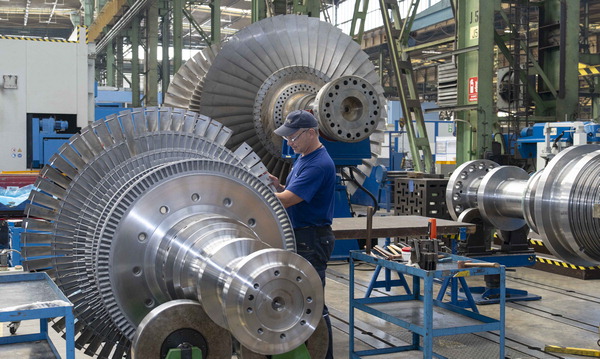
The real story behind South Korea’s SMR push
South Korea is building something most Western energy reporters are not tracking: a geographically concentrated, near-complete supply chain for small modular reactors inside a single province. That province is Gyeongnam — home to Doosan Enerbility, more than 240 nuclear firms, and a government strategy that aims to shrink SMR production time from 14 months to roughly three.
The headline number is 95 percent. Doosan Enerbility says its localization rate for core nuclear components has reached that level. That figure matters because SMR commercialization in the US and Europe has stalled not on design but on manufacturing capacity. Several American and British designs sit in regulatory queues partly because their builders cannot source certified high-pressure components fast enough. Korea is solving that bottleneck at home and exporting the solution.
Where the value chain lives
Doosan Enerbility traces its reactor and steam-turbine work back to the Uljin Nuclear Power Plant in 1982. Over four decades it built components for the APR1400 — Korea’s indigenous reactor design — and for the US AP1000. The cumulative experience is what produced the 95 percent localization rate, according to the company’s published track record.
But Doosan alone does not make a supply chain. Gyeongnam hosts 243 of South Korea’s 1,026 nuclear-energy companies, representing 23.7 percent of the national total. Those firms generated 1.56 trillion won in revenue last year against a national total of 2.75 trillion won — 56.8 percent. The province is number one in both count and output.
The supporting cast matters as much as the lead. Hyosung Good Springs makes pumps. Beomhan Mechatec builds storage vessels. Samheung Arc-Turon specializes in metal cutting machinery. Koreatech Precision Industries handles casting and tooling. Together they cover the long tail of parts a reactor needs beyond the pressure vessel itself.
Research institutes — the Korea Research Institute of Materials, the Korea Electric Power Research Institute, and the National Institute of Advanced Science and Technology at Changwon National University — feed the pipeline with testing, standards, and workforce development. Local government coordinates incentives. The setup mirrors how semiconductor clusters formed in the 1990s: design, fabrication, testing, and logistics concentrated within driving distance of each other.
The manufacturing bet
Korea’s SMR advantage is not simply that it can build things. It is that it wants to change how it builds them. The government and Doosan are investing 256.9 billion won in a set of process innovations aimed at collapsing the production timeline.
Three technologies do the heavy lifting:
PM-HIP (Powder Metallurgy - Hot Isostatic Pressing). A 4-meter-scale system that fuses metal powder into dense, homogeneous components in one piece, replacing multi-part weld assemblies. For reactor pressure boundaries and high-stress fittings, fewer joints mean fewer failure points.
Electron-beam welding. Beomhan Mechatec and partners are pursuing domestic systems that penetrate deeply and precisely into thick sections, reducing rework and inspection loops.
Metal 3D printing. The Korea Research Institute of Materials and others are developing additive processes for complex geometries that traditional machining cannot produce efficiently.
Taken together, these processes would allow a Korean SMR module to move from raw materials to certified component in roughly three months instead of 14. If the timeline holds, it undermines the primary cost argument that traditional nuclear advocates have made against modular reactors — that modularity trades manufacturing simplicity for higher per-unit cost. Korea is attempting to flip that logic.
Who the partners are
Doosan Enerbility has signed cooperation or supply agreements with three US firms that are furthest along in SMR development:
- TerraPower, Bill Gates’s company, which has moved toward construction of its Natrium reactor in Wyoming.
- NuScale Power, whose VOYGR design received early NRC design approval and has supplier contracts in place.
- X-energy, which supplies graphite-moderated, helium-cooled Xe-100 reactors and has a forging supply deal with Doosan.
These relationships are asymmetric. Korean firms provide components; American firms own the reactor designs and, critically, the regulatory licenses being pursued in Washington. The revenue flows to Busan and Changwon. The intellectual property stays, for now, across the Pacific.
That arrangement benefits Korea in the near term. It creates risk in the medium term if US licensing bottlenecks persist or if American policy shifts toward domestic content mandates. The Inflation Reduction Act and potential successor legislation could increasingly favor US-sourced nuclear components for projects receiving federal support.
Europe is the next bet
Doosan’s Czech subsidiary, Doosan Skoda Power, is positioned as the entry point for European markets. Czechia, Poland, and Hungary have all signaled interest in nuclear expansion, and none currently have a domestic SMR component supply base. Korean manufacturers with ASME-certified facilities and EU-level quality systems could fill that gap quickly.
The image that circulated alongside the recent reporting — a worker inspecting a steam turbine at the Czech plant — is not decorative. It signals that Doosan already operates certified manufacturing outside Korea, which shortens the path to European procurement. The question is whether Korean firms can clear EU stress-testing and licensing barriers that are stricter than Korea’s own.
Infrastructure is catching up
New facilities are under construction to support the push:
- A SMR Robotic Manufacturing Support Center in Changwon’s national industrial complex, funded at 32.3 billion won, is targeting a 2028 opening. It will provide robotic welding and machining support to small and mid-size suppliers.
- An SMR Manufacturing Component Testing and Inspection Center, funded at 27.5 billion won, will open by 2029. It will house industrial CT scanning for components thicker than 200 millimeters and cooperative-robot digital radiography systems that claim to cut inspection time to less than one-tenth of current methods.
These centers address a specific constraint: certified inspection capacity. Even if Korean factories can produce SMR parts faster, those parts must pass nuclear-grade inspection before they ship. Inspection bottlenecks are exactly the kind of invisible constraint that stalls nuclear projects.
What this means globally
Western nuclear advocates often frame the SMR opportunity as an American or British design contest. The Korean move reframes it as a manufacturing contest. Design licensure matters — no reactor operates without regulatory approval — but design approval without fabrication capacity produces nothing. Korea is betting that the side of the value chain where it holds advantage — precision manufacturing at scale — is the scarcer resource.
Gyeongnam province is effectively building a nuclear manufacturing cluster modeled on its semiconductor and automotive predecessors. The provincial government’s “5 poles, 3 special growth engines” strategy explicitly names next-generation nuclear and energy as one of those engines. A special SMR law taking effect in November is expected to streamline permitting and inspection coordination.
For international buyers, the implication is straightforward: South Korea may become the default supplier of certified SMR components whether the reactor design is American, British, or Korean. For Western policymakers, the implication is that supply-chain dependence on a non-NATO manufacturing base carries strategic risk — and that the alternative, building equivalent capacity domestically, is expensive and slow.
What happens next
Watch three signals over the next 18 months:
-
Whether Doosan Skoda Power lands a European contract. A signed agreement for component supply to a Polish, Hungarian, or Czech project would validate the export strategy and trigger competitive responses from European manufacturers.
-
How US firms scale their orders. If TerraPower, NuScale, or X-energy move from component supply agreements to high-volume procurement from Doosan, the Korean localization model gains credibility as a replicable template.
-
Whether the 3-month production target is met. The manufacturing innovations are unproven at scale. Hitting the timeline would be a market-moving claim. Missing it would expose the gap between ambition and factory-floor reality.
Korea is not building the world’s first SMR. It is building the world’s most complete SMR supply chain. In an industry where everything depends on getting certified parts made on schedule, that may be the more valuable asset.