SpaceX's $100bn Louisiana Base Is a Global Launch Game-Changer
SpaceX's $100bn Louisiana mega-base would dramatically reshape global launch economics. But with shares tumbling post-IPO and Mars ambitions on the line, the real question is whether scale alone can deliver profitability.
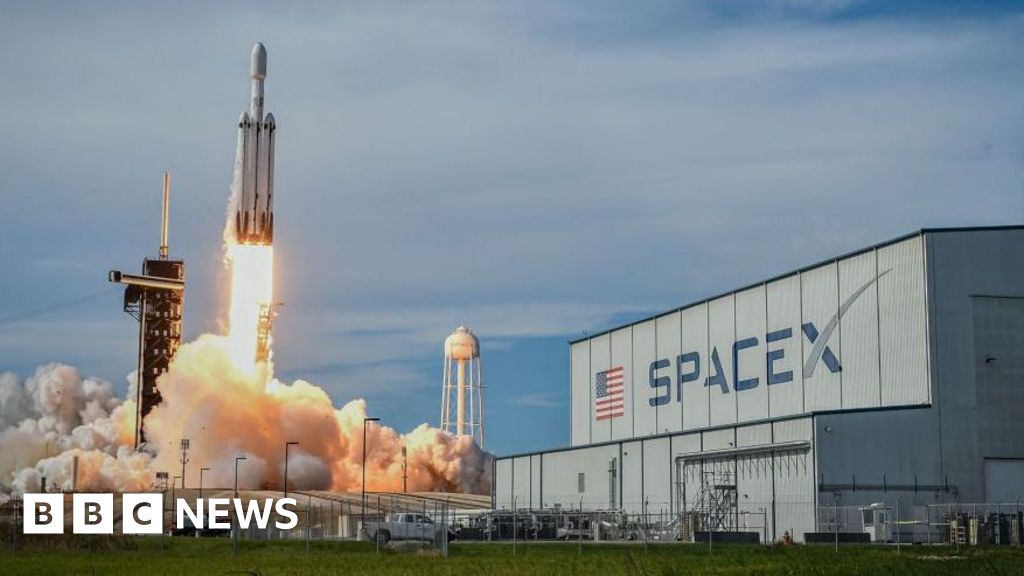
A $100bn bet on orbital dominance
SpaceX has announced the most aggressive infrastructure play in commercial space history — a $100 billion launch complex in southern Louisiana that would support thousands of Starship flights annually by the end of the decade. The project, dubbed Starbase Louisiana, sits on a sprawling 125,000-acre site and represents a doubling down on the company’s bet that raw launch volume, not launch price, will define the next era of space access.
The timing is not incidental. SpaceX shares hit the Nasdaq in June 2025 in the largest stock market debut ever, and the stock has since dropped more than 30% from its opening highs, though it remains above the $135 offer price. Investors who bought at the debut are watching nervously. A base this size requires a narrative that goes beyond rocket launches — it demands conviction that the orbital economy itself is about to change shape.
Why Louisiana, and why now?
SpaceX already operates in Texas, where residents in Cameron County incorporated a municipality called Starbase in 2025 to house testing and development operations. Florida is home to the company’s established Cape Canaveral and Kennedy Space Center pad operations. Louisiana gives SpaceX something neither can: a third Atlantic-facing coastline with different orbital access profiles, combined with Louisiana’s existing aerospace industrial base and a state government eager to brand itself as the next global aerospace hub.
The economics the Louisiana Economic Development agency is selling are stark. The company projects more than 3,000 direct jobs paying an average wage 192% above the region’s current mean salary, plus over 8,100 indirect positions. That kind of wage premium is meant to restructure a local labor market that has long depended on petroleum and port logistics. Whether the promise holds when construction winds down — as happened at many energy-sector booms — is a question no one is asking publicly yet.
The Starship math
Starship remains the linchpin of every claim SpaceX makes about this facility. Elon Musk’s target of 2029 for the first Starship launch from Louisiana depends on a vehicle that has spent years in public test flights, some ending in explosions, others achieving partial successes. The company has never flown Starship on an orbital mission. Every statement about thousands of annual flights from Louisiana is a forecast built on a prototype that has not yet proved itself at scale.
But the numbers matter even as forecasts. If SpaceX reaches the cadence it envisions — say 1,000 Starship launches per year — it would dwarf every operational launch site on Earth combined. Current global launch rates hover around 200 to 250 per year across all operators. A single site producing ten times that throughput is not an incremental upgrade. It is a structural shift in how much humanity can put into orbit, and who controls the gateway.
China’s response is already underway
The Louisiana announcement lands in a competitive landscape defined by one country: China. Beijing has made aerospace self-sufficiency a national priority, and its private rocket sector — including firms like LandSpace, iSpace, and GalaxySpace — has been absorbing state investment and policy support at a pace that mirrors the early days of SpaceX’s own rise. China’s commercial launch capability is unlikely to match Louisiana’s projected output, but it does not need to. The goal in Beijing is strategic autonomy, not market share.
What Louisiana signals globally is that the United States intends to maintain orbital cost leadership through sheer infrastructural excess. That is a different strategy from the one SpaceX pursued in its early years, when reliability and reuse were the only plays. Today the strategy is volume, and volume requires a different kind of capital — $100 billion worth.
Who wins, who loses
The immediate winners are clear: SpaceX shareholders who bought before the IPO, Louisiana politicians and planners who can point to an industrial transformation, and the global satellite constellation builders — Amazon’s Project Kuiper, OneWeb, various Earth observation operators — who will benefit if per-kilogram launch costs fall as Starship scales. These are the customers who have been rationed by available launch capacity.
The losers are harder to name but real. Other launch providers —ULA, Rocket Lab, Arianespace, India’s ISRO commercial arm — face a market in which one company could, in theory, saturate demand if it hits its cadence targets. No amount of policy protection insulates a launch provider from that kind of downward pressure on price. Small operators may survive on niche missions or government contracts, but the mass market for orbital delivery belongs to whoever can fly the most cheaply.
Environmentally, Louisiana’s coastal geography raises legitimate questions. A facility of this scale on low-lying wetland terrain invites scrutiny over runoff, noise, habitat disruption, and resilience to storm events. SpaceX has not published a detailed environmental impact assessment for the site. The absence is itself a signal: the company is moving fast, and the regulatory conversation has not yet caught up.
The investor question
SpaceX’s IPO put a public market price on private ambitions, but markets demand accountability that private funding does not. The stock has already given back a third of its opening value. A $100 billion capital expenditure program without a clear path to positive cash flow is exactly the kind of thing public markets punish. Musk has layered on even more complexity: Tesla and SpaceX are co-investing in a $16.8 billion AI chip fabrication facility in Texas — the so-called Terafab — and Musk has spoken openly about launching data centers into orbit. Every announced project pulls capital in a different direction.
The Louisiana base does not exist in isolation. It sits alongside Starbase Texas, the Terafab, Starship development, orbital deployment contracts, and Mars planning. Each of these is a separate financial commitment. The question for investors is not whether any single one will succeed, but whether SpaceX can fund all of them simultaneously without diluting its equity or defaulting on its obligations.
What happens next
Construction is expected to start next year, with the first Starship launch targeted for 2029. That timeline assumes no major regulatory delays, no catastrophic Starship test failures, and no capital constraints. Any of those assumptions could slip the schedule by years.
What is certain is that the announcement has already changed the conversation around global launch capacity. For years, analysts debated whether SpaceX would become the dominant provider of orbital access. Louisiana removes the debate and replaces it with a different one: whether SpaceX can afford to become that provider. The $100 billion price tag is the largest private infrastructure commitment in history, and it will be judged by one metric — how many launches actually leave the pad and return a profit. Everything else is noise.