Stray Kids' Tokyo Dome Record Rewrites the Rules of K-pop Touring in Japan
Stray Kids just became the first overseas male artist to sell three nights at Tokyo Dome — but the real story isn't the milestone. It's what their 520,000-person Japan run reveals about a structural shift in how K-pop acts now dominate the most guarded stadium market on earth.
A Surprise That Wasn’t Really a Surprise
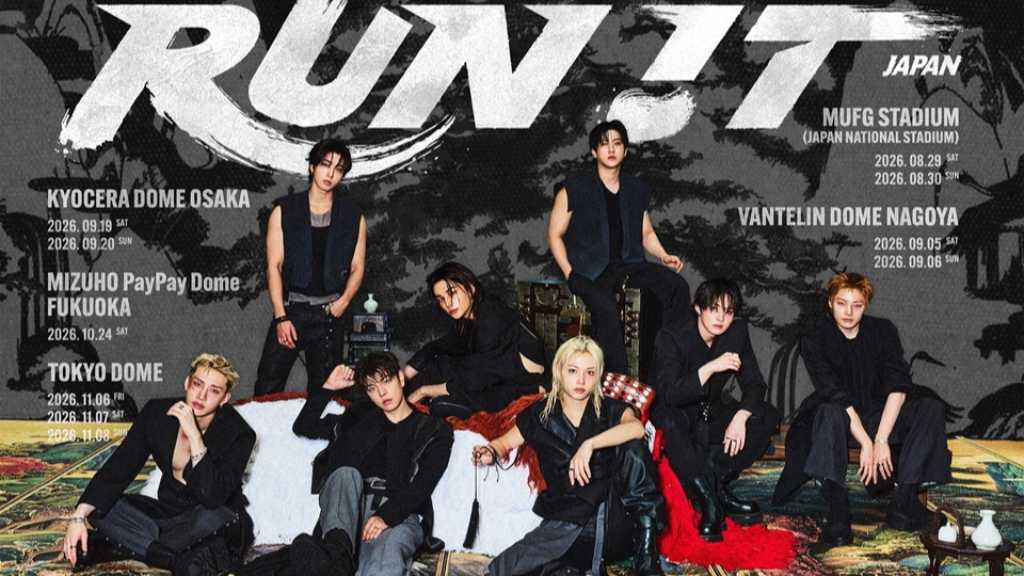
Stray Kids stood on the stage at MUFG STADIUM — the National Stadium, formerly the site of the 2020 Olympics — on the evening of August 30 and told fans something that sounded like hype but arrived like a correction. Behind the seven already-sold-out dates of their “RUN IT JAPAN” tour, there were three more. November 6, 7, and 8. Tokyo Dome.
The announcement landed with the kind of theatrical timing that defines the modern K-pop concert experience, but the substance behind it is worth taking seriously outside the fandom bubble. Stray Kids is now the first overseas male artist in Tokyo Dome history to book three consecutive nights there. The math is blunt: ten Japan shows total, approximately 520,000 attendees projected. At 15,500 yen per ticket — all seats the same price, no tiered premium seating visible in the announcement — that is a gross venue-level figure of roughly 8 billion yen, before you account for merch, food, or the secondary market.
What happened at the National Stadium wasn’t just a concert. It was a market test, and the test came back with an emphatic result.
The Tokyo Dome Gate Is Heavier Than Any Other
Japan’s biggest indoor arena has long been a status marker more than an open market. It fills easily for domestic acts. Arashi, the Johnny’s empire, have treated it as a seasonal home. But for foreign artists — especially male groups from outside Japan — the Dome has resisted. U2 played it. Bruce Springsteen played it. Madonna played it. Male K-pop groups? Rarely. Twice attempted it, with mixed results. BTS played three nights in 2021 during the pandemic, but that was a controlled environment with limited capacity and no international travel component.
Stray Kids’ announcement reframes the question. This isn’t an overseas act getting a charity slot at a Japanese landmark. This is a group that sold out seven shows at another major venue — the National Stadium, 68,000 capacity — and then moved into the Dome on its own merit. The upgrade from one venue to three nights at the larger one signals demand that outpaced the original booking architecture.
That sequencing matters. The surprise announcement wasn’t the three Dome dates alone. It was the fact that the initial seven shows at the National Stadium had already emptied. The market spoke first. The label listened second.
The Economics Are Stacking Up Differently Now
Consider the ticket structure. 15,500 yen for every seat — no orchestra premium, no balcony discount. That’s a flattening strategy that maximizes volume over margin per ticket. It works when demand is extreme and the bottleneck is physical capacity, not price sensitivity. It also means the real profit center shifts to merchandise, album sales, and fanclub membership, all of which Stray Kids’ label is clearly preparing to exploit.
The album cycle reinforces this. On August 31, JYP announced that Stray Kids will release their fourth Japanese mini-album, “SUIATSU,” on November 25 — roughly two weeks after the Dome run ends. Twelve physical formats. Solo single-member editions for the first time. A fanclub-only variant. This is a product strategy designed to capture demand that the live shows generate, converting concert-going fans into album purchasers across multiple SKUs.
The number 12 is deliberate. More formats mean more shelf space, more reasons to buy twice, more revenue per fan who can afford it. It’s a model that has worked in Japan for decades — the domestic idol industry perfected it — and Stray Kids is now deploying it with K-pop’s production efficiency.
The Fanclub Architecture Is the Real Moat
Look closely at the pre-sale structure and something interesting emerges. The W-member tier — simultaneously subscribed to both STAY JAPAN and STAY JAPAN MOBILE — gets first access. Then the separate tiers. Then an upgrade path that costs an additional 10,000 yen for arena seating and exclusive goods.
This isn’t just ticketing. It’s a loyalty funnel that rewards deep engagement and extracts more value from those willing to pay it. The rules are strict: profile information must match between platforms, you can only apply once per serial number, you cannot change your application after submission. These are friction points designed to reduce scalping and bot activity, but they also signal that the supply is genuinely scarce and the organizers are investing in controlling distribution.
For an overseas act, building that level of fanclub infrastructure in Japan is expensive and slow. Stray Kids has been doing it since their 2018 debut, but the Japanese market specifically has been a slower burn. Their first Japanese EP went million faster than any K-pop boy group in Japan — a record noted in the announcement — but the live infrastructure behind it is what makes the current moment structurally different.
Who Wins, Who Loses, and What Comes Next
The winners are clear. Stray Kids now hold a record that rewrites their trajectory in Japan. JYP has a proven playbook for capturing maximum revenue from a single market run. The Japanese live industry gains a template: K-pop acts are no longer trying to fill arenas as a stepping stone. They are filling domes as a destination.
The losers are less visible but real. Japanese male idol groups who compete for the same Dome slots face a new benchmark. The Johnny’s system, still dominant but increasingly challenged by changing audience demographics, now has a foreign act setting pace at its most iconic venue. Other K-pop groups will look at this and recalibrate their Japan touring strategies — longer runs, bigger venues, more formats.
What happens next depends on whether this is a Stray Kids anomaly or a structural shift. The data so far points to the latter. Their Kohaku appearance in 2023 marked their arrival at Japan’s cultural mainstream. The million-selling EP proved commercial viability. The ten-show run proves demand at the highest venue tier. The album rollout proves the label understands how to monetize the momentum across multiple touchpoints.
November 2026 will tell the rest. If those three Dome nights sell out the same way the National Stadium dates did — and the pre-sale mechanics suggest they will — then the conversation stops being about whether K-pop can fill Japanese stadiums. It becomes about how much of the stadium revenue stream Korean labels are now prepared to capture, and what that does to the economics of live music in one of the world’s most valuable markets.