Suzuki's e SKY Changes What an Affordable EV Can Be
Suzuki's first Kei-class EV achieves 310km range from just 26kWh — a brutal lesson in efficiency that could reshape how Asian OEMs approach affordable electric mobility against BYD's dominance.
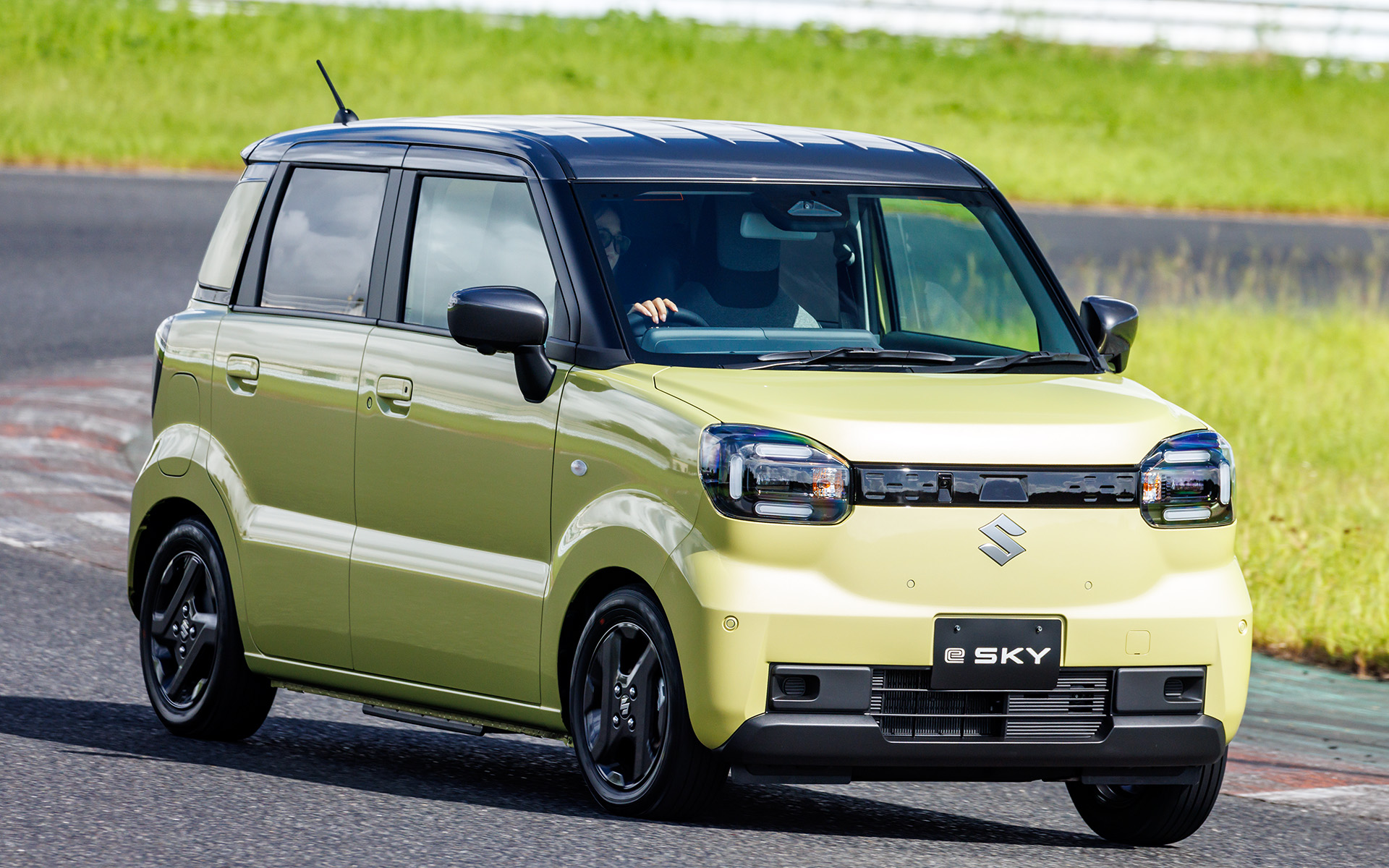
The Real Story Behind Suzuki’s e SKY
Suzuki’s going public with its first Kei-class EV this autumn, and the numbers on paper tell a quieter, more consequential story than most press releases will admit.
The e SKY carries a 26kWh battery — smaller than Nissan’s Sakura at 20kWh (in capacity, not range) andHonda’s N-ONE e at 29.6kWh — yet claims 310km of range. That gap isn’t engineering magic. It’s a deliberate, almost ruthless commitment to doing less with less. Suzuki achieved a 97Wh/km AC energy consumption figure that has no real peer in this segment. For context, most competing Kei EVs sit closer to 120-140Wh/km. That efficiency delta is where the entire business case lives.
This matters because it reframes the conversation about affordable EVs in Asia — and by extension, globally.
Why Efficiency Is the New Competitive Moat
BYD has been making waves in Japan’s Kei car segment with its own small EVs, offering generous specs at aggressive prices. The instinctive response for competitors would be to match or exceed those specs — bigger batteries, longer range, more features — and then undercut on price. That’s the volume game. It’s also a game Suzuki is explicitly refusing to play.
Instead, the e SKY follows Suzuki’s long-standing corporate philosophy of “small, few, light, short, beautiful” — a framework that translates into minimal packaging, weight savings, aerodynamic refinement, and a compact proprietary eAxle unit. The result is a vehicle that prioritizes real-world usability over spec-sheet dominance.
The strategic implication: Suzuki is betting that the majority of Kei car buyers don’t need 400km of range. They need 310km of reliable range, delivered at a price point that doesn’t require subsidy dependency. In a market where Kei cars account for roughly one-third of all new vehicle sales in Japan, getting the economics right matters more than looking impressive at auto shows.
Who Wins, Who Loses, What Changes
Nissan and Honda are the immediate references. Both have entries in the Kei EV space, both carry larger batteries, and both target slightly different buyer profiles. Nissan’s Sakura is positioned as an urban commuter; Honda’s N-ONE e leans into the Kei car legacy. Neither has matched Suzuki’s efficiency target with a comparable or smaller battery pack.
BYD is the outside force. Its presence in Japan’s Kei segment signals a broader Chinese EV strategy — not just exporting cars, but entering categories where Japanese manufacturers have decades of cost advantage. Suzuki’s efficiency-first approach is arguably the most credible domestic counter: if you can make a 26kWh battery do what a 40kWh battery does elsewhere, you’ve built a cost structure that’s harder to undercut on price alone.
The loser, in the short term, is the consumer who expects a dramatic EV transition experience. Suzuki’s messaging around the e SKY is unmistakable — this isn’t meant to convert people to a new way of thinking about cars. It’s designed for people who already own Kei cars and want to swap to electric without changing their habits. “Easy to Switch” is the slogan. The steering wheel retains its traditional shape. The shift lever looks the same. Even the interior noise levels were tuned to avoid the sterile quietness that typically accompanies EVs — Suzuki’s engineers deliberately filtered out only the frequencies that cause discomfort rather than chasing maximum insulation, which would add weight and cost.
The Platform Play
The HEARTECT e platform is Suzuki’s first dedicated EV architecture, and its design priorities reveal the company’s calculus. Battery placement at the vehicle center lowers the center of gravity without expanding the footprint. The 3,395mm length and 1,475mm width stay within Kei car regulations. At 1,030kg, the e SKY is lighter than most competitors in its class.
Charging infrastructure is another quiet differentiator. Normal charging supports up to 6kW — faster than many rivals in this segment — bringing the battery from empty to full in roughly 4.5 hours. Rapid charging hits 50kW, reaching 80 percent in about 25 minutes. These aren’t class-leading numbers on paper, but they’re calibrated to actual Kei car usage patterns: home charging overnight, occasional quick top-ups during errands.
The 10.1-inch display audio and connected navigation system represent Suzuki’s first adoption of these features in a Kei car. The navigation system factors in battery state and real-time traffic — a practical touch for first-time EV buyers who need route planning that accounts for charging stops.
What This Signals Beyond Japan
Suzuki’s approach to the e SKY is worth watching because it points toward a model that could replicate in other emerging markets with similar vehicle categories. Thailand, India, and Indonesia all have their own small-car ecosystems where cost sensitivity and usage patterns mirror Japan’s Kei market. A manufacturer that can deliver acceptable EV range from a smaller, cheaper battery pack has a structural advantage in price-sensitive markets — an advantage that becomes more pronounced as battery material costs remain volatile.
The e SKY won’t reshape global EV sales volumes. But it does prove that the most competitive path to mass-market electric mobility in certain segments may not be through bigger batteries and more features, but through leaner engineering and sharper economic discipline. In a market where BYD is counting on scale and vertical integration, Suzuki is counting on something else: the conviction that most buyers don’t want their lives changed by a car purchase — they just want the same car, electric.
Whether that conviction translates into commercial success will depend on pricing. Suzuki hasn’t announced a price yet. Given the company’s track record with Kei cars, expect it to land in a range that makes the efficiency numbers matter — not as a technological showcase, but as a cost advantage that competitors will struggle to match without rethinking their own approaches.