Sweden's Immigration Reversal Is a Blueprint for Europe
In barely a decade, Sweden transformed from Europe's most generous refugee host into a fortress. Its dramatic policy overhaul offers a playbook—and a warning—for the rest of the continent as migration dominates the political landscape.
The Sweden You Knew Is Gone
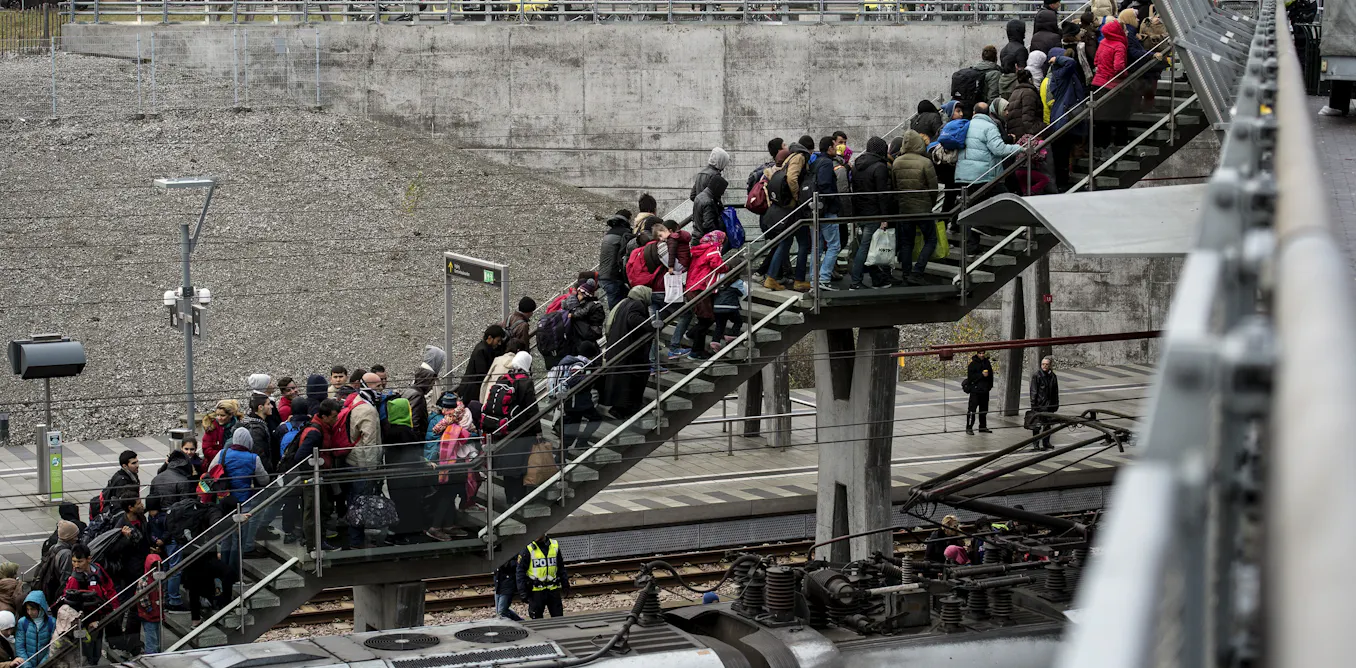
Picture Sweden in 2014: a country that accepted more refugees per capita than any other in the EU, led by a government that called openness a national virtue. Prime Minister Fredrik Reinfeldt had just welcomed hundreds of thousands of Syrians, Afghans, and Iraqis through a system built on the idea that humanitarianism was Sweden’s foreign policy brand. The world watched.
Fast forward a decade to the 2026 election, and that Sweden is unrecognizable. Asylum applications have plummeted from 162,000 in 2015 to roughly 6,700 in 2025 — a drop of nearly 96 percent. The approval rate sits at 23 percent. On a per-capita basis, Sweden now accepts less than half the EU average. The country that once prided itself on being Europe’s moral compass now ranks among the most restrictive migration destinations on the continent.
This is not a temporary reaction to an emergency. It is a structural realignment of Swedish politics — one that carries implications far beyond Scandinavia’s shores.
How the Reversal Happened
The turning point was the 2015 refugee crisis. Sweden received more than 162,000 asylum applications that year — over 12 percent of all applications in the European Union. Around 35,000 were unaccompanied minors, more than a third of the EU total. The infrastructure buckled. Schools lacked space. Housing became scarce. The political establishment, which had treated generous asylum policy as non-negotiable, found itself governing a system in freefall.
The immediate response came from an unlikely place: a cross-party agreement initiated by the governing Social Democrats themselves. Rather than resist the pressure, they embraced restriction. Stricter asylum rules, tighter family migration standards, temporary border controls, and the replacement of permanent residence permits with temporary ones for most refugees. The Social Democrats — Europe’s traditional champions of open-door compassion — became the architects of Sweden’s closure.
That decision was strategic as much as reactive. The Danish Social Democrats had pulled off something similar before their 2019 election: accepting the right’s restrictive framework and betting that voters would reward them for normalizing it. The Swedish leadership appeared to be making the same calculation.
The real overhaul, however, came after the 2022 election. A centre-right coalition led by Prime Minister Ulf Kristersson took power with the backing of the Sweden Democrats through the Tidö Agreement. The party remained outside the government — technically — but the agreement handed them enormous influence over migration policy. What followed was the most comprehensive migration reform package in modern Swedish history.
The Architecture of Restriction
Since 2022, Sweden has systematically dismantled nearly every pillar of its former openness. The reforms touched asylum reception, refugee resettlement, family reunification, labor migration, citizenship, return policy, detention, and access to social benefits.
The refugee resettlement quota was slashed from 5,000 places annually to just 900. Family reunification rules tightened dramatically. Humanitarian residence permits became harder to obtain. By 2025 and 2026, the package expanded further: social benefits like parental leave and child support now carry residence and employment conditions. Citizenship requirements tightened — longer residency, conduct checks, language tests, civic knowledge exams, and self-sufficiency mandates. The threshold for deporting non-citizens convicted of crimes was substantially lowered.
These reforms did not appear overnight. Sweden’s legislative process requires government inquiries, public consultations, and parliamentary scrutiny before major bills advance. The concentration of enacted reforms toward the end of the parliamentary term reflects institutional rhythm, not political opportunism. But the direction was set early and held steady.
What the Numbers Tell Us
The data is striking. Asylum applications are projected to fall further: approximately 4,200 in 2026 and 3,700 in 2027. Sweden has gone from absorbing one of the EU’s largest shares of asylum seekers to one of the smallest — all within a single decade.
This is not primarily the result of fewer people wanting to reach Sweden. The routes remain open. The conflicts persist. What changed is the signal Sweden sent: you will not be welcomed here. The policy worked as a deterrent, perhaps too well. The question now is whether the system is so restricted that it also deters legitimate claims — people who genuinely qualify for protection under international law.
An approval rate of 23 percent deserves scrutiny. For comparison, the EU average hovers significantly higher. When rejection rates climb that steeply, it raises the possibility that the bar for protection has been raised beyond what the law requires — or that the administrative machinery is struggling to process claims fairly under heavier burdens.
The Political Consensus
Perhaps the most consequential development is not the policy itself but the political agreement around it. The Social Democrats, the party that governed during the 2015 crisis, have actively supported or tacitly accepted most of the current government’s reforms. Their message ahead of the 2026 election is clear: if we return to power, the restrictive framework stays.
This is a dramatic departure from the party’s founding identity. The Social Democrats built their modern reputation on universalism and openness. To embrace restriction is to rewrite that story — and they seem willing to do it.
The governing coalition, by contrast, has every incentive to keep migration at the center of the campaign. They argue that a future Social Democratic government would depend on support from the Greens and the Left Party, both of which favor more liberal migration policies. The election debate is therefore shifting from whether Sweden should be restrictive to whether any alternative government could be trusted to maintain that stance.
This is a classic containment strategy. By forcing the opposition to defend the status quo rather than reverse it, the right keeps the Sweden Democrats’ voter base from defecting while neutralizing migration as a weapon against them.
The European Implications
Sweden’s trajectory matters because it is happening in a country where restriction was unthinkable. That makes the case study far more useful — and far more alarming — than watching another conservative government in Poland or Hungary tighten its borders. Sweden proves that even the most liberal democracies can normalize severe restriction when political incentives align.
The Danish model is spreading. If the Swedish Social Democrats succeed in anchoring restriction as the new consensus, the path opens for similar moves across the continent — particularly in countries where social democratic parties have historically defended open borders. Germany’s SPD, the Netherlands’ PvdA, Austria’s SPÖ could all face internal pressure to follow the same route: accept the right’s framing, co-opt the restriction, and try to win votes on economics instead.
The risk is that this strategy works too well. Once restrictive norms are embedded, they become the floor, not the ceiling. The Overton window shifts permanently. And the Sweden Democrats — the party that pushed Sweden in this direction — remain outside government but inside the consensus, which means their influence is secure regardless of who wins the next election.
What Comes Next
Sweden’s election on September 13 will decide less about migration policy than about who gets credit for it. The real story is what happened to a country that spent decades defining itself through humanitarian leadership. That identity did not simply change — it was consciously dismantled by the very party that built it.
For Europe, Sweden offers both a blueprint and a cautionary tale. The blueprint: restriction can be normalized quickly if the political class agrees. The caution: once normalized, it is remarkably difficult to reverse. The Sweden of 2015 is gone. The Sweden of 2026 is a different country — and its transformation may well be permanent.