Syria's Uranium Cache Reopens Old Scars and New Questions
The IAEA found 73 tons of natural uranium at a secret Syrian site linked to the al-Kibar reactor Israel bombed in 2007. Syria's new government is cooperating — Iran isn't.
A warehouse of questions
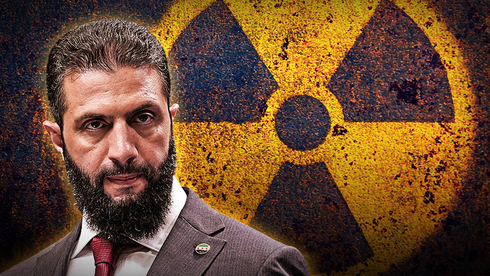
The IAEA has resolved its investigation into Syria’s Assad-era nuclear program. The agency found 73 metric tons of natural uranium metal at a secret site — 55 of those tons packed into clad fuel rods — all now under containment and surveillance. Syria’s new government, led by President Ahmed al-Sharaa, is cooperating. Inspectors are inside. They are also finding cooling infrastructure consistent with a reactor, dug out of a deliberately demolished facility.
What this does not resolve is far more interesting.
The ghost of al-Kibar
The site — reportedly known inside intelligence circles as Site 99 — was originally developed as part of the Assad regime’s covert nuclear effort. It stored material connected to the reactor project at al-Kibar, the facility Israel bombed in September 2007. The strike was one of the most consequential covert operations of the twenty-first century. It destroyed a reactor Israel judged to be on the verge of producing weapons-grade material. It also vanished into a long period of ambiguity.
Now that ambiguity has reappeared. The IAEA confirmed the site had been deliberately demolished after the Israeli strike. Inspectors reviewed excavation progress and uncovered cooling infrastructure consistent with a nuclear reactor. The question Israel asked before, and never fully answered, is back on the table: what exactly was at al-Kibar, and what else survived the bombing?
The discovery of intact fuel rods at a second site suggests the answer may have been larger than anyone admitted.
Who is winning
Syria’s new government is clearly trying to buy credibility. President al-Sharaa’s administration invited inspectors, opened doors, and allowed the IAEA to move material under safeguards. It is a textbook non-proliferation play — and a sharp contrast to the Assad years, during which Syria concealed and destroyed evidence rather than disclose it.
The IAEA gains something rare: a closed case in a region defined by open ones. Director General Rafael Grossi described the cooperation as “transparency,” and the agency formally declared the outstanding safeguards issues resolved. That is a substantive achievement for a watchdog that has spent years navigating cover-ups and access denials.
Israel faces a harder calculation. The original strike on al-Kibar was justified by the argument that Assad was building a bomb. The existence of a second cache, still intact and only disclosed after the regime fell, raises uncomfortable questions about how much of that program actually survived the 2007 bombing — and how much was simply hidden underground rather than destroyed above it.
The Iran contrast
The same day the IAEA announced it had closed the Syrian case, it released a separate report on Iran — and the contrast was stark. The agency said it remains unable to resolve outstanding questions about undeclared nuclear sites in Iran. Where Damascus opened its doors, Tehran has kept them locked.
This is not incidental. Syria’s uranium was discovered at a site with clear historical connections to a program that Iran helped build. The al-Kibar reactor was constructed with North Korean technology, but Iranian technical involvement in Syrian nuclear work was widely reported before the 2007 strike. The material found now — natural uranium in fuel rod form — is the kind of stockpile that could feed a fuel cycle, even if it cannot directly power a weapon.
The agency’s own description of the material is telling: it cannot be used to manufacture a nuclear weapon directly, but it could be used to make a “dirty bomb.” The distinction matters less for non-proliferation logic than for regional perception. In a Middle East where Israel struck a reactor out of existential fear, any confirmed accumulation of nuclear material — even natural uranium — carries political weight that dwarfs its technical limits.
What happens next
The immediate question is whether the discovery reopens debates about al-Kibar. Israeli officials have not commented on the IAEA report. The United States mediated an agreement last month to remove the material from Site 99, but Syrian Foreign Minister Asaad al-Shaibani insisted the material would remain under Damascus’ control for “peaceful purposes.” That language echoes a familiar pattern: declarations of civilian intent paired with strategic ambiguity about actual capability.
The more consequential trajectory is Iran. The IAEA’s inability to resolve questions about undeclared sites there — while closing out Syria — creates a double standard that Tehran will exploit and Washington will struggle to address. Syria cooperated because its government changed. Iran’s government has not. The agency can praise transparency where it finds it, but praise does not compel compliance.
The regional shadow
Seventy-three tons of natural uranium is not a bomb. It is not even a bomb factory. It is, however, a physical reminder that the Assad regime maintained a parallel nuclear infrastructure that outlasted the 2007 strike and survived the civil war. That infrastructure was hidden. It was demolished. It was never fully accounted for.
The discovery reopens old scars — the unanswered questions about al-Kibar, the unresolved questions about who supplied what, and the unresolved questions about Iran’s own undeclared sites. It also signals something new: a regional nuclear architecture that was believed to be broken is showing signs of continuity. The material is now under IAEA safeguards. The safeguards exist on paper. Whether they hold in practice depends on a Syrian government still consolidating power and a regional order still shifting beneath it.
What the IAEA has done is close one file and leave another wide open. The regional consequence is that both are now visible at the same time.