Syria's Weapon-Configured Reactor Reveals the Anatomy of Covert Nuclear Programs
The IAEA's confirmation that Syria's destroyed reactor was built for weapons-grade fissile material rewrites the post-Assad nuclear record. But the real story is what this reveals about the survival and spread of clandestine programs in the Middle East.
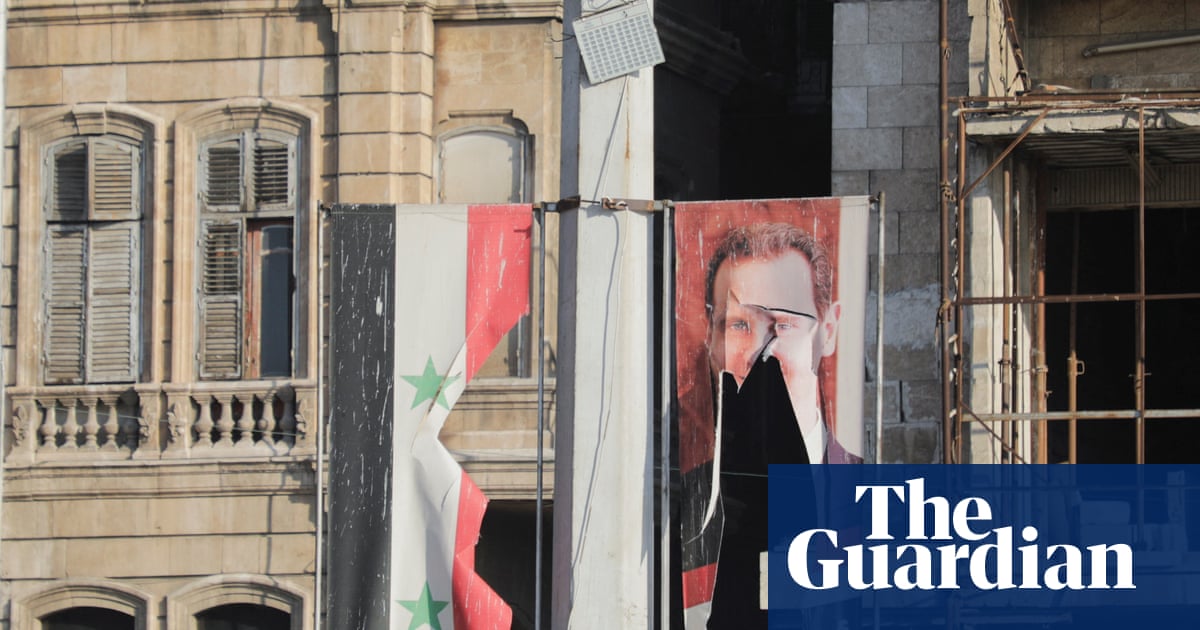
The wall hiding the bomb
In August, IAEA inspectors had to tear through drywall and crawl through narrow passages to reach a cache of nuclear material buried inside a former Syrian military site. Behind those walls sat roughly 73 tonnes of natural uranium metal — fuel rods, cladding intact, waiting in cardboard boxes like discarded equipment in a warehouse that never closed. What inspectors found confirms what US and Israeli officials suspected nearly two decades ago: the reactor Syria was building in the eastern desert town of Deir ez-Zor was not a civilian energy project. It was designed to breed plutonium for weapons.
Rafael Grossi, the IAEA director general, said plainly at the agency’s board of governors meeting in Vienna that the reactor’s configuration was optimized for fissile material production. A research-style reactor fed by natural uranium, not enriched, is a classic route to weapons-grade plutonium. The device Israel bombed in September 2007 — an operation it would not publicly acknowledge for another decade — was only the first chapter of a program that survived its own destruction.
What this confirms about the Assad regime
Syria under Bashar al-Assad ran one of the most ambitious clandestine nuclear programs in the Middle East. The regime’s effort began in earnest in the early 2000s and included a reactor built with significant technical assistance from North Korea, which has its own nuclear ambitions and a track record of exporting reactor designs to unsanctioned buyers. After Israel’s air strike in 2007, the facility was left as rubble. Most analysts assumed the program had been set back by years, perhaps permanently. The IAEA’s latest findings show that assumption was incomplete.
The new Syrian authorities, formed after Assad’s ouster in December 2024, invited inspectors to two sites — one in Deir ez-Zor, the other a previously undeclared location. The agency verified the uranium, installed surveillance cameras, and produced a confidential report seen by the Associated Press. Grossi told reporters the previous government was clearly pursuing clandestine activities and did not want the world to know what it was doing. That much was always suspected. What the IAEA confirmed now is how far the program extended and how carefully it was hidden even from those who knew it existed.
The North Korean connection
The Deir ez-Zor reactor bears the hallmarks of North Korean reactor design. Pyongyang has provided civilian nuclear assistance to several countries over the decades, often under the guise of energy cooperation while embedding weapons-relevant technology. Syria’s reactor shared key features with the experimental gas-graphite reactors North Korea has operated — a design choice that prioritizes plutonium production over electricity generation. The parallel is significant because it suggests that the same network of suppliers that enabled North Korea’s own weapons program was active in Syria, and that the two programs may have reinforced each other.
North Korea itself has been developing nuclear weapons for decades and only recently began to flirt with denuclearization discussions that have since stalled. The question of whether North Korean engineers or materials remain in Syria after the fall of Assad is unaddressed in the IAEA report and has not been disclosed by the new government. That silence is itself a data point.
What the uranium means — and does not mean
Natural uranium metal is not directly usable in a nuclear weapon. It must first be processed in a reactor to create plutonium-239, which then needs to be chemically separated in a reprocessing facility before it can be fabricated into a warhead. Logan Mintz, a director at the Nuclear Threat Initiative, noted that the material could be diverted to a covert weapons program that carries out that further processing. The implication is that 73 tonnes of uranium sitting in Syria represents a latent weapons capability — not a bomb, but the raw ingredient for one, assuming the regime had the infrastructure to process it.
The IAEA now has cameras watching the material. Whether that material stays in Syria or is moved to a third country for secure disposition remains a decision for the Syrian government, according to Grossi. The agency is not requesting removal, but it insists on knowing the location of every gram. For a nonproliferation body that has struggled to verify nuclear programs in Iran, Pakistan, and elsewhere, that level of accounting is unusually thorough — and it shows what sustained international inspection can achieve when a government cooperates.
Who wins, who loses
For the IAEA, the Syria findings are vindication. The agency has faced sustained criticism for missing the scale of Iran’s nuclear program and for being too deferential to member states that resist inspection. The ability to enter Syria, trace hidden sites, and confirm the existence of a weapons-capable reactor is a win for institutional credibility. It also validates the intelligence-led approach that critics have sometimes dismissed as speculative.
For Israel, the results are vindication of the 2007 air strike. The strike did not destroy the entire program, but it disrupted the reactor’s construction and likely killed key personnel. That Israel admitted to the operation a decade later — something no other state has publicly done — suggests the government viewed transparency as strategically useful. The IAEA’s confirmation that the reactor was weapon-configured strengthens that argument retrospectively.
For the new Syrian government, the disclosures are a double-edged sword. Cooperation with the IAEA opens the door to international legitimacy and potentially sanctions relief. But it also exposes the depth of the previous regime’s nuclear ambitions to a region still reeling from Assad’s brutal civil war. Regional rivals — particularly Iran and Turkey — will read these findings as evidence that Syria’s nuclear program was not an isolated aberration but part of a wider regional proliferation ecosystem.
For proliferators everywhere, the message is less reassuring. The Syria case demonstrates that a covert nuclear program can be uncovered years after the fact, even inside a country devastated by conflict and surrounded by hostile neighbors. The walls were torn down. The boxes were counted. The cameras are running. If Syria could be found, so could anyone else.
The longer arc: what happens next
The most consequential finding from the IAEA report is not what it says about Syria. It is what it implies for every state that has ever considered building a clandestine nuclear program. The reactor at Deir ez-Zor was not a secret until it was not. The uranium was hidden until inspectors arrived. The weapons potential was inferred until Grossi said it aloud in Vienna.
This changes the calculus for programs in Iran, Saudi Arabia, Egypt, and elsewhere in the region. A regime that once believed it could build a bomb in the shadows now faces the reality that shadows are shorter than they used to be. The tools of verification — satellite imagery, material accounting, inspector access — are more pervasive than at any point since the Cold War.
But the Syria case also reveals a persistent vulnerability: programs can outlast their facilities. The reactor was destroyed in 2007. The program survived. The uranium was buried in walls. That persistence is what makes nonproliferation enforcement so difficult. Destroying a building is straightforward. Destroying knowledge, supply chains, and the political will to build is far harder.
Grossi’s visit to Syria came at a moment when the IAEA is simultaneously confronting stagnating negotiations with Iran and a North Korea that has accelerated its own weapons testing. The agency’s ability to verify the Syrian program under these conditions is a reminder that inspections work when governments allow them to work. The question is whether other governments will continue to allow that.
The reactor in Deir ez-Zor was never finished. The uranium behind the walls was never processed. The bombs were never built. But the fact that someone tried — and that the attempt is now on record — reshapes how the world understands the Syrian program and, by extension, how it should understand every other program it cannot yet see.