Why a Tanker Strike Off Saudi Arabia Could Trigger a Global Energy Crisis
A tanker hit by an unknown projectile off Saudi Arabia marks the latest escalation in U.S.-Iran tensions. With Iran vowing to block all oil exports through the Strait of Hormuz, the incident threatens to upend global energy markets and shipping routes.
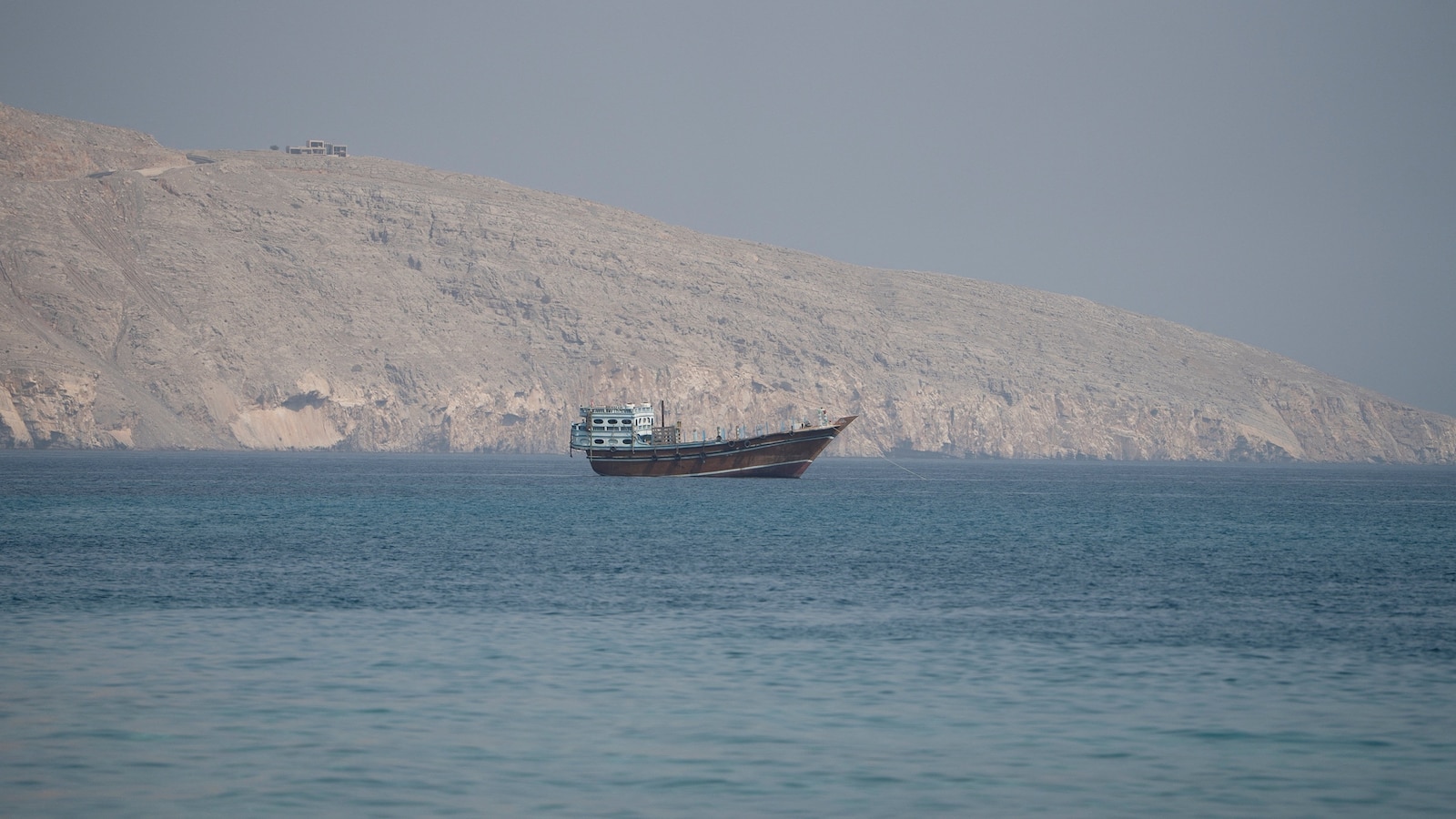
A Hit That Could Rewrite Global Energy Maps
The image was almost banal: a commercial tanker listing slightly, fire on its main deck, crew safely evacuated, no spill. The UK Marine Trade Operations posted the details on Monday morning like routine hazard logging—a vessel about 63 nautical miles off Yanbu, Saudi Arabia, struck by what it called an “unknown projectile.”
Nothing about the description suggested catastrophe. Everything about the timing did.
This incident landed in a geopolitical environment so volatile that a single spark can rewrite energy projections, shipping routes, and diplomatic calculations overnight. The United States and Iran have been trading blows since President Donald Trump announced “major combat operations” against Iran on February 28, with joint U.S.-Israeli strikes hitting military, government, and infrastructure sites. Two delegations met in June in what was framed as a path toward a war-ending deal, built on a memorandum of understanding both sides had signed. Instead, the fighting continued—and the Strait of Hormuz, the narrow chokepoint through which roughly 20 percent of global oil consumption flows, became the central theater.
Iran’s Nuclear Option Is Oil
What makes the tanker strike especially dangerous is not the damage—it is the signal. On Sunday, Mohsen Rezaee, secretary of Iran’s Supreme National Security Council, posted a statement on X that amounted to a declared economic weapon: “Not a single drop of oil will be exported” if the United States continues what he called Iran’s “economic war.”
Rezaee specified that the embargo would apply both through the Strait of Hormuz and from anywhere in the Persian Gulf. He went further, warning that any country participating in or supporting America’s economic campaign against Iran would be treated as a belligerent.
That language leaves little room for ambiguity. China, Japan, South Korea, India—all major importers of Persian Gulf oil—are now explicitly in the crosshairs of Iranian threats. None of them have publicly distanced themselves from U.S. policy, but none have endorsed it either. Iran’s message was calibrated to exploit that gray zone.
Hours later, Iran’s Persian Gulf Strait Authority (PGSA) followed up with its own notice, threatening fines, detention, or confiscation against vessels violating Iranian protocols for the strait. It published an online list of non-compliant ships—a bureaucratic weapon designed to chill commercial traffic without firing a shot.
The two announcements together form a coherent strategy: Iran does not need to sink tankers to control the flow of oil. It needs only to make every shipowner, insurer, and port operator in the world pause and ask whether the cargo is worth the risk.
The Economics of Fear
Insurance markets already price in conflict risk. What they do not price in well is the kind of uncertainty on display here. When projectiles hit commercial vessels in contested waters, the immediate reaction is not to calculate probable damage—it is to reassess whether the route remains viable at all.
The Strait of Hormuz handles approximately 21 million barrels of oil per day in normal conditions. Any sustained disruption—whether from actual attacks or from the shadow of them—creates immediate supply anxiety. Prices respond before governments do. Refiners in Asia, already negotiating long-term contracts, begin evaluating alternatives: shipments from the Middle East’s eastern coast through the Red Sea and Suez Canal, or longer routes around Africa. Both add time, cost, and vulnerability.
The tanker struck off Yanbu was not Iranian-owned. It was simply in the wrong place at the wrong time, which is precisely how commercial maritime violence escalates into systemic risk. A single strike on a neutral vessel, in an area where Iran has already threatened to block all exports, sends the same message as an attack on an Iranian ship: the water itself is now contested.
Who Wins, Who Loses
Iran gains leverage. By tying its export blockade to U.S. economic policy, it frames the conflict as defensive rather than aggressive—a posture designed to preserve domestic support and complicate Western coalition-building. If Washington wants to isolate Tehran economically, Iran is now offering a mirror: isolate Iran economically, and the world loses access to its oil.
The United States faces a familiar strategic trap. Military pressure was intended to compel negotiation. Instead, it appears to have triggered the very outcome it sought to avoid—Iran’s willingness to weaponize the global energy supply. Trump’s characterization of the campaign as the “most crushing economic operation ever taken against any country” reads now less as deterrence and more as provocation, at least from Tehran’s perspective.
Shipping companies lose regardless. Every incident adds to rising insurance premiums, longer routing, and delayed deliveries. Tanker owners who continue operating in the region do so because退出 has its own costs—idle vessels, canceled contracts, stranded crews. But the calculus shifts quickly when the threat escalates from rhetoric to projectiles.
Consumers bear the lagging cost. Oil markets moved on the news of the strike. The fuller impact—on gasoline prices, industrial input costs, inflation expectations—has not yet landed. What is clear is that the bottleneck at Hormuz is not just a geographic feature. It is a pressure valve for the global economy, and it is currently under stress.
What Comes Next
The most likely near-term scenario is not full-scale closure of the strait but sustained disruption—a steady drip of incidents, threats, and insurance-driven rerouting that raises costs without triggering open naval warfare. Iran has demonstrated it can project force into commercial waters without crossing the threshold that would invite a major military response. The tanker strike, with its minimal damage and safe crew, fits that pattern precisely.
The more dangerous scenario involves escalation beyond calculation. If a future projectile hits a vessel carrying significant cargo loss or casualties, the feedback loop between American military posture and Iranian economic retaliation could accelerate faster than diplomatic channels can manage. June’s negotiations were already fragile. They are now operating in an environment where every maritime incident carries symbolic weight far beyond its physical reality.
The tanker off Yanbu will be repaired. The crew will return to work. The oil that was supposed to move through Hormuz will find another route—or wait. But the incident marks a new phase in a conflict that has moved beyond traditional battlefields into the veins of the global economy.
In the Strait of Hormuz, geography is destiny. And right now, destiny looks like a world holding its breath, watching each vessel that passes through, wondering whether the next report will be routine—or catastrophic.