US Pulls Diplomats From Saudi — A Signal of Broader Gulf Shift
The US evacuation order from Saudi Arabia is not an isolated travel warning. It signals a likely military buildup in the Gulf with direct implications for global energy markets and regional trade routes.
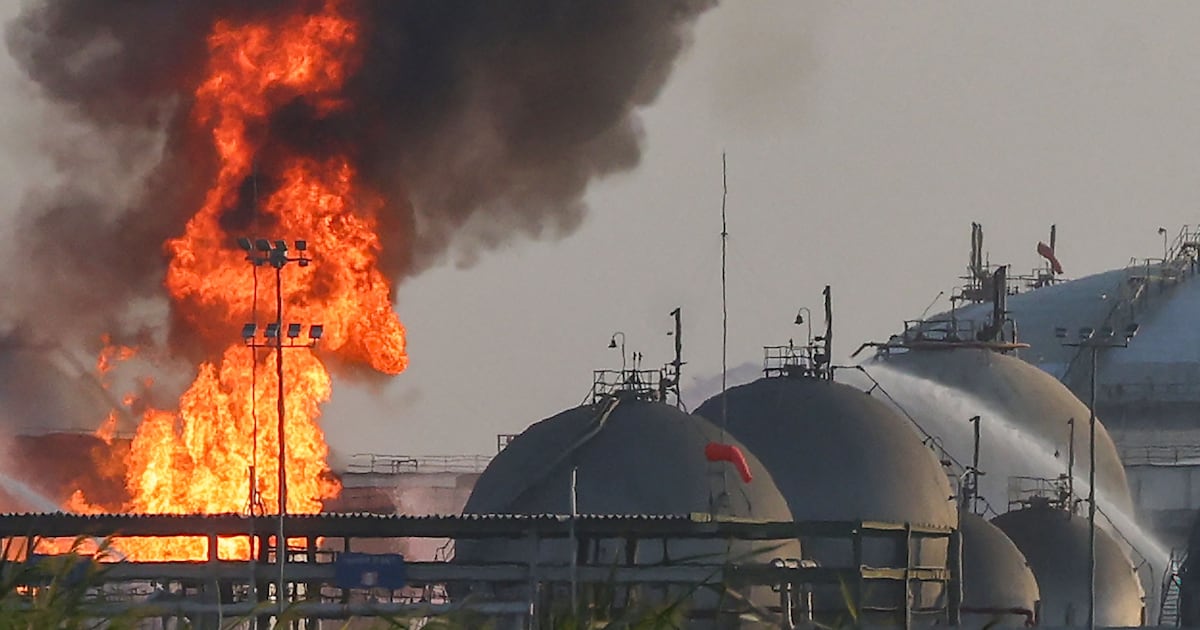
The Evacuation Order That Wasn’t About Travel
Washington ordered non-essential diplomats and their families out of Saudi Arabia last week. On its face, that sounds like routine protocol — a precaution, not a prelude. But the timing and the scope matter more than the notice itself.
The State Department framed the move as a response to what spokesperson Tommy Pigott called an escalation of hostile acts by Iran-backed Houthi rebels against Saudi civilian airports and critical infrastructure. Dammam’s King Fahd International Airport was struck on the 21st, killing one person and injuring eight. Days earlier, two Filipino and Nepali workers were killed when Saudi air defenses intercepted a drone aimed at Aramco’s Shaybah oil field. Riyadh’s King Khalid International Airport came under fire on October 10. The US embassy issued its own security alert warning of further attacks.
Here’s what the press release didn’t say, and what English-language coverage has mostly ignored: Reuters is reporting that similar departure orders are being prepared for US diplomatic posts across other Gulf states. Pigott confined his remarks to Saudi Arabia, but four unnamed US officials told the agency that the geographic scope extends well beyond Riyadh.
That distinction is the story. An evacuation limited to one country is a warning. An evacuation across the Gulf is a preparation.
What This Actually Signals
The most credible reading of these movements is straightforward: Washington is planning something kinetic in the Gulf, and it wants its people out before the fallout begins.
The Houthis have been striking Saudi targets with increasing frequency since February, when the broader US-Israel war with Iran commenced. Tehran’s militant network across the region — Hezbollah in Lebanon, the Houthis in Yemen, various militias in Iraq and Syria — has targeted American facilities multiple times. Washington pulled back significant portions of its diplomatic footprint across the Middle East after those initial attacks, only to quietly rotate some staff back in recent months. Now the reversal is happening again, and this time it appears coordinated rather than reactive.
The logic is not complicated. If the United States launches a military campaign against Houthi positions in Yemen, there is a near-certainty that the group will retaliate against nearby US and allied assets — Saudi airports, Qatari bases, Emirati infrastructure, Bahraini naval facilities. The evacuation orders are not just about protecting diplomats; they are about reducing the civilian and institutional target set before any exchange begins. Fewer Americans in the Gulf means fewer leverage points for Houthi or Iranian retaliation.
This is standard force-readjustment behavior. What is unusual is the speed with which it has reoccurred. In March, the US embassy in Riyadh and a CIA annex were struck by drones. Staff had been partially restored by summer. Now they are being told to leave again within weeks.
Who Wins, Who Loses
The Houthis are the immediate actors, but the deeper beneficiaries and victims are structural. Riyadh is the most exposed partner. The kingdom’s economic modernization project — Vision 2030, Neom, the Red Sea megaprojects — depends on the region looking safe. Each attack on an airport or oil facility undercuts that narrative directly. The Shaybah incident is particularly significant: Aramco is not merely a Saudi company, it is the single largest contributor to the kingdom’s fiscal budget and the cornerstone of its energy diplomacy with China, India, and Japan.
Washington gains tactical clarity. By relocating personnel, it removes a hostage factor from any future engagement. If the United States decides to strike Houthi positions, it can do so without the compounding political cost of American casualties among its own diplomatic corps. The move also signals resolve to allies and adversaries alike — the US is not passively absorbing attacks, and it is preparing for escalation rather than hoping it passes.
The losers are everyone who depends on stable Gulf shipping lanes. The Strait of Hormuz and the Bab el-Mandeb are the twin chokepoints through which roughly 20 percent of global oil and a significant share of container traffic pass. Any kinetic exchange between the US and the Houthis — or, by extension, Iran — immediately threatens those routes. Insurance premiums on commercial vessels through the Red Sea have already spiked in 2024 and 2025 following Houthi attacks on merchant shipping. A full military operation would push those costs far higher, and potentially shut passages down entirely for periods of time.
The Energy Implication Nobody Is Discussing
Aramco’s facilities have been the primary target, not coincidentally. The Shaybah drone interception killed workers but did not breach production. The kingdom’s oil output has held steady despite the attacks. But the strategic calculus is shifting. Each incursion forces Riyadh to divert defensive resources, each near-miss raises the probability of a successful strike, and each attack reinforces the incentive to accelerate investment in alternate export routes that bypass the Gulf entirely — the East-West pipeline to the Red Sea, expanded rail links to Jeddah, new terminal capacity at Ras Tanura’s opposite coast.
For global markets, the signal is clear: the United States is preparing for a wider conflict, and the Gulf’s energy infrastructure is the likely battleground. Oil prices already embed a risk premium for Middle East tensions. This evacuation order adds a new variable — not because it guarantees war, but because it guarantees that Washington is no longer treating the current violence as containable. The premium will widen.
China, the largest buyer of Saudi crude, is watching closely. Beijing’s energy security strategy has long assumed that Gulf shipping lanes remain open. If they do not, the consequences for global oil markets are asymmetric — Asian refiners depend on Middle Eastern supply far more than European or American buyers do. That dependency creates leverage, and it also creates vulnerability.
What Comes Next
The most likely scenario is a limited US military response against Houthi launch sites and radar installations in western Yemen, followed by renewed Houthi retaliatory strikes against Saudi and Emirati targets and possibly US assets in the region. The evacuation orders accommodate exactly that sequence: remove personnel before the retaliation phase begins.
There is a second, less discussed possibility. If Iran interprets the troop movements and evacuation procedures as preparation for a broader strike — not just against the Houthis but against Iranian interests more generally — it could preemptively activate its own regional proxies. The militia networks in Iraq and Syria have already demonstrated willingness to target American forces in the region. An escalatory spiral is never triggered by a single decision; it is triggered by the sequence of reactions that follow.
What makes this moment distinct from previous rounds of tension is the pace. The United States pulled some staff back after the initial February attacks, partially restored them, and is now pulling them out again within months. That cyclical pattern suggests neither side is seeking a durable de-escalation. It suggests both sides are testing boundaries, and the boundaries are moving.
The evacuation order from Saudi Arabia is not a story about a single diplomatic post. It is a signal flare. Washington is telling the Gulf that it expects things to get worse before they get better — and that it intends to be ready when they do.