The Tech-vs-Factory Diplomatic Signal at Trump-Xi Dinner
The guest list for the Trump-Xi state dinner draws a stark line: American Big Tech and Chinese manufacturing sit at the same table by design. The invitations reveal how Washington is trying to separate cooperation from competition.
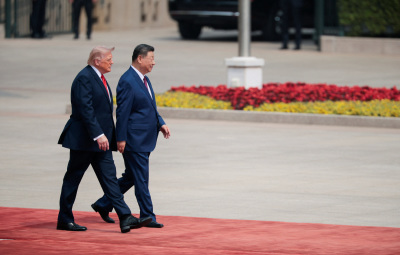
The guest list is the story
The United States and China are in a trade war that has been going on for years. The latest twist is not about tariffs or sanctions. It is about who gets invited to dinner.
On September 24, Donald Trump will host Xi Jinping for a state dinner at the White House. The known attendee list from the American side reads like a who-is-who of Silicon Valley and Wall Street. Jeff Bezos, Sundar Pichai, Sam Altman, Tim Cook, Elon Musk, Jensen Huang, Michael Dell, Mark Zuckerberg, Albert Bourla, Satya Nadella, Greg Brockman, Cristiano Amon, Jamie Dimon, Jane Fraser, and Mary Barra are all expected to attend.
The Chinese side is still negotiating its roster. Reports from Reuters and NewsPim suggest BYD, CATL, Xiaomi, Gotion, Hisense, Wanxiang Group, the Bank of China, and COFCO are under discussion. Nothing is confirmed.
The contrast between the two lists tells you everything about where Washington and Beijing stand right now.
America brought its brain; China brought its brawn
The American invitees are overwhelmingly software, AI, cloud, and semiconductors. Huang runs Nvidia. Pichai runs Alphabet, which owns Google Cloud and DeepMind. Altman and Brockman run OpenAI. Nadella runs Microsoft, which owns Azure and OpenAI stakes. Amon runs Qualcomm, which designs chips. Cook and Dell move hardware that runs AI workloads.
This is not a random mix. Trump is inviting the people who define the technology layer that the United States considers its strategic edge. The same people who are currently pushing for tighter export controls on advanced chips to China.
China’s list, meanwhile, is almost entirely physical goods. BYD makes electric vehicles. CATL makes batteries. Xiaomi makes phones and EVs. Hisense makes home appliances. Wanxiang makes auto parts. Gotion makes batteries. This is the manufacturing layer that China considers its competitive advantage.
Put another way, the US is bringing the minds and the machines that think. China is bringing the bodies and the materials that build.
Why this matters beyond the dinner table
The guest list is a proxy for the broader economic architecture both countries are trying to construct. The US wants to lock down the high-end technology funnel. The AI models, the chip designs, the operating systems, the cloud infrastructure, the proprietary algorithms. These are the layers where American firms still lead and where export controls are tightening.
China wants access to American markets and capital for its manufacturing sector. BYD, CATL, and Xiaomi have been expanding globally. They face tariff walls and regulatory scrutiny in the United States, but they also see opportunity. Inviting them to the dinner signals that Beijing is still willing to engage on trade while drawing a harder line on technology transfer.
The contradiction is intentional. Washington is saying: you can sell us cars and batteries, but you cannot buy our chips and our AI models. Beijing is saying: we will play the manufacturing game as long as you do not shut down our factories.
The winners and losers already visible
Nvidia and Qualcomm benefit immediately. Their CEOs are at a table with Xi, which signals that American chipmakers remain indispensable even amid sanctions. Any signal that Washington is open to limited engagement with China helps their stock prices and their lobbying positions.
BYD and CATL benefit too, though more conditionally. Being mentioned as candidates for the Chinese delegation tells investors that these firms are seen as strategic enough to matter in bilateral talks. That is leverage in trade negotiations and a signal to global buyers that they are politically connected.
The losers are less visible but real. American cloud and AI firms that had hoped for broader access to Chinese data and developer ecosystems will find the gap even wider. If the dinner does not produce a deal on chip exports or AI model licensing, the tech divide hardens. Huawei, SmarterCloud, and other Chinese AI firms will keep accelerating alternatives, but they will stay behind.
European automakers and battery producers also lose. The more the US and China carve out their own lanes, the less room there is for third-party suppliers to navigate between them. Volkswagen, BMW, and Samsung SDI are already feeling this pressure.
What happens next
The dinner itself is a photo op. The real work happens in the rooms before and after. Three issues will shape the next six months.
First, whether any American chipmaker gets permission to ship more advanced processors to China. Nvidia and Qualcomm have been lobbying hard for this. If Trump grants limited licenses, it changes the AI cost curve for Chinese firms and weakens the current restriction regime.
Second, whether tariffs on Chinese EVs and batteries get adjusted. BYD and CATL would not be discussed at a state dinner unless tariffs were on the table. Trump has already imposed steep duties on Chinese electric vehicles. The question is whether he raises them further or makes exceptions for companies willing to localize production in the United States.
Third, whether there is any movement on AI governance frameworks. The US wants to prevent Chinese firms from using American models for military applications. China wants access to frontier models and training compute. Neither side is close to agreeing on a shared boundary.
The deeper pattern
What is striking about the guest list is not just the contrast. It is the symmetry. Both sides have invited exactly the people who represent what they want to protect and what they want to trade.
America invites its tech leaders because it wants to defend the technology frontier. China invites its manufacturers because it wants to defend the manufacturing base. The dinner is a mirror of the economic separation that is already underway.
This is not a de-escalation. It is a negotiation about the terms of separation. The question is whether the two sides can agree on how much trade happens at the border and how much stays locked behind the wall.
The guest list suggests Washington already has an answer. It is just waiting for Beijing to respond.
What English-language outlets are missing
Most American coverage of the Trump-Xi dinner focuses on symbolism and diplomacy. Very few outlets have connected the guest lists to the underlying industrial strategy. The Korean press has been more direct about reading the invitees as a map of the economic divide.
That gap matters. The guest list is not just a social event. It is a policy document written in sequins and silverware. Anyone who reads it wrong will misread the next phase of the trade war.