Ternus Steps Out of Cook's Shadow as Apple Bets Big on Foldables
John Ternus taking the stage instead of Tim Cook signals a generational shift at Apple. With the iPhone 18 Pro and the first foldable iPhone Duo, the company is gambling on a design revolution — and customers are paying nearly $150 more for it.
Who’s Really Running Apple Now?
The most interesting thing about Apple’s latest launch tease wasn’t the phone. It was the person saying so.
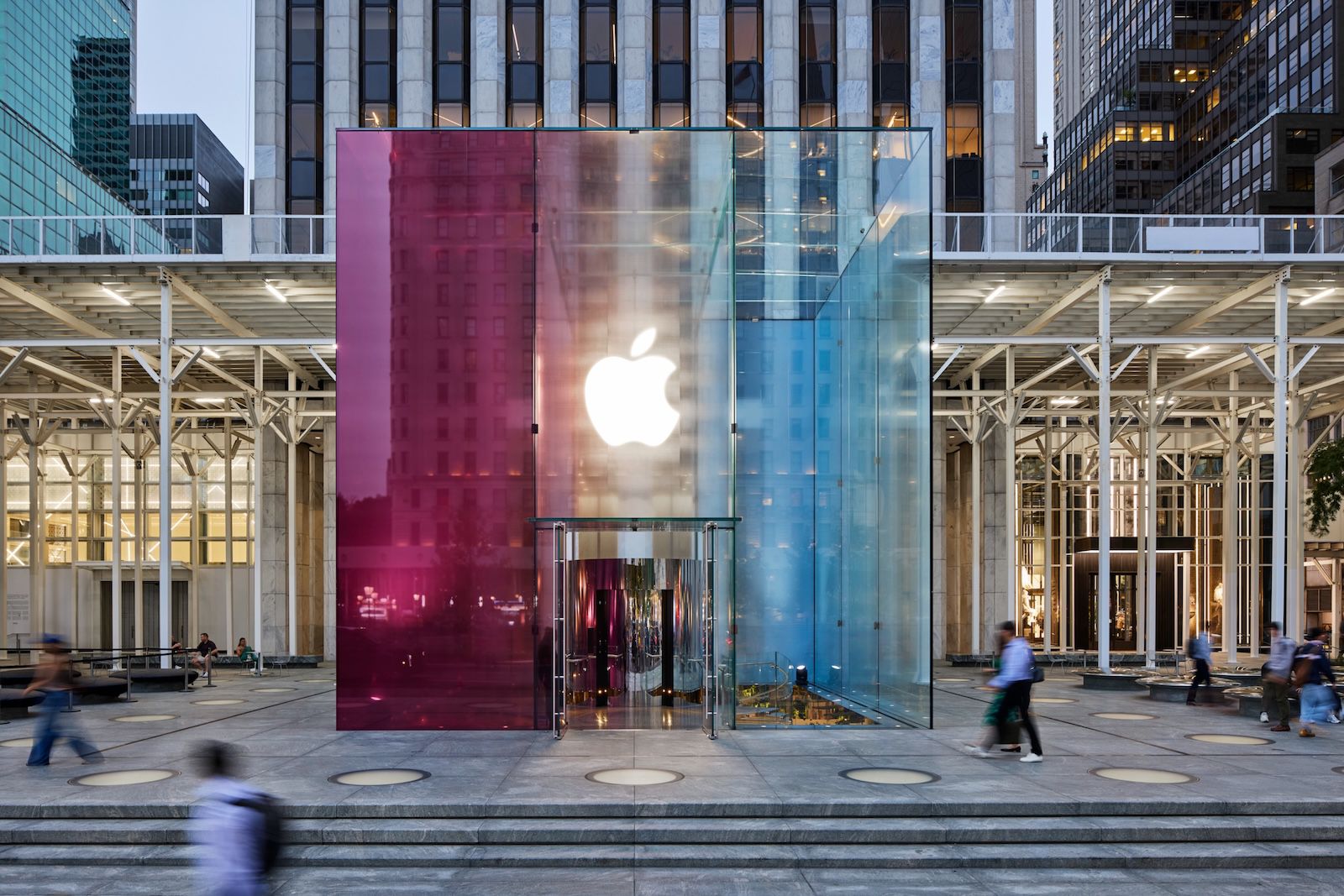
John Ternus, Apple’s senior vice president of hardware engineering, posted from the Fifth Avenue store that the iPhone 18 Pro launch is tomorrow. He’ll likely be there in person. Tim Cook is nowhere in the frame.
This isn’t accidental. Cook has quietly stepped back from the theatrical center of Apple events over the past two years, ceding the spotlight to engineers and product leads. Ternus, the architect behind the M-series chips and the overall iPhone hardware roadmap, now represents a different kind of Apple CEO-in-waiting — one whose credibility comes from making things, not just selling them.
Ternus’s trajectory at Apple reads like a blueprint for the post-Cook era. He joined the company in 2001, just months after returning from a near-fatal brain aneurysm that left him fighting for his life. Steve Jobs personally approved Ternus’s transfer from the industrial design team to hardware engineering — a move that set the trajectory for two decades of increasingly visible leadership. He led the teams behind the Retina display iPhone, the unibody MacBook, the switch to custom silicon, and the Vision Pro. Each milestone pushed him closer to the center of Apple’s identity.
The implication is clear: Apple is entering a phase where product risk is higher than it’s been in a decade, and the company wants the public to trust the hands that built the product, not just the handshake that closes the deal.
It also signals that Cook is preparing for a smoother succession timeline. Whether Ternus is the eventual successor or simply the face of a more decentralized leadership model, his visibility marks a structural shift. Apple is no longer a one-person brand in the way it was during Jobs’s illness and beyond. It’s becoming a company where the engineer-in-chief carries as much cultural weight as the chief executive.
The Foldable Gamble
Tomorrow’s “Surprise and Shine” event carries Apple’s single biggest design change in the iPhone’s thirty-year history.
The iPhone Duo — Apple’s first foldable phone — is headlining alongside the iPhone 18 Pro and Pro Max. A foldable iPhone isn’t incremental. It’s a fundamental rethinking of how the device is engineered, priced, and experienced. Hinges, flexible displays, software that adapts to two form factors, battery placement, thermal management — every one of these problems is new territory for Apple’s hardware team.
Ternus was the engineer who solved the hardest version of these problems for the MacBook Pro with the M4 chip and the Vision Pro. If anyone at Apple could pull off a consumer-friendly foldable, it’s him. That’s why he’s front and center.
But here’s what the tease doesn’t tell you: foldables remain brutally difficult at scale. Samsung learned that the hard way with early Galaxy Z series devices that broke under normal use. Google’s Pixel Fold has been functional but lukewarm. By launching its own foldable, Apple isn’t following the market — it’s trying to reset expectations about what a foldable can actually endure.
The second-order effects of getting this wrong are significant. A foldable iPhone that cracks, bends, or disappoints within a year doesn’t just hurt iPhone sales — it damages the perception that Apple can execute on any form factor. The company’s reputation for durable, well-engineered products is its strongest moat, and a botched foldable would erode it faster than any software misstep. Conversely, a successful launch would reinforce the narrative that Apple doesn’t enter markets until it can redefine them, a strategy that has worked remarkably well across every category the company has touched.
There’s also the matter of software. iPadOS and iOS will need to handle a device that transforms between two modes mid-task. App developers will need guidelines for foldable-specific interactions. Apple has spent years building the software infrastructure for multi-modal devices with the Mac and Vision Pro, but adapting that experience to a pocket-sized phone introduces constraints the company hasn’t publicly addressed. How does Face ID work when the screen folds? What happens to the notch or Dynamic Island when the device is half-open? These aren’t minor UX questions — they’re the difference between a gimmick and a genuine category win.
The Price Tag Problem
TrendForce estimated the iPhone 18 Pro starting price at $1,249, up roughly $150 from the iPhone 17 Pro’s $1,099 launch price. That’s not a rounding error.
Apple has historically absorbed component cost increases rather than passing them to consumers. A $150 jump suggests either expensive new parts — likely the foldable display for the Duo and whatever sensor or processing upgrades are inside the Pro — or a deliberate strategy to reposition the Pro tier as even more exclusive.
The Chinese market makes this especially sensitive. Huawei’s foldable phones have been gaining traction in China, and Apple’s already losing ground there to local competitors on price and features. A $1,249 Pro model won’t win over budget-conscious buyers anywhere, and it may accelerate the migration of high-end customers toward Samsung or Huawei before Apple even gets the Duo into hands.
Economically, the pricing creates a feedback loop. Apple’s services revenue — which depends on a growing installed base of active iPhone users — faces headwinds if price-sensitive customers opt out. The $150 increase could shave percentage points off iPhone upgrade rates, and in a market where replacement cycles already stretch beyond two years, that compression matters. Analysts at Bloomberg and Counterpoint have both flagged that even modest declines in upgrade velocity can significantly dent quarterly revenue given the disproportionate share iPhone contributes to Apple’s top line.
There’s also the question of whether Apple plans to price the Duo separately from the Pro. If the foldable model launches at $1,499 or higher, it creates a two-tier premium structure that could further strain demand at the Pro tier — or it could establish a new luxury segment that reinforces the brand. Either way, Apple is testing whether its customer base will accept a meaningful price bifurcation within the iPhone lineup, something the company has avoided since the original iPhone ever offered.
AI Hardware Meets Supply-Chain Reality
The broader context matters as much as the product itself. Every major Android manufacturer is currently integrating on-device AI features into their latest flagships — Samsung with Galaxy AI, Google with Gemini integration, Xiaomi and OPPO pushing conversational AI into hardware controls.
Apple has been conspicuously quiet on AI hardware differentiation. The iPhone 18 Pro is expected to carry next-generation Neural Engine capabilities, but those advantages only matter if the supply chain can actually deliver the chips at volume. Apple’s been warned about this before: the Apple Watch Series 9 launch in 2023 was delayed because TSMC couldn’t produce enough of the S9 chip fast enough.
A foldable iPhone multiplies that risk. Display yield rates for flexible OLED panels remain low industry-wide. Samsung Display dominates this space, and while Apple has invested heavily in diversifying its display supply — bringing LG Display and possibly BOE into the fold — none of those alternatives match Samsung’s yield rates for premium foldable panels. If Apple is committing to shipping a foldable at scale, it has either cracked a manufacturing process that no one else has — or it’s prepared to throttle initial supply and create artificial scarcity that looks like demand.
The AI dimension adds another layer. On-device neural processing requires memory bandwidth and thermal headroom that a folded-form-factor device struggles to provide. Thin hinges leave less room for vapor chambers and graphite sheets. The iPhone Duo may need to throttle AI workloads more aggressively than the iPhone 18 Pro to stay within thermal limits — a compromise that could undermine one of the key selling points of the next-generation chips.
Competitors are watching closely. Samsung’s foldable portfolio already includes phone, tablet, and watch form factors. Huawei has a differentiated approach with its book-style Mate XT. If Apple enters late with a single hinge design, it risks being perceived as playing catch-up rather than leading — the opposite of the narrative the company has cultivated for fifteen years.
What Happens Next
The Fifth Avenue glass cube is dressed in Burgundy and Glacier — colors chosen deliberately to signal that this isn’t just another annual refresh. The store setup is a visual statement: Apple wants the launch day to feel like an event, not a press release.
What follows tomorrow will determine whether Apple can sustain its premium positioning while navigating three simultaneous challenges — a redesign that breaks decades of iPhone convention, a price increase that tests customer loyalty, and an AI narrative that competitors are already shipping.
Ternus standing in that store tomorrow morning, instead of Cook in a black turtleneck, is the first signal. Apple is asking people to believe in its engineers again. The foldable phone is the proof.
The long-term implication extends beyond this launch. If the iPhone Duo succeeds, Apple will have validated its strategy of entering late but winning through engineering rigor — a playbook it’s applied successfully in wearables and spatial computing. If it stumbles, the company faces a rare public product failure at the flagship tier, something that hasn’t happened since the original iPhone Plus fiasco in 2014. The stakes for Ternus personally are equally high: this is his moment to cement the transition from behind-the-scenes engineer to the public face of Apple’s hardware ambitions.
Whether the hardware can keep up with the hype remains the question no press release can answer. But the fact that Apple chose Ternus to ask it — not Cook — tells you everything about where the company thinks its future lives.