Tokyo's Quiet Dilemma: Japan, the ICC, and American Power
Trump sanctions the ICC's Japanese president. Japan declined to join a joint condemnation. The emergency reprint of her book reveals what's at stake for multilateral justice — and for Tokyo's uncomfortable position between allies.
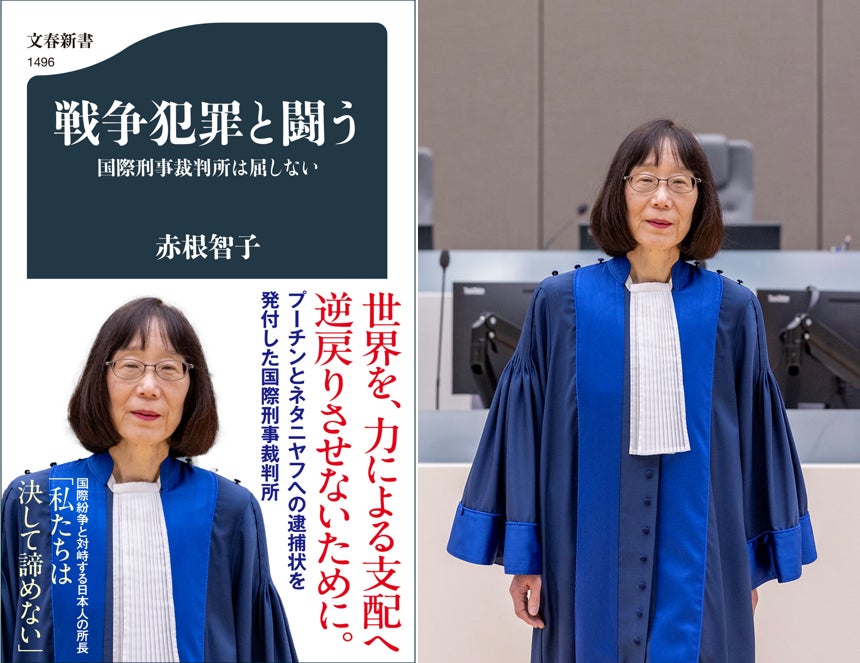
The Emergency Reprint No One Saw Coming
A Bunkasha Shinsho paperback about the International Criminal Court has gone into emergency reprint. Not because it won an award. Not because a famous case made headlines. Because its author — ICC President Tomoko Akane — was sanctioned by the Trump administration, and Japanese readers are buying the book to show they’re not letting the court be bullied.
It is a small thing. And it matters more than it looks.
Akane, 72, is the first Japanese president of the ICC. She served as a prosecutor in Yokohama, Tokyo, and Sapporo before becoming a judge at the court in 2018 and its president in March 2024. Her book, War Crimes and the Struggle Against Them: The International Criminal Court Will Not Buckle, is now being reprinted in an emergency second run after reports surfaced that Washington imposed sanctions on her.
Her quoted response: I was somewhat prepared for this, so I am not surprised.
The real quote, though, is the one she gave Japanese officials when she visited them in late 2024. She came back from her vacation specifically to ask them to intervene. She warned that severe sanctions could freeze the court’s salary payments and paralyze its operations. She said investigations and trials would halt if American IT companies cut ties. She said witnesses and victims under the court’s protection could be put at risk.
She then asked something most Western readers might not expect: to pressure Washington from Tokyo, leveraging Japan’s deep alliance to blunt the sanctions.
What the English Press Missed
American coverage of the ICC’s troubles is usually framed as Washington versus The Hague — a straightforward clash between a superpower and an institution it resents. That framing is incomplete without Tokyo in the picture.
Japan is not just a sympathetic observer. It is a state party to the Rome Statute. It joined the ICC as a matter of policy conviction, not coincidence. The court’s own chapter titles in Akane’s book include one literally called The ICC and Japan’s Future, and the epilogue is titled Hoping for Japan-led Action to Protect the Rule of Law.
This is not symbolic. Japan has spent years funding ICC operations and hosting training programs through the United Nations Asia Far East Crime Prevention and Training Institute, where Akane herself once served as director. She has been a professor at Nagoya University and Nagoya University School of Law. She served as a special adviser to the Foreign Ministry on international judicial cooperation. The institutional tie between Tokyo and The Hague is thicker than most English-language reporting acknowledges.
And that is precisely why the sanctions matter.
The日本政府’s Calculated Silence
Here is the part that should worry Japanese legal policymakers: Tokyo did not sign the joint statement condemning Trump’s executive order.
Akane says directly that she found this very regrettable. She wanted Japan to send a forceful signal to the world that it stands with the ICC. She wanted it to use its political and diplomatic leverage — the very leverage she asked her to use in private meetings — publicly, not quietly.
Japan’s decision not to sign reflects a familiar calculation. The US is its primary security guarantor. Openly antagonizing Washington over an international court, however principled, carries costs that the Kishida government (and its successor) were unwilling to pay. Silence was the safest path.
But silence is also a choice — and it is a choice with consequences beyond the immediate bilateral relationship.
When Japan stays quiet, it signals to other middle powers that alliance loyalty outweighs institutional commitment. It signals that the rule of law, as Tokyo has long proclaimed it a core national value, is conditional. This matters not just for the ICC but for any multilateral body that depends on consensus among democracies.
Why the Book Matters Right Now
The emergency reprint is a cultural event, not a legal one. But it is both. It tells us who the audience is and what they believe.
Japanese readers are buying this book not because they need a primer on the ICC — Akane’s earlier sections cover the court’s structure and its cases — but because they want to signal alignment. In a country where the rule of law is treated as a near-sacred civic value, a Japanese woman leading the ICC against American pressure is a narrative that resonates deeply. It crosses lines of gender, institutional pride, and postwar identity.
Akane’s career arc is itself a statement: prosecutor, judge, university lecturer, Foreign Ministry adviser, ICC president. She is the kind of technocrat Japan trusts — sober, experienced, rooted in domestic institutions. Her leadership of the ICC is not an abstraction. It is a career built inside Japan’s own legal establishment, now visible on the world stage.
The sanctions make her a figure of defiance rather than just a bureaucrat. And the book becomes a banner.
What Happens Next
The practical risk to the ICC from individual sanctions on its president is limited. The court’s budget is diversified. Its staff are Dutch and third-country nationals. Its operations do not depend on any single salary account. Akane herself noted that the sanctions were somewhat expected — suggesting the court had contingency planning.
But the symbolic damage is real and layered.
First, it tests the consistency of Japan’s stated commitment to the rule of law. If Tokyo believes in the ICC, it will eventually need to act in ways that cost something. Silence is cheap. Solidarity is not.
Second, it reveals the vulnerability of multilateral courts to unilateral pressure. The ICC already operates without enforcement power of its own. It relies on state cooperation for arrests, evidence, and funding. Sanctions on individual officials are a new tactic — targeted, personal, designed to chill institutional independence without declaring outright hostility to the court.
Third, it raises the question of what other Japanese legal figures might face if the pressure escalates. Akane is the president. Who else at the court has Japanese ties? The answer matters for whether Tokyo’s legal establishment feels directly threatened or merely watched.
The Real Question for Tokyo
Akane asked Japan to use its political power to mitigate the sanctions. Japan used its political power to stay silent.
That gap between what she requested and what she received is the story. The emergency reprint of her book is a symptom — a public, cultural response to a political choice made behind closed doors.
The ICC will survive this. It has survived worse. But the episode exposes a structural weakness: multilateral courts depend on the political will of member states, and that will is always negotiable when a powerful ally applies pressure.
Japan’s dilemma is not unique. Germany, Canada, and others face similar tensions. But Japan’s case is distinctive because its identity as a rule-of-law state is central to its postwar self-image. When that identity is tested, the silence speaks louder than any statement ever could.