Netanyahu's Likely Fall Reshapes Middle East Power
Israeli polls point to Netanyahu losing his parliamentary majority — a rupture that could upend US-Iran deterrence, rewrite Gaza postwar planning, and force America to confront whether its ally still commands a governing coalition.
The arithmetic is already hostile
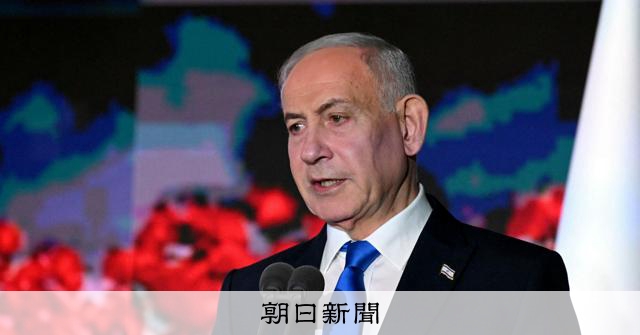
Israel votes Thursday, and the math is ugly for Benjamin Netanyahu. A poll released by the public broadcaster KAN on the 23rd projects his Likud party at just 20 seats — far below the 61 needed for a governing majority. Even adding his hard-right and ultra-Orthodox coalition partners brings the bloc to roughly 50. That leaves him 11 seats short, even before accounting for the fact that some of those allies may refuse to serve alongside him if the election produces exactly this outcome.
The opposition, coalescing around former IDF Chief of Staff Gantz’s centrist party Yashir, is projected at 22 seats, with the wider opposition bloc reaching about 52 — narrowly ahead. But neither side clears the threshold either. The decisive swing factor is Israel’s Arab minority, which makes up roughly one-fifth of the population and controls a dozen or so seats in the Knesset. Those parties are now the kingmakers.
This is not a routine election. It is a verdict on a war that began with Hamas’s October 7 attacks and spiraled into a multi-front conflict stretching across Gaza, Lebanon, and directly into Iran. Whatever governing arrangement emerges will inherit all of that.
The hostage of Trump’s endorsement
Donald Trump has publicly thrown his weight behind Netanyahu. That creates a trap. A Netanyahu government that survives only through fragile far-right alliances has already demonstrated an inability to constrain its own coalition — the expansion of the war, the near-collapse of the Gaza ceasefire negotiations, and the repeated bypassing of US diplomatic channels all flowed from that dynamic. If Trump expected a pliant ally but gets a prime minister who is simultaneously weakened and untethered, the relationship enters uncharted territory.
For Washington, the stakes are immediate. US policy toward Iran has been calibrated to a Netanyahu who, however contentious, was predictable in his hostility toward Tehran. A caretaker government or a coalition held together by extremists removes that predictability. Conversely, a Gantz-led government would face enormous pressure to re-establish the US as the primary diplomatic channel — precisely at a moment when American attention is fragmented across Ukraine, the South China Sea, and domestic politics.
Trump’s endorsement also signals that the Republican Party has fully absorbed the pro-Israel hardline position. If Netanyahu falls and the right-wing bloc retains significant strength, the question becomes whether Trump doubles down on support for a weakened premier or pivots toward whoever can deliver a governing majority, regardless of ideology. The answer will define American leverage in the region for years.
Who wins, who loses, who governs
The most likely scenario is a fragmented Knesset where no single bloc can govern alone. That pushes Gantz and his allies toward a transactional deal with Arab parties — precisely the arrangement that both sides have publicly rejected. The Arab parties want a government that ends the war in Gaza, negotiates a hostage release, and, most critically, normalizes the status of Palestinian citizens of Israel who have long been treated as a political voting bloc rather than as citizens with representation. Gantz needs their seats. They need his legitimacy.
If that deal holds, Netanyahu exits. The hard-right parties — at least the most overtly settler-expansionist factions — lose their ministerial portfolios and their ability to block diplomacy. Iran recalibrates its posture, sensing a government less committed to the strategy of maximum pressure through proxy warfare.
But there is a darker path. If the Arab parties refuse to cooperate with any government that includes far-right ministers, and if Gantz cannot secure a pure center coalition, Israel faces the prospect of repeated elections or a Netanyahu government propped up by a handful of extremist seats with no clear mandate for anything — not Gaza, not Lebanon, not Iran. That is a governing vacuum dressed as democracy.
Gaza, Lebanon, Iran — the trilemma
The war in Gaza has not ended. The ceasefire negotiations have stalled. Reconstruction plans are theoretical. A new Israeli government will inherit a territory that is partially destroyed, partially blockaded, and politically ungoverned by anyone — not Hamas, not the Palestinian Authority, not Israel itself. The US has spent months trying to assemble an interim international administration. Israel has spent months sabotaging it. The next government in Jerusalem will determine which timeline applies.
Lebanon remains a live front. Hezbollah has been degraded but not destroyed. Israel’s northern communities are only now beginning to return. A government without a clear war mandate will struggle to justify further military operations south of the Litani river, even as Iranian-backed militias continue to test the ceasefire.
And Iran — the strategic layer above all others. Tehran has been measuring Israeli weakness for months. It sees a Netanyahu whose coalition is fracturing, a US president who is transactional rather than institutional, and a regional order that has never been more contested. Whatever government emerges in Jerusalem will set the terms of the next confrontation or the next détente. The difference between those two outcomes is being decided this week.
Why this matters beyond Israel
Japan is reporting on this election as a proxy for broader Middle East instability because it is. Israeli governance shapes Gulf security architectures, energy routes, and American force posture across the Persian Gulf. A Netanyahu government that cannot command a majority becomes a liability for every US ally from Riyadh to Manama. A Gantz government that depends on Arab parties creates a new precedent for Palestinian-Arab political integration that could reshape the region’s political calculus.
Neither outcome serves the status quo. That is precisely why the election matters.
The world watched Israel vote this week. The numbers suggest a government that cannot govern as Netanyahu governed. What fills the void — and who benefits from the uncertainty — will define the next chapter of a war that refuses to end.