Trump Builds AI Oversight Command Center Under Intelligence Chief
Trump has placed the US AI policy "command center" under the Director of National Intelligence, signaling a shift toward treating artificial intelligence as a national security priority. The move has major implications for the global tech race.
A New Tier of AI Control
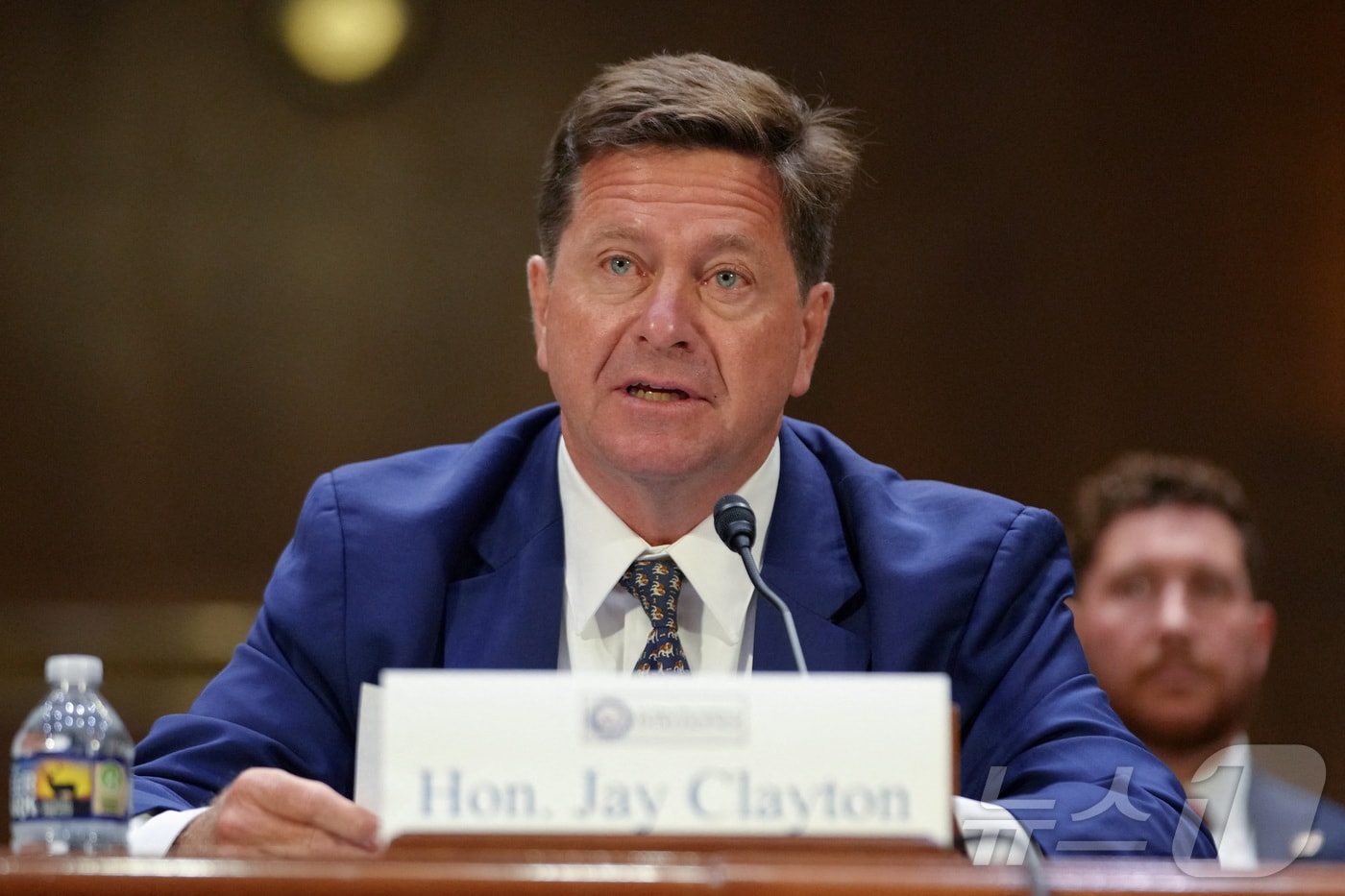
Donald Trump’s administration has quietly reclassified artificial intelligence from a technology sector issue into a national intelligence priority. On July 3, the Wall Street Journal reported that a new White House task force called the Super Intelligence Force has been established under the leadership of Jay Clayton, the Director of National Intelligence. This is not a symbolic reshuffle. It is an institutional escalation.
For the first time, the US government is placing AI oversight under the same architecture that tracks foreign threats, espionage, and military risks. The implication is that Washington now views AI advancement through the lens of great-power competition — with China as the implied adversary.
Who Is Running the Show
Jay Clayton was chosen to chair the task force, effectively making him the closest thing the US has to an AI czar. Over the next 120 days, he will be tasked with producing a comprehensive analysis of the opportunities and threats posed by AI, then translating those findings into concrete federal policy recommendations.
The composition of the team tells the story. Emil Michael, the Under Secretary of Defense for Research and Engineering, handles industry coordination. Scott Cooper of the Office of Personnel Management oversees critical infrastructure concerns. Andrew Ferguson from the Federal Trade Commission will focus on consumer protection and free speech issues. At the senior level, Vice President JD Vance, Defense Secretary Pete Hegseth, Treasury Secretary Scott Bessent, and White House Chief of Staff Susie Wiles all hold seats. Former Secretary of State Condoleezza Rice and technology advisor David Sax are providing external counsel.
This is not a team designed for light-touch oversight. It is a cross-agency apparatus with teeth in defense, finance, labor, trade, and intelligence.
The Real Move: National Security Framing
What makes this significant is the framing. Trump called the meeting of AI executives last month — including Nvidia CEO Jensen Huang, Anthropic founder Dario Amodei, and OpenAI CEO Greg Brockman — and followed it immediately with the task force announcement. His stated rationale was blunt: he wants to ensure the US stays number one in AI while preventing hostile nations from exploiting the technology.
“I will never suppress the growth of a technology that is bigger than the Industrial Revolution,” Trump said at the meeting, according to reports. The logic is clear. AI is being treated as a domain of strategic competition on par with nuclear weapons or cyber warfare.
That framing changes everything. When AI falls under the national security community, it stops being regulated like software and starts being governed like dual-use technology — the same category used for semiconductors, encryption, and missile systems.
What This Means for China
The most immediate consequence is for US-China tech competition. China has invested heavily in domestic AI development through companies like Baidu, ByteDance, and Huawei, and the Chinese government has made AI a central pillar of its Five-Year Plan. Washington’s decision to centralize AI policy under the intelligence community is a direct signal that the US sees Beijing’s progress as a strategic threat, not just an economic one.
Expect tighter export controls on advanced chips and AI infrastructure, more aggressive coordination between the Department of Defense and private AI labs, and potentially new restrictions on American talent flowing to Chinese research programs. The task force’s 120-day review will likely produce recommendations along those lines.
Global Regulatory Ripple Effects
Beyond the US-China axis, this move sets a precedent that other governments will follow. When the world’s largest economy treats AI as an intelligence issue, Europe, Japan, India, and others will recalibrate their own approaches. The EU’s AI Act already takes a risk-based regulatory stance. Expect stricter enforcement mechanisms and closer government-private collaboration in allied nations.
The task force itself is modeling that approach. It plans to draw on regulatory frameworks from the Federal Reserve and the Securities and Exchange Commission — institutions that have spent decades managing systemic risk in complex financial systems. The idea is to adapt those models to AI’s unique challenges: rapid capability jumps, concentrated power among a handful of labs, and the difficulty of detecting dangerous applications before they are deployed.
The Tension Between Control and Innovation
There is an inherent tension in what the task force is being asked to do. Its mandate includes both addressing societal threats — from deepfakes and algorithmic bias to the risk of AI-assisted biological weapons — and preventing the kind of over-regulation that could slow American innovation and cede ground to competitors. That balancing act will define the next year of US AI policy.
Clayton’s team is explicitly tasked with finding that balance. The question is whether a structure designed for intelligence analysis can also foster the kind of open scientific environment that produced today’s leading AI models. History suggests these goals are not always compatible.
What Comes Next
The task force’s 120-day deadline lands around late October or early November 2026. If its findings are substantial, expect a wave of executive actions, interagency directives, and possibly new legislation targeting AI safety, export controls, and government procurement. The WSJ reported that the task force’s functions could be permanently institutionalized as a standalone agency if its work proves impactful enough to warrant it.
That would be a historic shift. No previous administration has created a dedicated AI governance body at this level. If it happens, the US would become the first major country to treat artificial intelligence as a standalone national security category — and the rest of the world would be watching closely.
The Super Intelligence Force is small on the surface but massive in what it represents. AI is no longer just a business story. It is a national security story, and the people writing that story now sit in the intelligence community.