Trump's Diesel Deal With Putin Threatens Ukraine Alliance
Trump's agreement to buy Russian diesel and ease sanctions has triggered a public rift with Zelensky, exposing a strategic pivot that rewards Moscow and pressures Kyiv into negotiations on Washington's terms.
The Diesel Deal That Broke the Alliance
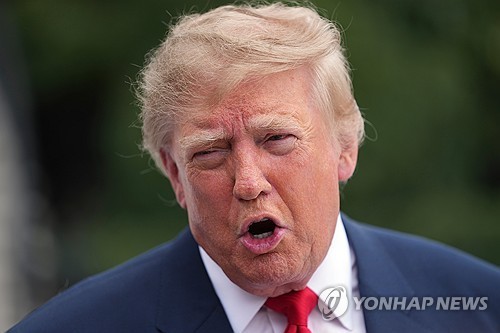
Donald Trump did not simply criticize Volodymyr Zelensky. He told him, in front of reporters at the White House, that Ukraine needs a new president. The context was a Russian diesel deal — one that Trump struck with Vladimir Putin and then temporarily loosened US sanctions to make possible. The subtext was a far larger unraveling: the post-2022 transatlantic security architecture, flexing its joints under American pressure.
On October 10, Trump held a press conference that unfolded like a negotiation by intimidation. He said Zelensky had chosen not to end the war several times. He said the United States had told Kyiv to attack Russia however it wanted — “just don’t attack Russian oil refineries because it causes global problems.” He warned that Ukraine was now causing problems for the world and for American farmers and ranchers. And he laid out the alternative: a new leader willing to negotiate.
“Ukraine has lost 30 percent of its territory,” Trump said. “More than a million people have died.” He paused. Then he added, almost as an aside: “I think it is time for Ukraine to have a new president.”
That sentence did more than summarize Trump’s frustration. It revealed the architecture of his leverage.
The Deal Behind the Words
A day earlier, Trump had posted on Truth Social that he and Putin had agreed to Russia supplying the United States with more than 300,000 tons of diesel immediately, with additional shipments bringing the total to 4.8 million tons. Within hours, the Treasury Department’s Office of Foreign Assets Control — OFAC — announced a temporary relaxation of sanctions on Russian diesel sales. The timing was not coincidental. The deal was both the carrot and the bludgeon.
Trump’s framing was blunt: the United States would accept Russian fuel, but Ukraine would have to stop hitting the refineries that produced it. The logic — if such a thing can be called that — rested on a single claim: that Ukrainian strikes on Russian energy infrastructure were spiking global fuel prices, hurting American consumers.
That claim obscures more than it reveals. Ukrainian attacks on Russian refineries have been widely documented as part of Kyiv’s strategy to degrade Russia’s war-making capacity — to strike at the logistics chain that feeds the invasion. Whether those attacks meaningfully move global diesel prices is disputed even among energy analysts. What is not disputed is the political message Trump sent: Moscow’s energy exports, a lifeline for its war economy, are now being partially reconnected to the American market under a deal Trumpegotiated himself.
Zelensky’s Counter
Zelensky’s response was immediate and unmistakable. He called the agreement a “gift” from Trump to Putin. In his framing, allowing Russia to continue selling petroleum products on global markets — including to the United States — was equivalent to investing in a war that should be ending, not prolonging it.
The two leaders are describing the same event in irreconcilable terms. For Trump, the deal is a bargain: Russian fuel for American consumers, leverage over Kyiv for a negotiated settlement. For Zelensky, it is a betrayal wrapped in a trade agreement — a signal that Washington no longer prioritizes Ukrainian sovereignty over American energy margins.
This is not a minor diplomatic disagreement. It is a structural fracture. The United States has been the primary supplier of weapons, intelligence, and financial support to Ukraine since Russia’s full-scale invasion. That relationship has always been conditional — conditioned on Ukrainian military effectiveness, on political stability, on the broader alignment of American strategic interests. Trump has now made the conditionality explicit and personal: comply with our terms, or find a leader who will.
Who Wins, Who Loses
The winners from this arrangement are already visible. Russian refiners, many of whom have struggled with downstream congestion since Western sanctions redirected their crude exports, now have a sanctioned path to sell diesel into the American market. The 4.8-million-ton figure Trump cited is significant — not because it would replace any meaningful share of US diesel consumption, but because it signals a normalization of Russian energy trade that the Biden administration spent nearly four years trying to isolate.
American consumers may see marginal price relief, though energy economists caution that the impact would be negligible given the scale of US domestic production. The political reward, however, is real for Trump: a tangible deal he can point to as evidence that his approach works where diplomacy failed.
Losing is Ukraine — and not in any abstract sense. Every day that Russian diesel flows into American ports under eased sanctions is a day that Moscow’s war chest remains partially funded. Every day that Trump publicly calls for a new Ukrainian president is a day that Kyiv’s negotiating position weakens. The message to Putin is unambiguous: the United States is willing to trade Ukrainian concessions for Russian compliance on energy, and it is prepared to enforce that trade by pressuring Kyiv directly.
What Happens Next
The immediate question is whether Ukraine will comply with Trump’s injunction to stop attacking Russian refineries. Zelensky has not announced any such shift. Ukrainian strikes on energy infrastructure have continued at a steady pace, and there is no indication that Kyiv is preparing to halt them. But the pressure is mounting — not just from Washington, but from the implicit threat that American support could become conditional on behavioral change.
The longer-term implication is more consequential. If Trump follows through on his suggestion that Ukraine needs a new leader, the question becomes whether the United States will recognize and engage with a successor government even if that government emerges through processes Kyiv — and much of the international community — would not endorse. A presidency handed down by a foreign power is a precedent with no constructive outcome for anyone.
Alternatively, if Trump backs away from the most aggressive language while keeping the deal in place, the arrangement becomes a new normal: Russian energy flowing to the United States under selective sanctions relief, Ukrainian military operations constrained by American preference, and the war frozen in a state that benefits Moscow more than either side explicitly acknowledges.
Either path represents a departure from the unified Western stance that defined the first three years of the war. The diesel deal is not merely an energy transaction. It is the instrument through which that departure is being executed — quietly, through a press conference, through a social media post, through a temporary waiver at the Treasury Department.
The world is watching to see whether Ukraine’s allies will protest, accommodate, or look away.