Trump's Falklands gambit shows the special relationship is over
Donald Trump's willingness to revisit US neutrality on the Falklands in retaliation for Britain's stance on Iran marks a decisive break from decades of Atlanticist assumption. What happens next for London, Buenos Aires, and Washington's alliance architecture.
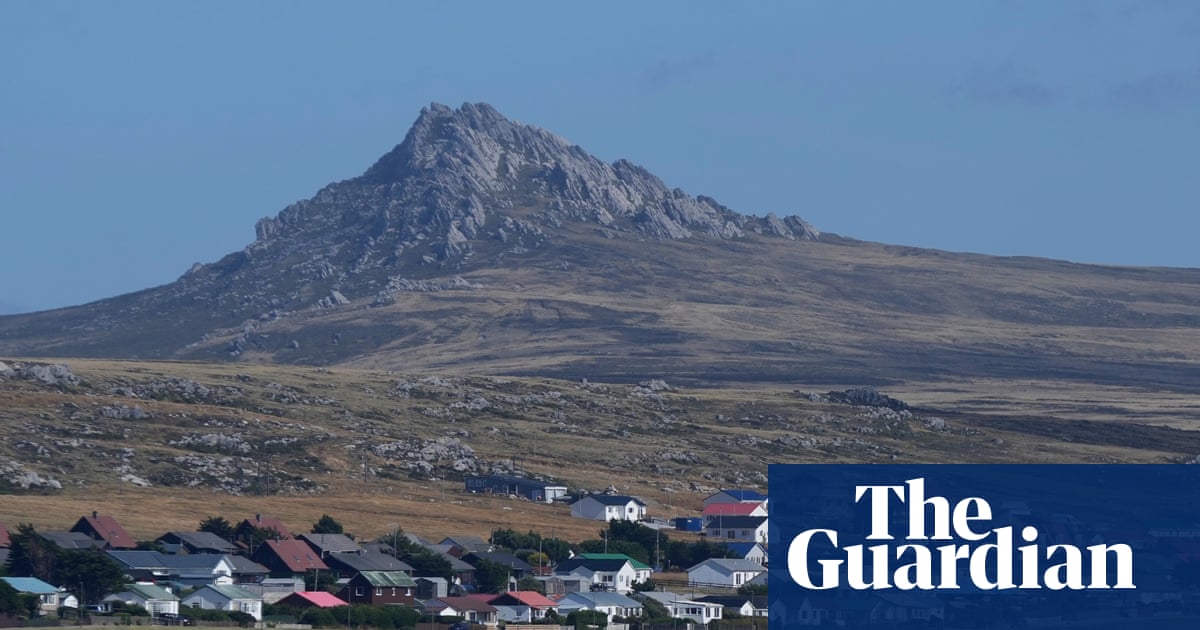
Trump has spent his second term treating alliances like a ledger, not a commitment. The Falklands dispute is the latest entry. And it should alarm every British policymaker who grew up assuming that Washington would always stand behind London — however quietly, however reluctantly. The assumption is dead.
The sequence is telling. Donald Trump gave an interview to GB News over the weekend, complaining that Britain had not sent ships to help him in the conflict against Iran. Keir Starmer’s government had declined, citing its own legal and strategic constraints. Trump responded by confirming that the United States was “reviewing” its longstanding neutral position on Falklands sovereignty. Not announcing a new policy. Reviewing it. The ambiguity is the point. He wants London to feel the ground shift beneath its feet without having done anything explicitly wrong enough to trigger a formal crisis.
Milei, as any seasoned opportunist would, moved first. In a televised address flanked by his cabinet, he declared his intention to reopen Argentina’s claim to the islands — the Malvinas as they are known across the Rio de la Plata. His phrasing echoed Harold Macmillan’s famous 1960 speech in Cape Town about the wind of change sweeping through Africa. Milei said Britain is on a path of decline: demographic collapse, economic malaise, a migratory crisis he treated as evidence of irreversible decay. He did not mention his own collapsing approval ratings, or the fact that the 1982 military junta had seized the islands for the same reason any exhausted authoritarian regime does — to distract from domestic unpopularity.
What Milei understood immediately was that Trump does not reward loyalty. He rewards leverage. And right now, the Falklands give Buenos Aires leverage it has not held since the Thatcher-Reagan era.
The historical parallel is stark. In 1982, Margaret Thatcher won a swift military victory because Ronald Reagan backed her openly and materially. The special relationship was not just rhetoric. It was logistics, intelligence, and diplomatic cover at the UN. Today, Andy Burnham faces a US president who sees alliance obligations as personal slights waiting to be settled. This is not a rhetorical difference. It is structural.
Trump’s grievance catalogue reads like a roll call of America’s closest partners. South Korea’s joint exercises were cut short by six days last month after Seoul declined to join the Iran fight. The White House announced the withdrawal of 5,000 troops from Germany following Friedrich Merz’s refusal to get involved. Oman has been threatened with bombing over Hormuz access. Spain and Italy are being squeezed on defense spending. The pattern is consistent: allies who do not comply with Trump’s demands are treated as adversaries in waiting, while adversaries who accommodate him receive strategic concessions.
The Falklands case is different from the rest because it is not about troop deployments or budget percentages. It is about sovereignty itself — the most fundamental question a state can ask about its territory. By reopening the question, Trump is testing whether the US will continue to underwrite the post-1982 settlement that has held, however uneasily, for over four decades. The answer so far is no.
There is also a bargaining layer here that goes beyond ideology or grievance. John Healey, the new British chancellor, has already suggested the UK may not hit increased defense spending targets. Trump has a habit of turning every complaint into a negotiation. The Falklands review could be the opening move in a wider campaign to extract concessions from a cash-strapped Treasury — defense spending, Nato burden-sharing, trade terms, whatever serves the moment. Milei’s announcement gives Trump a wedge he can drive into the special relationship without appearing to act alone. He can tell his base he is standing up for American interests while quietly benefiting an ally of convenience in Buenos Aires.
This is the transactional logic in its purest form. Alliances are not defended on principle. They are priced.
The risk for London is not immediate war. It is something slower and more corrosive: the gradual realization that Washington’s commitment to British territories is conditional, negotiable, and reversible. The Falkland Islands have fewer than 2,000 residents who have consistently voted to remain British in referendums. Britain garrisons them with a naval and air presence that is modest but credible. Under the current arrangement, the US does not defend them directly but provides diplomatic cover and strategic reinforcement through the special relationship. That cover is now in question.
What happens next depends on whether Burnham treats this as a moment for recalibration or denial. The temptation will be to insist that nothing has changed — that Trump’s comments are performative, that the underlying architecture of the alliance remains intact. That would be a dangerous misreading.
The architecture has changed. Trump has made the change visible. The question for Britain is whether it responds with the same clarity that Thatcher showed in 1982, or with the confused hedging that characterized Starmer’s Iran response. Thatcher had one advantage Milei does not and Burnham may lack: she had a president who shared her worldview. Trump shares neither Milei’s ideology nor any coherent strategic doctrine beyond personal grievance.
The wind of change Milei invoked in 1960 was about decolonization. The wind blowing now is about something else entirely — the dismantling of the postwar alliance system that held the Atlantic together. Britain’s overseas territories were never meant to be defended on merit. They were defended because the system required predictable commitments. Trump has replaced predictability with leverage. That is a colder world for London, for Buenos Aires, and for anyone who believed the special relationship was more than a convenient fiction.
The Falklands dispute did not start with Trump’s comment. It was always there, dormant but unresolved. What Trump has done is remove the implicit guarantee that kept it dormant. Whether Milei has the domestic capacity to turn a rhetorical claim into something more remains unclear. Whether Trump will follow through on the review remains equally unclear. But the uncertainty itself is the point. That is how transactional politics works — not through sudden crises but through sustained ambiguity that forces other countries to invest in guessing games instead of their own strategic planning.
Britain’s task now is to decide whether it wants to play that game or to build a defense posture that does not depend on the mood of a single man in the White House. The special relationship offered the illusion of certainty for forty years. It is gone. The question is what replaces it.