Trump Flies B-2s Over Andrews to Welcome Xi — and Make a Point
The B-2 and F-22 flyover during Xi Jinping's state visit is hardware diplomacy dressed as hospitality. What it reveals about where US-China tensions are headed matters more than the spectacle itself.
The Flyover That Wasn’t Just a Flyover
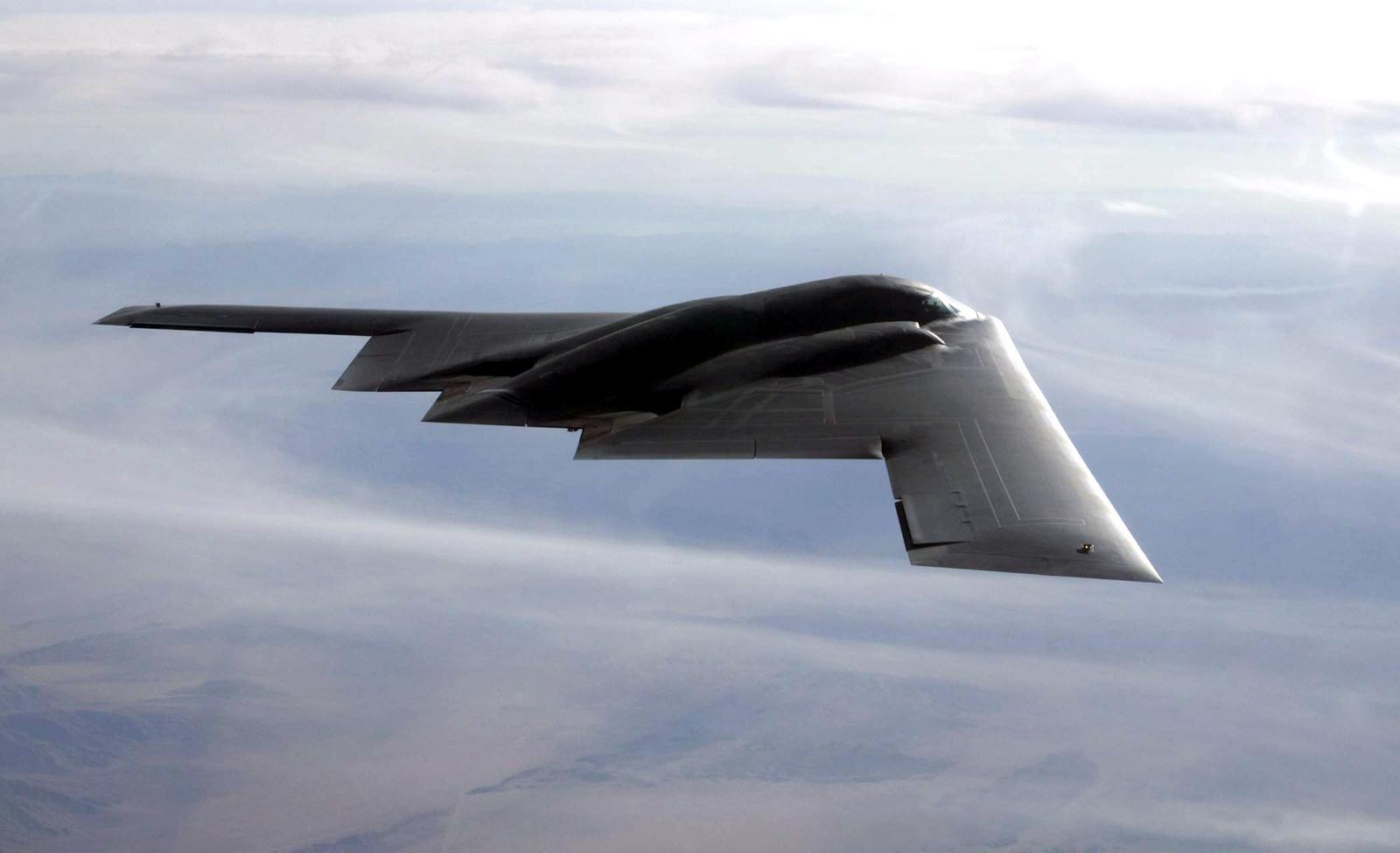
On September 24, a B-2 Spirit bomber and four F-22 Raptors will trace arcs over Washington’s airspace as Xi Jinping steps off a plane at Andrews Air Force Base. The White House has called it a commemorative flight. Anyone watching the footage from 2015 will recognize the pattern: in September of that year, Xi visited Washington as a foreign head of state and the centerpiece was a flyover of B-2s and F-35s over the Potomac. The playbook is deliberate.
But this time the calculations are different. Trump is not just honoring Xi — he is staging a reminder of what happens when the world’s two largest economies stop playing nice.
The Numbers Behind the Spectacle
Forty-seven9 American service members will stand at attention in the Rose Garden. Four F-22s and one B-2 will cross the sky. Xi’s entourage includes his wife, Peng Liyuan, and the visitor list at the state dinner reads like a roll call of American technological power: Sam Altman, Jensen Huang, Tim Cook. The imagery is not accidental. Trump wants Xi to see both the bombs and the boards that build them.
Melania Trump, who rarely appears at diplomatic events, will attend the welcome ceremony, the state dinner, and a private lunch. Her presence at a third event signals something the State Department would not put in a briefing book: this visit matters to Trump personally, and he is staging it accordingly.
Hardware Diplomacy Has a History
The anchor comparison is Anchorage, August 2025, when Putin arrived and Trump greeted him with the same B-2 and F-22 formation that flew over Washington two weeks later. The message was identical then: courtesy on the ramp, capability in the air. Chinese analysts noted it at the time. American commentators mostly missed the echo.
What changed since 2015 is not the tactic — it is the relationship. In 2015, the flyover was meant to signal alliance strength to a China that was largely cooperating on climate and North Korea. In 2025, the same gesture signals something else entirely: the United States can still deploy its most exclusive aircraft on short notice, and it will do so even while talking trade with the very country it is trying to outmaneuver.
That is the point of hardware diplomacy. It creates a second channel of communication that runs parallel to the press releases. When Trump says China should buy more American agriculture, the B-2 flying overhead whispers that the leverage is not just economic.
The AI Dialogue Is the Real New Thing
While the headlines will focus on bombers, the substantive development is happening in side rooms. Treasury Secretary Scott Bessent and USTR representative Jamieson Greer met with Chinese Vice Premier He Lifeng in New York on September 20 to lock down agenda details. Bessent announced that the two sides have established a formal China–US AI dialogue with an incident hotline, a structure modeled on nuclear risk-reduction frameworks but applied to an entirely different domain.
The timing is notable. The two sides plan to meet again in Shenzhen on November 18 and 19, ahead of the APEC summit. That means the AI channel is not a one-off — it is institutionalizing a conversation that previously had no permanent home.
Neither side is shy about what drives this. Both governments worry about uncontrolled AI agents and non-state actors accessing dual-use capability. The dialogue is framed as threat reduction. What it actually does is create a regular meeting schedule between people who otherwise would only communicate through press statements and social media rants.
The Trade Truce Is Stretched Thin
The backdrop to all of this is a trade truce expiring November 10. Both sides want an extension, according to Greer, who described a three-to-six-month pause as appropriate. The New York Times reports that China prefers a longer deal while the United States is pushing the shorter window to maintain leverage. The gap is not tiny.
China has purchased roughly $39 billion in non-soy American agricultural goods between January and July. The annual target Trump officials set was $170 billion. China is fulfilling about two-thirds of its rare-earth supply commitments from the September 2024 Busan summit, according to the Financial Times. Boeing orders are advancing — about 140 of 200 promised jets are moving forward, with 10 more in document form — but the mathematics of the agreement remain uncomfortable for both sides.
The Board of Trade, which will lower tariffs on $30 billion of non-sensitive goods from each country, is now operational. It is a mechanism, not a solution. Mechanisms buy time. They do not resolve structural disputes.
Who Wins, Who Loses
For Trump, the win is visible. The flyover gives him a photograph that circulates globally. He is the president who hosted Xi with the same pageantry he once used for Putin — a symmetry that reinforces his branding as a dealmaker who operates on his own terms. The state dinner guest list, stacked with tech CEOs, tells the same story in a different register: America’s innovation economy is the real power projection, and Xi is welcome inside it.
For Xi, the calculus is harder. A state visit with full honors reinforces the personal rapport Trump cultivates with foreign leaders. But the B-2 overhead is a reminder that the rapport has limits. China’s domestic audience will see the flyover and note that the United States still feels compelled to demonstrate muscle around its Chinese counterpart.
The trade negotiators on both sides lose the cleanest narrative. The truce extension looks like delay, not resolution. The AI dialogue is meaningful but narrow — it addresses risk, not competition. China’s agricultural purchases remain far below targets. Rare-earth compliance is partial. The numbers do not lie; they just refuse to be dramatic.
What Comes Next
The visit peaks on September 25 with a private coffee session at the White House and a tour of the National Archives, where both sides will review documents with symbolic weight. The National Archives choice is worth noting: it is a museum of American governance, not a military installation. Trump is offering Xi a version of America that exists alongside the one on display at Andrews.
After that, the schedule compresses. November brings the Shenzhen AI meeting and the APEC summit, where the trade truce will be either renewed or allowed to lapse. If the extension holds, the next friction point arrives in spring 2026. If it does not, the B-2s will likely fly again — this time without the invitation.
The spectacle at Andrews is the cover story. The real visit is happening in side conversations about rare-earth quotas, agricultural imports, and the rules for an AI system neither country wants to lose control of. The bombers make the news. The negotiations make the future.