Trump-Mamdani Meet as Israel Crisis Looms Over U.N. Week
Donald Trump is meeting with New York Mayor Zohran Mamdani during U.N. week—a collision of two politicians who once called each other nightmares, now forced into uneasy negotiation over Gaza, housing, and who gets to host world leaders.
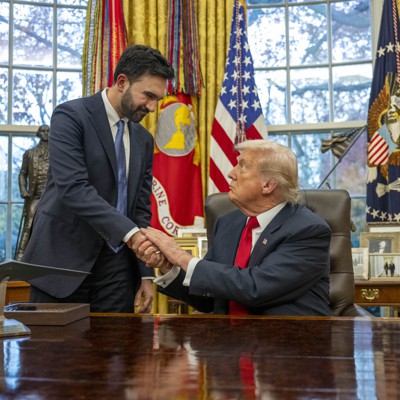
The Meeting That Was Never Supposed to Happen
Donald Trump is flying to New York this Monday to sit down with Zohran Mamdani at Gracie Mansion—the mayor’s residence—just days before Israeli Prime Minister Benjamin Netanyahu lands in the city for the U.N. General Assembly. It is, by any measure, a strange geopolitical calendar: the president of the United States meeting the man who once promised to be his worst nightmare, while the man Netanyahu might legally arrest sits across from Trump at Yom Kippur.
City Hall has released no details about what will be discussed. The White House has not commented. But the timing tells you everything.
Who Wins, Who Loses
Trump wins visibility. A photo op at Gracie Mansion during U.N. week signals presidential accessibility to mayors—a contrast to the adversarial posture he has maintained toward Democratic cities throughout his administration. It also gives him a chance to project a narrative of cooperation on a city that has been, since Mamdani’s election, a thorn in the administration’s side on immigration enforcement, housing policy, and foreign policy alignment.
Mamdani wins a framing opportunity. He has spent his first six months in office threading an impossible line: maintaining his anti-Netanyahu campaign rhetoric while publicly acknowledging that New York City cannot and will not enforce an ICC arrest warrant. The Trump meeting lets him recast himself as a pragmatic dealmaker who gets results—something he pointedly highlighted after their February encounter, when he secured the release of a pro-Palestinian protester detained in Manhattan.
Netanyahu loses control of his own itinerary. He is expected to spend only about a day in New York and will not meet with Trump, according to The Times of Israel. That separation is significant. In previous years, Netanyahu’s U.N. visits have included White House meetings. This time, the Israeli prime minister arrives in a city run by a mayor who campaigned on his prosecution and a president who has historically been sympathetic to him—but who is now sitting across the table from that very mayor on the same week.
The absence of a Trump-Netanyahu meeting is itself a message. It signals that the administration will not prioritize the Israeli prime minister’s visit above its own political calculus. For Netanyahu, this represents a diplomatic downgrade without any formal announcement. His security entourage arrives in a city where the person hosting the president on municipal affairs has publicly called for his arrest.
The Real Strain Is Housing, Not Just Israel
The Israel question will dominate headlines. But the substantive policy dispute between Trump and Mamdani has been unfolding for months over Sunnyside Yard—a federal rail yard in Queens that both sides agreed could become one of the largest affordable housing developments in the country. Mamdani pushed for federal investment there during his February visit to the White House. There has been little public progress since.
That gap matters because it reveals the structural limitation of mayoral diplomacy with a hostile executive branch. Mamdani can fly to Washington, shake hands, and return with a press release about advocacy. He cannot compel the Department of Housing and Urban Development to commit funds. Trump controls those levers—and has shown no urgency to use them for a city whose mayor calls him an enemy.
The housing stall is a preview of what happens next. Every major policy request Mamdani makes from the federal government will run into the same wall: the president benefits politically from appearing cooperative but has every incentive to withhold concrete deliverables from a jurisdiction that voted against him by a historic margin.
For Mamdani’s constituents in Queens, this dynamic is not abstract. Sunnyside Yard was promoted as a potential solution to New York’s affordability crisis—a project that could have delivered thousands of units. Its stagnation underlines the limits of symbolic politics when material resources are controlled by adversaries.
The ICC Warrant Nobody Talks About
Mamdani’s most incendiary campaign promise—to arrest Netanyahu if he set foot in New York—has been quietly deflated. In July, he acknowledged his administration would not attempt an arrest. Last week, he inaccurately claimed he had never encouraged New Yorkers to protest Netanyahu’s visit. The reversal is a textbook example of an elected official retreating from rhetoric that was advantageous during a campaign but unenforceable in office.
What is striking is what neither Mamdani nor Trump will say about this during their Monday meeting. The ICC warrant sits at the center of a legal and diplomatic minefield that neither party has an interest in detonating publicly. Trump has every reason to protect Netanyahu—not just on ideological grounds but because antagonizing the Israeli prime minister during U.N. week would complicate broader Middle East policy. Mamdani has every reason to avoid the subject because revisiting it exposes the gap between his campaign vows and his municipal powers.
The unenforced warrant also carries implications beyond this week. It establishes a precedent for how New York City will handle future international legal proceedings—whether involving foreign heads of state or other figures subject to ICC jurisdiction. The message sent by not enforcing the warrant will reverberate through diplomatic circles long after U.N. week concludes.
What Comes Next
If the meeting produces nothing beyond a photo and a statement about mutual interest, it will be the most honest outcome possible. These two politicians occupy fundamentally different political universes. Mamdani governs a city that is 67 percent Democratic; Trump governs a country that elected him on a coalition that largely dismissed that city’s priorities.
The real story of this meeting will not be what was discussed. It will be what both sides chose not to discuss: the stalled housing deal, the unenforced ICC warrant, and the fact that Netanyahu is in town and neither the White House nor City Hall can agree on what to do about it.
The fractures between these two administrations were visible throughout the campaign and have only deepened in office. Yet the calendar forces them together. U.N. week always turns New York into a stage. This year, the cast is more fractured than usual.