Trump Pressures Seoul to Sell Missiles to Ukraine — Quietly Rewriting the Rules
Trump is using a published column as diplomatic pressure on South Korea to supply its Cheon-gung-II air-defense missiles to Ukraine, a move that tests Seoul's arms-export laws and its alliance commitments — all without spending American taxpayer dollars.
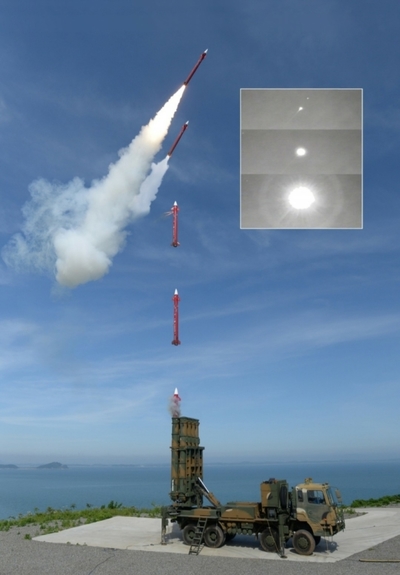
A Column as a Pressure Weapon
Donald Trump did not draft a new executive order. He did not hold a press conference or call President Yoon Suk Yeol directly. On September 4, he shared a Washington Post op-ed on his Truth Social page — and the subtext was unmistakable.
The article, by columnist Mark Tiessen, argued that South Korea should be compelled to sell its Cheon-gung-II (M-SAM II) short-to-medium-range air-defense missiles to Ukraine. That Trump chose to amplify this specific argument, rather than one of his own authorship, was the point. Sharing a sympathetic column is one of his most reliable signals of endorsement. The message to Seoul: Washington is watching.
What the Column Actually Says
Tiessen opens with a problem Trump raised at last July’s NATO summit — the idea that Ukraine should be permitted to manufacture its own Patriot missiles on home soil. The logical obstacle is technical leakage. The PAC-3 MSE interceptor carries classified counter-hypersonic guidance data. Licensing it to a Ukrainian production line, Tiessen argues, risks exactly what Moscow and Pyongyang most want: access to American terminal-guidance technology that could flow through insufficiently controlled channels.
His solution is to fall back. Ukraine should receive licensing for either the newer, cheaper PAC-3 ACE program — which Tiessen rates at roughly 70 percent of PAC-3 MSE performance at under half the cost — or the older PAC-2 GEM-T variant. But both of those would take years to field. In the interim, Ukraine’s skies remain exposed to Russian missile and drone strikes.
That gap is where South Korea enters the frame. Tiessen contends that Seoul should be pressured to sell its Cheon-gung-II batteries to Kyiv as an immediate stopgap. He acknowledges a legal barrier — South Korean law currently prohibits arms exports to countries in active conflict — then immediately undercuts it with a single data point: in June, South Korea airlifted Cheon-gung-II batteries to the United Arab Emirates to defend Dubai against Iranian missile threats. If that exemption worked for the Middle East, he argues, there is no coherent reason to deny a similar path for Ukraine.
The Real Bargain Trump Is Proposing
Tiessen closes with what is really being offered. Trump is reportedly frustrated with South Korea over its refusal to support US naval operations through the Strait of Hormuz — a separate friction point in an already strained alliance relationship. Selling Cheon-gung-II missiles to Ukraine, he suggests, would be a corrective. It would solve Washington’s delivery problem without American spending, and it would demonstrate Seoul’s reliability as an ally.
In other words: trade a strategic asset for political credit. That is not merely a policy suggestion. It is a negotiating framework dressed as journalism.
The Legal Loophole That Already Exists
The legal argument against selling Cheon-gung-II to Ukraine is thinner than Tiessen gives it credit for, or than Seoul may publicly admit. South Korea’s Arms Trade Act restricts transfers to conflict zones, but the UAE precedent proves the government can and does carve out exceptions — particularly when the buyer is a strategic partner and the delivery involves emergency humanitarian or defensive necessity. The question is not whether Seoul could legally transfer the missiles. It is whether it would choose to.
And that choice matters for reasons that reach far beyond Ukraine.
What Seoul Stands to Lose
For one, any emergency exception set for Ukraine establishes a template. Buyers around the world — including countries South Korea is courting for its growing defense export portfolio — will watch to see whether Seoul treats its wartime allies differently from its peacetime customers. If South Korea can waive restrictions for one conflict, it cannot plausibly deny the same logic to others, including buyers in the Middle East and Southeast Asia who are among the regime’s most lucrative export targets.
The Cheon-gung-II itself is another consideration. South Korea is deploying the system to its own missile-defense batteries in Gyeonggi Province this year. Its 2026 production batch is already being integrated into terminal-phase lower-altitude interception units. Diverting combat-ready batteries to Ukraine would create a hole in Seoul’s own air-defense architecture at a time when North Korean missile activity continues to intensify.
Finally, there is the question of what happens to those missiles once the war ends. South Korea does not currently have a mechanism to buy them back. Unlike the US, which can repatriate or refurbish transferred equipment, Seoul would be transferring hardware with no guaranteed return path — potentially losing assets it cannot easily replace on its own production line.
What Ukraine Stands to Gain — and What It Still Won’t Get
On balance, Ukraine would receive exactly what it needs in the short term. The Cheon-gung-II intercepts tactical ballistic missiles, cruise missiles, and drones at ranges that fill the gap between man-portable systems and the longer-range S-300 or Patriot arrays it already operates. The batteries Tiessen describes would not win the air-defense war — Ukraine still needs the longer-endurance Patriot systems for high-altitude interception — but they would reduce the nightly toll of Russian missile strikes on civilian infrastructure.
What Ukraine will not get from this exchange is the licensing deal Tiessen’s column ultimately advocates. The PAC-3 ACE and PAC-2 GEM-T options remain theoretical unless Washington formally pursues them. Until that happens, the Cheon-gung-II sale is the only concrete outcome on the table — and the only one that requires South Korea to move first.
The Bigger Picture: America’s New Financing Model
The most important detail in this story is not the missile. It is the financing model it reveals. Trump is effectively asking an ally to pay for a capability that the United States would otherwise provide — or fund through its own procurement channels. This is not an isolated improvisation. It reflects a broader shift in how the American administration intends to sustain Ukraine’s defense: through allied contributions, third-country transfers, and diplomatic pressure rather than direct Congressional appropriations.
If the model holds, other US security commitments will increasingly look like requests disguised as demands. The question for Seoul — and for other allies in the Indo-Pacific — is whether refusing a single missile sale is enough to draw a line, or whether the precedent will keep expanding.
Trump shared a column. The implication is clear. The next move belongs to the government in Seoul.